
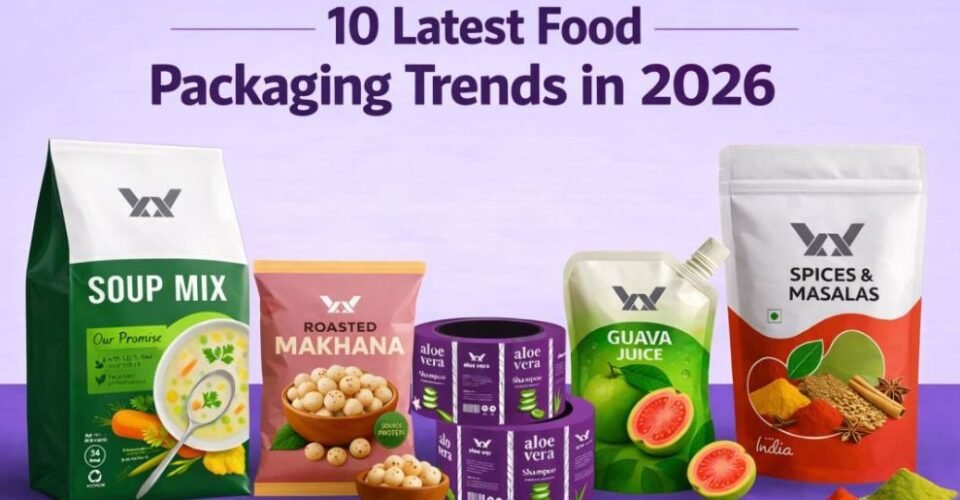
Food packaging in 2026 is no longer just about protecting products during transit. It has become a strategic tool that influences consumer trust, brand perception, and purchasing decisions across global markets.
As food brands adapt to sustainability goals, evolving regulations, and changing consumer habits, packaging is playing a much larger role than ever before. These shifts are shaping the Latest Food Packaging Trends seen across retail shelves and digital marketplaces.
In this blog, we explore the most impactful Latest Food Packaging Trends in 2026 and how they are transforming food packaging design, functionality, and long-term brand value.
Food Packaging Trends Shaping 2026
The Latest Food Packaging Trends in 2026 highlight how packaging is evolving into a key driver of sustainability and brand value. Changing consumer habits and regulations are accelerating this shift.
Modern food packaging trends focus on sustainable packaging trends and designs that enhance convenience, safety, and shelf appeal. Leading companies like White Lotus Industries are helping brands bring these innovations to life.
Below are the Latest Food Packaging Trends that are shaping the future of food packaging in 2026 and beyond.
1. Sustainability-Focused Food Packaging Trends
Sustainability has evolved from a value-add to a core requirement in the food industry. One of the most influential Latest Food Packaging Trends is the focus on environmentally responsible packaging that balances performance with reduced environmental impact.
Food brands are adopting materials and formats aligned with sustainable packaging trends, optimising material usage, improving recyclability, and lowering their carbon footprint – all while maintaining product integrity.
Sustainability is also shaping brand communication. Modern food packaging design reflects environmental responsibility through minimal graphics, thoughtful material choices, and clear eco-messaging. For more insights, brands often explore resources like What is Sustainable Packaging to guide eco-conscious decisions.
Key Sustainability Practices
- Lightweight and space-efficient formats reduce transportation emissions
- Increased use of recyclable and mono-material packaging supports circularity
- Durable packaging designs extend shelf life and help minimise food waste
Lightweight, space-efficient pouches like center seal pouches and 3-side seal pouches help reduce material usage while maintaining food safety and shelf life.
These sustainability-led Latest Food Packaging Trends are driven by regulations and rising consumer expectations for responsible, future-ready food packaging.
2. Food Packaging Design Trends Shaping Modern Brands
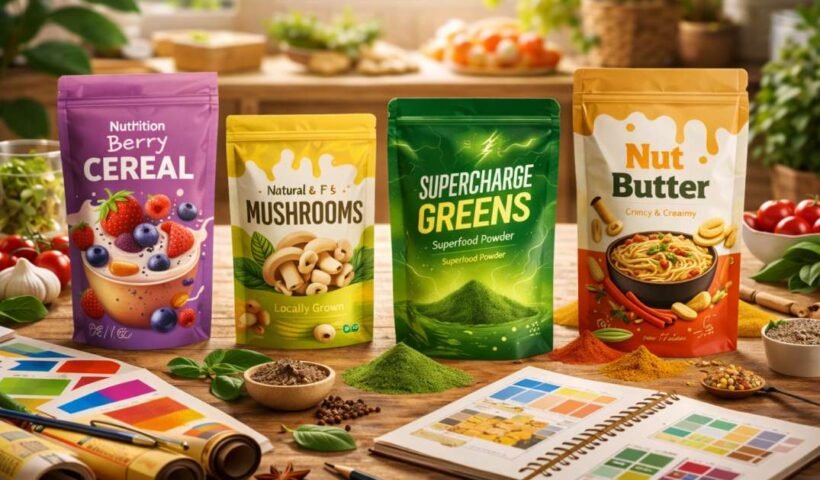
Food packaging design is becoming more intentional, minimal, and purpose-driven. Brands are moving away from cluttered visuals and focusing on clarity, authenticity, and strong shelf presence.
One of the most visible Latest Food Packaging Trends is the use of clean layouts, muted colour palettes, and bold typography. This shift reflects changing consumer behaviour, where buyers prefer packaging that is easy to understand and communicates trust at a glance.
Today, food packaging design goes beyond aesthetics. It supports sustainability objectives, regulatory compliance, and brand storytelling, positioning design as a strategic asset within evolving food packaging trends.
Design Shifts Influencing Packaging
- Minimal graphics and increased whitespace improve readability and shelf visibility.
- Transparent or semi-transparent packaging elements help build consumer trust.
- Premium finishes are used selectively to enhance perceived value without unnecessary material usage.
Structurally strong pouches such as flat bottom pouches and shaped pouches allow brands to combine premium shelf appeal with functional food packaging design.
These food packaging trends demonstrate how brands are balancing visual appeal, functionality, and sustainability in competitive retail environments.
3. Smart and Connected Food Packaging Trends
Technology is playing a key role in shaping Latest Food Packaging Trends, especially as brands focus on traceability, safety, and transparency. Smart packaging solutions are increasingly used to enhance how food packaging communicates information.
Consumers now expect more product details than a physical label can provide. As a result, QR codes, digital traceability tools, and smart indicators are becoming integral to modern food packaging trends.
Rather than replacing traditional formats, smart solutions complement existing food packaging design by improving communication across the product lifecycle.
How Smart Packaging Supports Food Brands
- QR-enabled packaging offers instant access to sourcing, ingredient, and usage information.
- Smart labels improve transparency while supporting regulatory and compliance requirements.
- Connected packaging enhances supply chain visibility and quality control.
These innovations highlight Latest Food Packaging Trends that prioritise trust, data accessibility, and brand accountability.
4. Consumer Engagement Through Connected Packaging
Connected packaging is emerging as one of the more interactive Latest Food Packaging Trends, enabling brands to engage consumers beyond the point of purchase. Packaging is now a digital touchpoint rather than a static container.
By integrating smart elements, brands can share sustainability messages, product authenticity details, and brand stories directly through food packaging design.
This approach aligns with evolving sustainable packaging trends, where transparency and consumer education play a growing role in brand loyalty.
Key Benefits of Connected Packaging
- Digital access reduces on-pack clutter while improving information delivery.
- Interactive packaging strengthens brand engagement and consumer trust.
- Data-enabled packaging supports informed purchasing decisions.
These connected food packaging trends show how technology is reshaping the relationship between brands and consumers.
5. Convenience-Focused Food Packaging Trends
Convenience-driven consumption is accelerating one of the most practical Latest Food Packaging Trends. Changing lifestyles, smaller households, and on-the-go eating habits are reshaping food packaging requirements.
Packaging is now expected to support easy handling, efficient storage, and repeated use. These expectations are directly influencing food packaging design across snacks, dry foods, liquids, and ready-to-eat categories.
This shift explains the growing demand for functional pouches such as zipper lock pouches, and spout pouches with handles, which improve ease of use, storage, and repeat consumption.
Exploring the different types of packaging pouches can help brands choose the right format for snacks, dry foods, liquids, and ready-to-eat products.
Convenience-Led Packaging Expectations
- Easy-to-open and resealable features improve everyday usability.
- Compact packaging supports modern retail layouts and home storage needs.
- Functional designs encourage repeat purchases and brand loyalty.
These food packaging trends reflect how brands are adapting packaging strategies to match real consumer lifestyles.
6. Shelf Impact and Brand Differentiation Trends
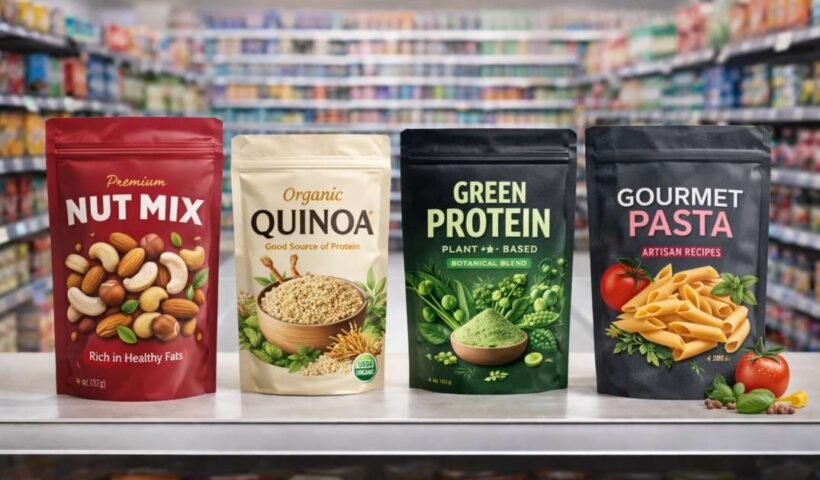
As retail environments grow more competitive, shelf visibility has become a major driver of Latest Food Packaging Trends. Packaging now acts as a silent brand ambassador at the point of sale.
Food packaging design increasingly focuses on standing out while remaining clear and compliant. Distinct shapes, balanced colour usage, and strong brand cues improve recognition without overwhelming consumers.
This trend also influences how brands select packaging formats that enhance shelf presence across physical and digital retail channels.
Shelf-Driven Design Priorities
- Upright packaging improves product visibility and shelf hierarchy.
- Consistent branding strengthens recognition across product ranges.
- Simplified designs improve scanability in crowded retail spaces.
These food packaging trends show why shelf impact and brand recall are now strategic packaging decisions.
7. Smart Space Optimisation in Food Packaging
Space efficiency has become a strategic focus within Latest Food Packaging Trends. Brands are prioritising packaging that maximises space usage without increasing material consumption.
Rising logistics costs and tighter retail layouts are driving this shift. As a result, food packaging trends now favour formats that minimise empty headspace while maintaining strength and shelf appeal.
Smart space optimisation also supports sustainable packaging trends, making it a high-impact approach across the packaging value chain.
Space-Efficient Packaging Drivers
- Optimised shapes reduce transportation and warehousing costs.
- Improved stacking enhances retail and storage efficiency.
- Compact formats support sustainability and cost control goals.
Space-optimised formats such as 4-side seal pouches and 2-side gusset pouches reduce headspace while improving stacking and logistics efficiency.
These developments highlight how food packaging design is evolving to balance efficiency, performance, and responsibility.
8. Food Packaging Trends Supporting Multi-Channel Retail
The growth of e-commerce and hybrid retail models is reshaping Latest Food Packaging Trends. Packaging must now perform consistently across physical stores, online platforms, and last-mile delivery networks.
Modern food packaging design is increasingly influenced by durability, leak resistance, and visual consistency across digital and physical touchpoints. Brands are aligning packaging decisions with omnichannel retail strategies to protect product integrity.
This shift explains why flexible and adaptable formats are gaining wider acceptance within evolving food packaging trends.
Packaging Needs for Multi-Channel Distribution
- Improved durability supports long-distance and last-mile delivery.
- Consistent visual identity strengthens brand presence online and offline.
- Packaging designs compatible with automated fulfilment systems improve efficiency.
These factors show how packaging is adapting to changing retail structures.
9. Premiumisation and Value-Driven Packaging Trends
Premiumisation continues to shape Latest Food Packaging Trends, as consumers increasingly associate packaging quality with product value. Packaging now plays a key role in influencing freshness perception, quality, and brand trust.
Rather than excessive decoration, premium food packaging design focuses on clean aesthetics, strong structure, and considered material selection. This approach aligns with consumer expectations for authenticity and transparency.
Current food packaging trends balance premium appeal with everyday usability to support both brand image and consumer experience.
Premium Packaging Signals
- Minimal and refined packaging design builds consumer confidence.
- Structured formats enhance perceived product quality.
- Consistent branding reinforces premium positioning across product ranges.
This trend highlights packaging as an essential part of brand storytelling.
10. Shift Toward Flexible Packaging Formats
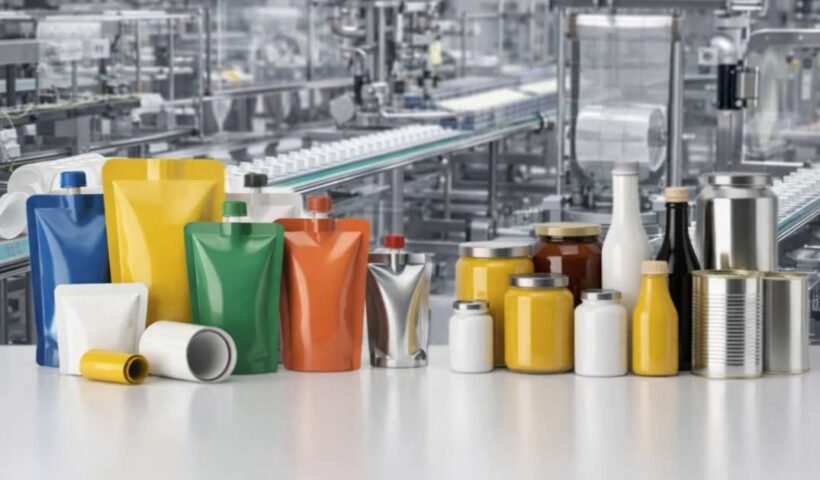
One of the most noticeable Latest Food Packaging Trends is the growing transition from rigid to flexible packaging formats across food categories. This shift is driven by efficiency, sustainability goals, and changing consumer lifestyles.
Brands now assess packaging choices based on performance and environmental impact. Many explore insights such as the benefits of flexible packaging over rigid containers to evaluate material efficiency and logistics advantages.
This transition explains why flexible solutions have become central to modern food packaging trends.
Why Flexible Formats Are Gaining Momentum
- Reduced material usage lowers overall environmental impact.
- Lightweight structures improve transportation and handling efficiency.
- Format adaptability supports multiple food categories and shelf types.
These advantages continue to influence how brands rethink long-term packaging strategies.
Flexible packaging solutions such as stand-up pouches are increasingly replacing rigid packaging across food categories.
How the Latest Food Packaging Trends Are Influencing Strategy
The Latest Food Packaging Trends are reshaping how brands think about packaging at a strategic level. Packaging decisions are no longer made in isolation but are tied to supply chain planning, sustainability commitments, and regulatory readiness.
Packaging as an Integrated Business Function
Food packaging design is now evaluated as part of a broader operational system. Brands assess how packaging performs across sourcing, production, distribution, and compliance rather than focusing only on shelf appearance.
This integrated approach reflects a shift within modern food packaging trends, where packaging supports long-term business continuity instead of short-term execution.
Alignment With Brand and Compliance Goals
Packaging strategy increasingly supports brand positioning and future regulations. Clear material choices, consistent design systems, and scalable formats help brands stay compliant while reinforcing trust.
These priorities show how Latest Food Packaging Trends are influencing decision-making beyond design teams.
Why Format Flexibility Matters More Than Ever
One of the strongest signals within the Latest Food Packaging Trends is the move toward adaptable packaging formats. Brands are seeking structures that can evolve alongside product lines and distribution models.
Moving Away From Fixed Packaging Structures
Rigid packaging formats often limit scalability and operational efficiency. In contrast, flexible solutions allow brands to respond faster to market changes and portfolio expansion.
Many decision-makers evaluate how flexibility improves performance over time.
Supporting Multi-Channel Distribution
Adaptable formats perform more consistently across retail, e-commerce, and logistics environments. This consistency reduces complexity while supporting modern food packaging design requirements.
As a result, flexibility has become a strategic advantage within current food packaging trends.
How Material Awareness Is Shaping Packaging Decisions
Material selection is becoming a defining factor in the Latest Food Packaging Trends, especially as sustainability expectations continue to rise. Brands must balance packaging performance with environmental responsibility.
Key factors shaping material-related decisions include:
- Recyclability and end-of-life recovery potential
- Barrier properties required for food safety and shelf life
- Overall lifecycle impact of packaging materials
Packaging teams now evaluate materials beyond visual appeal. The focus has shifted toward functional performance, regulatory readiness, and long-term sustainability alignment.
Understanding flexible packaging material helps teams choose sustainable, high-performing solutions while keeping packaging design consistent across products.
Instead of short-term substitutions, brands are developing material roadmaps aligned with evolving regulations and sustainable packaging trends. This approach reflects a more accountable and future-ready direction within modern food packaging trends.
How These Trends Shape Future Packaging Decisions
The Latest Food Packaging Trends are more than observations – they guide actionable choices. Brands are using insights from sustainability, design, and format flexibility to plan packaging that is efficient, adaptable, and aligned with long-term goals.
Packaging is now treated as a strategic tool, helping brands balance consumer needs, operational efficiency, and regulatory compliance while staying ahead of evolving food packaging trends.
Conclusion
The Latest Food Packaging Trends show a market shaped by sustainability, efficiency, regulatory alignment, and evolving consumer expectations. Food packaging design is no longer just functional – it is strategic, adaptable, and forward-looking.
Brands are translating trends into action by focusing on flexible formats, sustainable materials, and designs that build trust. Working with the best flexible packaging manufacturers helps businesses align packaging choices with long-term operational and environmental goals.
Ultimately, the future of food packaging lies in thoughtful, responsible design that balances performance, sustainability, and consumer trust – paving the way for the next era of packaging excellence.
Frequently Asked Questions (FAQs)
1. What are the latest trends in food packaging?
The Latest Food Packaging Trends focus on sustainability, convenience, and innovation. Modern food packaging design emphasizes eco-friendly materials, flexible formats, and designs that improve shelf appeal while reducing waste. Brands are adopting sustainable packaging trends to meet consumer expectations and regulatory requirements.
2. Who is the biggest packaging company in India?
One of the most trusted names in the Indian packaging industry is White Lotus Industries. They lead in providing innovative and flexible food packaging solutions that align with the latest industry trends and sustainability goals.
3. What is the best material to use for packaging?
The choice of material depends on product type, shelf life, and sustainability needs. Flexible materials like high-barrier films are widely preferred as they combine protection with eco-friendly options.
4. What is the future of food packaging?
The future is strategic, sustainable, and consumer-focused. Food packaging trends are moving toward smart, flexible, and recyclable solutions that enhance brand value while reducing environmental impact. Brands that adopt these trends and prioritize innovative food packaging design will lead the market.
5. Which type of food packaging is now used more?
Flexible formats, including stand-up pouches, flat-bottom pouch, and resealable packs, are increasingly preferred. These solutions support convenience, durability, and sustainability. Leaders like White Lotus Industries provide a wide range of such packaging options that align with the latest food packaging trends.