
Flexible packaging is an important part of product manufacturing. It helps protect products, maintain freshness, improve shelf appeal, and make storage and transportation easier. However, packaging expenses can become a major part of the overall production budget, especially for businesses that manufacture products in large quantities.
Many businesses want to reduce packaging expenses, but choosing cheaper materials or reducing packaging thickness without proper evaluation can affect product safety and performance. The better approach is to identify where costs can be optimized while maintaining the required packaging quality.
Understanding Flexible Packaging Costs can help businesses make smarter decisions about material selection, pouch dimensions, printing requirements, production quantities, and packaging designs.
Whether you manufacture food products, cosmetics, pharmaceuticals, beverages, or FMCG products, the right packaging strategy can help control expenses without affecting product protection.
In this guide, we will explore the major factors affecting packaging expenses and practical ways to reduce them without compromising quality.
What Are Flexible Packaging Costs?
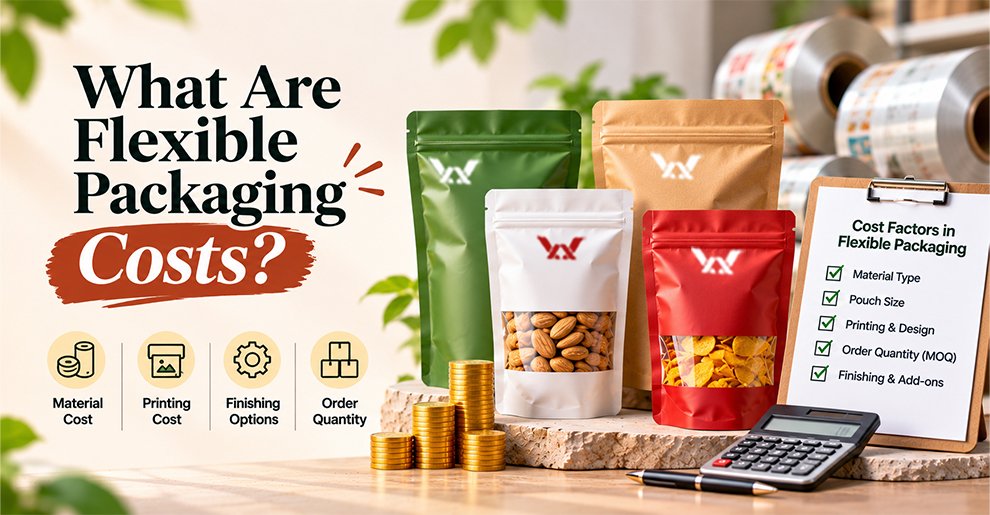
Flexible packaging costs refer to the total expenses involved in designing, manufacturing, printing, and delivering flexible packaging materials such as pouches, laminated films, and roll-form packaging.
Unlike standard packaging, flexible packaging can be customized according to product requirements. The final cost depends on the materials used, pouch dimensions, thickness, printing specifications, production quantity, and additional features.
For example, a basic three-side seal pouch may cost less than a customized stand-up pouch with a zipper, premium printing, and multiple barrier layers. This is because different packaging formats require different amounts of material and manufacturing processes.
The overall packaging expenses generally include:
- Material costs: Expenses related to PET, BOPP, PE, aluminium foil, metallized films, and other packaging materials.
- Printing costs: Expenses associated with artwork preparation, printing methods, colours, and printing cylinders or plates.
- Manufacturing costs: Costs involved in lamination, pouch conversion, sealing, and production.
- Customization costs: Additional expenses for zippers, spouts, tear notches, special shapes, and other features.
- Transportation costs: Expenses related to packaging storage, handling, and delivery.
Understanding these expenses helps businesses identify areas where they can make improvements and avoid unnecessary spending.
Different packaging formats have different material and manufacturing requirements. To understand the available options, explore the different types of flexible packaging used across various industries.
What Factors Affect Flexible Packaging Costs?
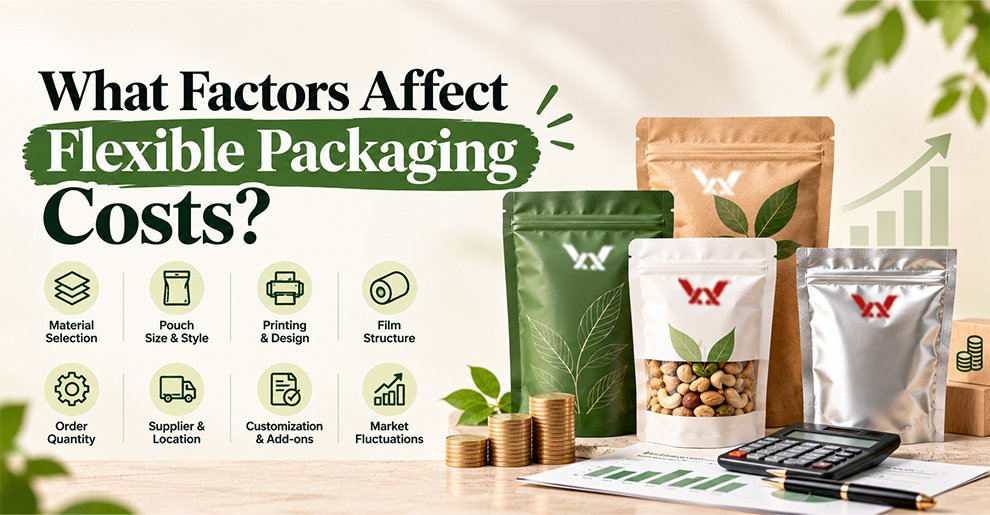
Several factors influence the final price of flexible packaging. Understanding these factors helps businesses compare supplier quotations and select packaging that meets their product requirements and budget.
1. Packaging Material Selection
Material selection is one of the most important factors affecting packaging expenses. Different materials provide different levels of strength, flexibility, print quality, and barrier protection.
Common flexible packaging materials include:
- PET (Polyethylene Terephthalate)
- BOPP (Biaxially Oriented Polypropylene)
- PE (Polyethylene)
- CPP (Cast Polypropylene)
- Metallized films
- Aluminium foil
- Multilayer laminated materials
For example, a snack product may require protection against moisture and oxygen to maintain freshness, while a liquid product needs suitable sealing strength and leak resistance.
Using a material with unnecessary barrier properties may increase costs. However, selecting an unsuitable low-cost material can affect product quality and shelf life.
The best approach is to select a material structure based on the product’s actual protection requirements.
Businesses comparing packaging options should also understand the differences between flexible packaging vs rigid packaging, particularly in terms of material usage, transportation, storage, and product protection.
2. Pouch Size and Dimensions
The size of a packaging pouch directly affects the amount of material required during manufacturing.
Larger pouches generally consume more material than smaller pouches. Similarly, oversized packaging can increase material usage without providing additional benefits.
Businesses should consider:
- Product weight and volume
- Required pouch dimensions
- Filling space
- Sealing area
- Storage requirements
- Transportation conditions
For example, a business packaging 100 g of dry fruits should select pouch dimensions that comfortably accommodate the product without leaving excessive empty space.
Optimizing pouch dimensions can help reduce unnecessary material consumption while maintaining sufficient space for filling and sealing.
3. Material Thickness and Barrier Properties
Material thickness plays an important role in determining packaging expenses. Thicker packaging generally requires more raw material, which can increase the overall cost.
However, reducing thickness without evaluating product requirements can create problems such as leakage, punctures, weak seals, or reduced product protection.
Different products require different barrier properties:
- Snacks may require moisture and oxygen protection.
- Coffee may need strong oxygen and aroma barriers.
- Spices may require protection against moisture, light, and aroma loss.
- Pharmaceutical products may require application-specific protection and suitable packaging compliance.
- Liquid products need appropriate sealing and leak resistance.
Businesses should evaluate material thickness and barrier performance together rather than focusing only on reducing micron levels.
The objective should be to use the minimum suitable material structure that meets the required strength, sealing, and product protection standards.
4. Printing and Design Requirements
Printing requirements can also influence packaging expenses. The number of colours, artwork complexity, printing method, and design variations can affect manufacturing costs.
For example, a pouch with multiple colours, detailed graphics, and different designs for several product variants may require additional printing preparation.
Businesses can manage these expenses by:
- Keeping packaging designs simple and organized.
- Avoiding unnecessary colour variations.
- Finalizing artwork before production.
- Maintaining consistent branding across product variants.
- Planning printing requirements according to order volume.
A well-planned packaging design can maintain brand identity without adding unnecessary production complexity.
5. Order Quantity and Production Volume
Order quantity can significantly influence the cost per pouch.
Packaging production involves setup, machine preparation, printing, and other manufacturing activities. When fixed setup expenses are distributed across a larger production quantity, the cost per unit may become more economical.
For example, businesses ordering larger quantities of the same packaging design may benefit from better production efficiency compared with multiple small orders.
However, bulk ordering is not always the best solution.
Before increasing order quantities, consider:
- Actual product demand
- Storage capacity
- Available working capital
- Number of product variants
- Packaging shelf life and artwork updates
The right order quantity should balance production savings with inventory requirements.
8 Ways to Reduce Flexible Packaging Costs
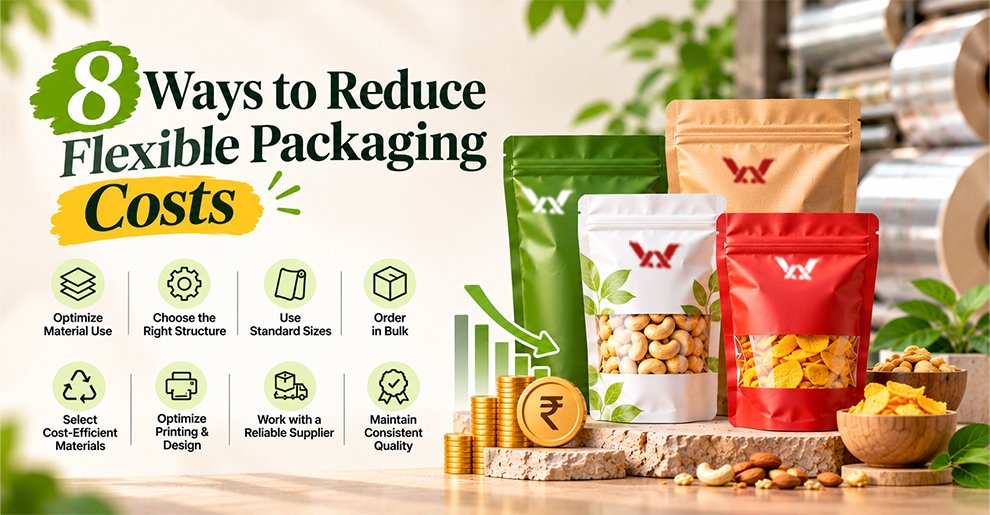
Reducing packaging expenses requires a combination of better planning, material optimization, and efficient production decisions. Here are eight practical ways businesses can manage packaging budgets without sacrificing product quality.
1. Choose the Right Packaging Material
Selecting the right packaging material can help control unnecessary expenses.
Instead of choosing the most expensive material structure, businesses should evaluate the protection their products actually require.
For example, products that need moderate moisture protection may not require the same material structure as products that need strong oxygen and light barriers.
Discuss your product requirements with an experienced packaging manufacturer to identify suitable material combinations.
The right selection can help maintain product protection while avoiding unnecessary material expenses.
2. Optimize Pouch Size and Dimensions
Choosing the correct pouch dimensions is another effective way to control packaging expenses.
Oversized pouches can increase material consumption, while undersized pouches may create filling difficulties and sealing problems.
Businesses should consider product weight, volume, filling equipment, and required sealing space before finalizing pouch dimensions.
For instance, if a product can be safely packed in a smaller pouch, there may be an opportunity to reduce material consumption without affecting its functionality.
Accurate pouch sizing also helps improve storage and transportation efficiency.
3. Avoid Unnecessary Material Thickness
Using excessive material thickness can increase manufacturing expenses.
However, reducing thickness without proper testing can compromise packaging strength and durability.
Businesses should work with their packaging suppliers to evaluate whether the existing laminate structure can be optimized.
Consider the following before making changes:
- Product weight and characteristics
- Required shelf life
- Puncture and tear resistance
- Sealing strength
- Transportation conditions
- Storage environment
Any material reduction should be validated through suitable packaging and product compatibility tests before large-scale production.
4. Simplify Packaging Design and Printing
Complex packaging designs can increase printing preparation and production requirements.
Businesses can reduce unnecessary printing expenses by maintaining consistent design elements across different product variants.
For example, using a common brand layout while changing only product-specific information can simplify artwork management.
Other useful practices include:
- Finalizing artwork before printing.
- Reducing unnecessary design variations.
- Selecting printing methods based on order volume.
- Avoiding frequent artwork changes.
- Planning product designs together where practical.
These steps can help reduce repeated setup work while maintaining attractive packaging.
5. Select a Cost-Effective Pouch Style
Different pouch styles have different material requirements and manufacturing processes.
Choosing a suitable pouch format can help businesses manage packaging expenses.
For example:
- Three-side seal pouches: Suitable for compact packaging and single-use applications.
- Stand-up pouches: Useful for products that need upright shelf presentation and convenient storage.
- Flat-bottom pouches: Suitable for products requiring a stable base and premium shelf appearance.
- Side-gusset pouches: Commonly used for products that need additional capacity.
- Spout pouches: Suitable for liquid and semi-liquid products requiring convenient dispensing.
The most economical format depends on the product, packaging quantity, required features, and manufacturing specifications.
Explore different flexible packaging pouch options to understand which format may suit your product requirements.
You can also read our guide on stand-up pouches vs flat pouches to understand their differences, applications, and cost considerations.
6. Plan Bulk Orders Strategically
Bulk ordering can help businesses achieve better per-unit pricing by distributing setup and production expenses across a larger quantity.
However, placing very large orders without understanding actual demand can create inventory problems.
A better approach is to analyze previous sales, production requirements, and future demand before finalizing order quantities.
Businesses should also consider whether they can standardize packaging dimensions or designs across multiple product variants.
This can make procurement and production planning more efficient.
7. Minimize Material Waste During Production
Material waste is another factor that can increase overall packaging expenses.
Poor artwork alignment, incorrect dimensions, printing errors, lamination defects, and production setup issues can lead to unnecessary material consumption.
Businesses can work with their manufacturing partners to improve production efficiency through:
- Accurate artwork and specification approval.
- Proper material planning.
- Consistent quality inspections.
- Suitable machine settings.
- Regular production monitoring.
- Effective inventory management.
Reducing avoidable production waste can help control manufacturing expenses while maintaining consistent packaging quality.
8. Work with an Experienced Packaging Manufacturer
Choosing the right packaging manufacturer can make a significant difference in long-term packaging expenses.
An experienced manufacturer can help businesses evaluate material structures, pouch formats, printing requirements, and production quantities according to their product needs.
Instead of selecting a supplier based only on the lowest quotation, businesses should compare:
- Manufacturing experience and capabilities.
- Available packaging formats.
- Material quality and specifications.
- Printing and customization options.
- Quality control processes.
- Production capacity.
- Delivery timelines.
- Relevant certifications and compliance documents.
White Lotus Industries offers customized flexible packaging solutions for different industries and product applications. Working with a packaging manufacturer that understands your requirements can help identify suitable packaging options and opportunities for cost optimization.
How to Reduce Costs Without Compromising Packaging Quality
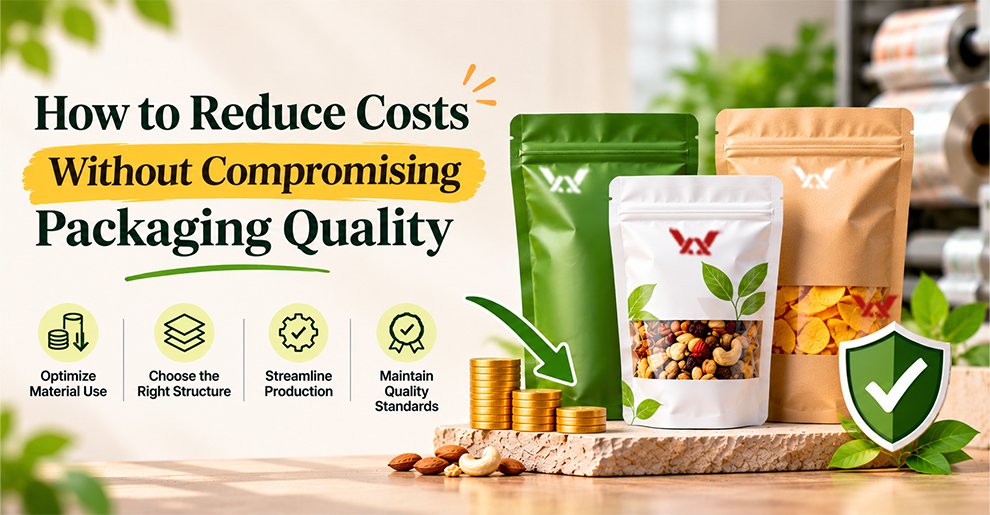
Reducing packaging expenses should never come at the expense of product safety, durability, or shelf life.
The most effective strategy is to improve packaging efficiency while maintaining the performance required for the product.
Here are some important considerations:
Focus on Total Packaging Value, Not Just the Initial Price
A cheaper pouch may appear economical initially, but if it causes leakage, product damage, or reduced shelf life, the overall business expense can increase.
Businesses should evaluate the complete value of packaging, including product protection, storage, transportation, and customer experience.
Test Material Performance Before Making Changes
Before changing material thickness or laminate structures, conduct suitable packaging performance tests.
Depending on the application, these may include:
- Seal strength testing.
- Puncture resistance testing.
- Drop testing.
- Leakage testing.
- Barrier performance evaluation.
- Product compatibility testing.
Testing helps identify potential issues before large production quantities are manufactured.
Maintain Consistent Quality Standards
Businesses should establish clear packaging specifications and quality requirements.
These may include material structure, thickness tolerance, printing accuracy, dimensions, sealing performance, and appearance.
Regular quality inspections can help identify production issues and maintain consistency between different batches.
Choose Features According to Product Requirements
Additional features such as zippers, spouts, transparent windows, and special finishes can improve packaging functionality.
However, not every product requires every feature.
For example, a resealable zipper may be useful for dry fruits and snacks that are consumed over multiple occasions, while a simple pouch may be sufficient for single-use products.
Selecting only the necessary features can help manage costs without reducing customer convenience.
The goal is to create packaging that provides the right balance of protection, functionality, appearance, and affordability.
How to Choose the Right Flexible Packaging Manufacturer
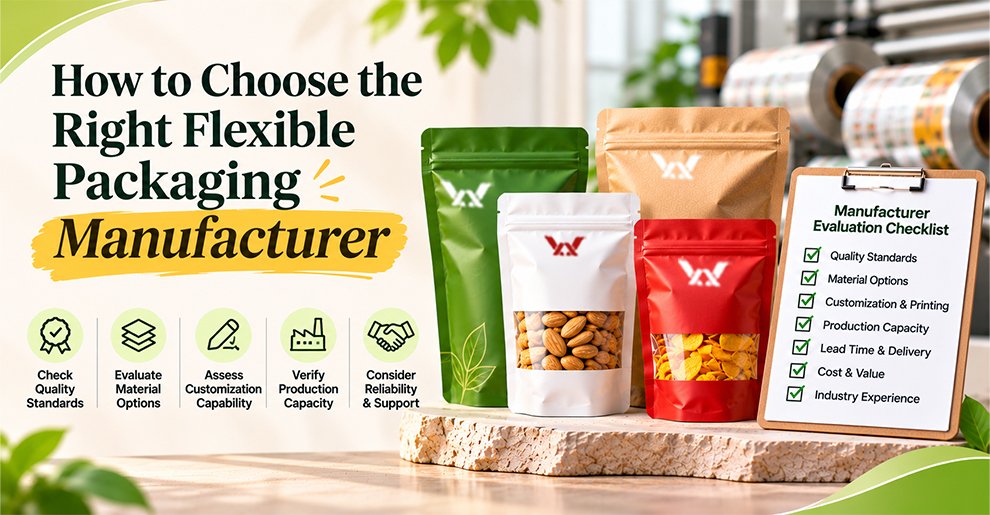
Selecting the right packaging manufacturer is an important decision for businesses looking to manage packaging expenses over the long term.
A suitable manufacturer should understand your product requirements and recommend packaging specifications that balance cost and performance.
Consider these factors before making your decision.
1. Check Manufacturing Experience
Look for a manufacturer with relevant experience in your product category and packaging requirements.
Different industries have different packaging needs. Food products, pharmaceuticals, cosmetics, and industrial goods may require different material structures and performance standards.
2. Evaluate Material and Packaging Options
Check whether the manufacturer offers suitable materials, laminate structures, pouch formats, and customization options.
Having access to different packaging formats can help you select the right solution for your application.
3. Understand Quality Control Processes
Ask about the manufacturer’s quality inspection procedures, testing facilities, material specifications, and relevant certifications.
These details help you understand how packaging quality is maintained during production.
4. Compare Quotations Carefully
Do not compare suppliers based only on the quoted price per kilogram or per pouch.
Ask for a clear breakdown of material specifications, thickness, printing charges, setup costs, order quantity, transportation, and other applicable expenses.
For a more detailed understanding of packaging quotations, read our guide on printed pouch for masala packing costs.
5. Review Customization and Production Capabilities
A good packaging manufacturer should be able to understand your product specifications and suggest suitable customization options.
White Lotus Industries provides flexible packaging solutions for different industries, including food and beverages, pharmaceuticals, FMCG, personal care, and industrial applications.
White Lotus Industries focuses on customized packaging solutions that consider product protection, material requirements, and packaging functionality.
Choosing the right manufacturing partner can help businesses make better purchasing decisions and manage packaging expenses more effectively.
Conclusion
Reducing packaging expenses does not mean choosing the cheapest material or compromising product quality. It requires a better understanding of material selection, pouch dimensions, printing requirements, order quantities, and production efficiency.
By choosing suitable packaging materials, optimizing pouch sizes, avoiding unnecessary features, planning bulk orders, and minimizing production waste, businesses can manage their packaging budgets more effectively.
At the same time, maintaining barrier protection, sealing strength, durability, and product compatibility is essential for ensuring reliable packaging performance.
White Lotus Industries understands that different products require different packaging solutions. By evaluating product requirements and selecting suitable flexible packaging formats, businesses can work towards achieving the right balance between cost, quality, and functionality.
FAQs
1. What factors affect flexible packaging costs?
Flexible packaging costs depend on several factors, including material selection, pouch size, material thickness, printing requirements, customization, and order quantity. The type of product and its protection requirements also influence the final packaging price.
2. How can businesses reduce flexible packaging costs?
Businesses can reduce flexible packaging costs by selecting suitable materials, optimizing pouch dimensions, simplifying printing designs, planning bulk orders, and minimizing production waste. Working with an experienced packaging manufacturer can also help identify cost-saving opportunities.
3. Does material thickness affect flexible packaging prices?
Yes, material thickness can affect flexible packaging prices because thicker materials generally require more raw material. However, reducing thickness without proper testing may affect packaging strength, sealing performance, and product protection.
4. Is bulk ordering more cost-effective for flexible packaging?
Bulk ordering can reduce the per-unit packaging cost because manufacturing setup and production expenses are distributed across a larger quantity. However, businesses should consider storage capacity, product demand, and inventory requirements before placing large orders.
5. Which packaging materials are more cost-effective?
The most cost-effective packaging material depends on the product, required shelf life, and protection requirements. Materials such as PET, BOPP, PE, and laminated films offer different properties. Businesses should select materials based on performance rather than price alone.