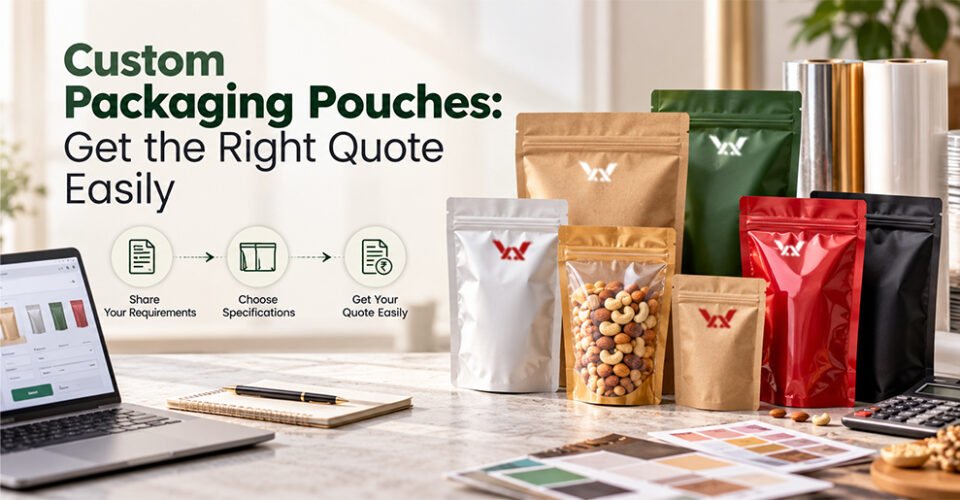
Choosing the right packaging is an important decision for any business. Whether you manufacture food products, cosmetics, pharmaceutical items, or other consumer goods, packaging plays a major role in protecting your products and presenting your brand. If you are planning to order custom packaging pouches, providing the right information to a manufacturer can make the quotation process easier and more accurate.
Many businesses request packaging quotations without knowing which details are required. Information such as product type, pouch dimensions, packaging material, printing requirements, and order quantity helps manufacturers understand the actual packaging needs.
Before contacting a packaging supplier, it is useful to prepare these details in advance. This helps avoid confusion, reduces unnecessary communication, and makes it easier to compare quotations from different manufacturers.
Why Is Accurate Information Important When Requesting a Quote?
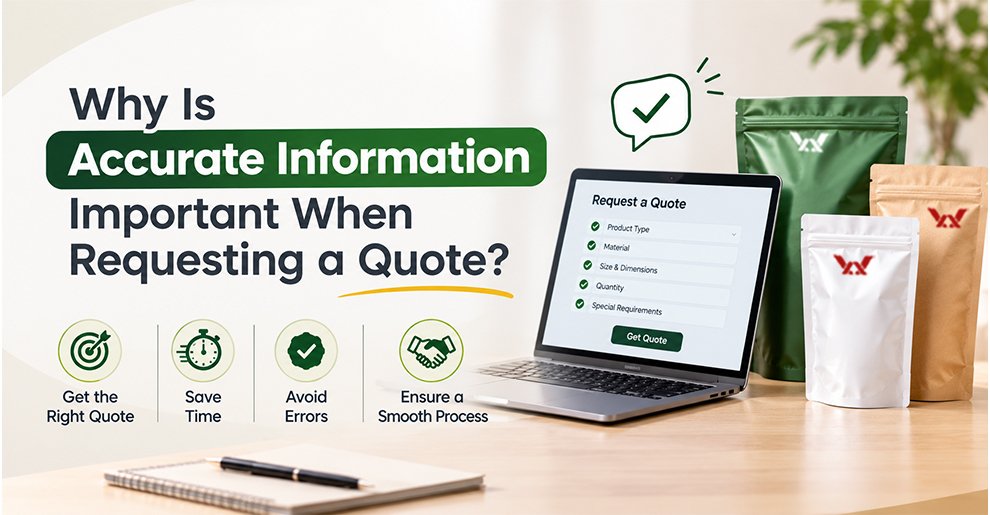
When requesting a packaging quotation, manufacturers need to understand your product requirements before suggesting a suitable packaging solution. Every product has different storage, protection, and presentation requirements. Therefore, the same packaging material or pouch design may not work for every application.
For example, a snack manufacturer may require packaging that protects products from moisture and maintains freshness, while a cosmetics brand may need packaging that offers product protection and attractive printing.
Sharing accurate information helps manufacturers:
- Understand your product and its packaging requirements.
- Recommend suitable materials and pouch structures.
- Estimate production costs more accurately.
- Suggest appropriate pouch sizes and designs.
- Understand printing and finishing requirements.
- Plan production according to your order quantity.
Providing clear specifications also makes communication easier between your business and the manufacturer. It helps both parties understand the expected packaging outcome before production begins.
What Information Should You Share Before Requesting a Quote?
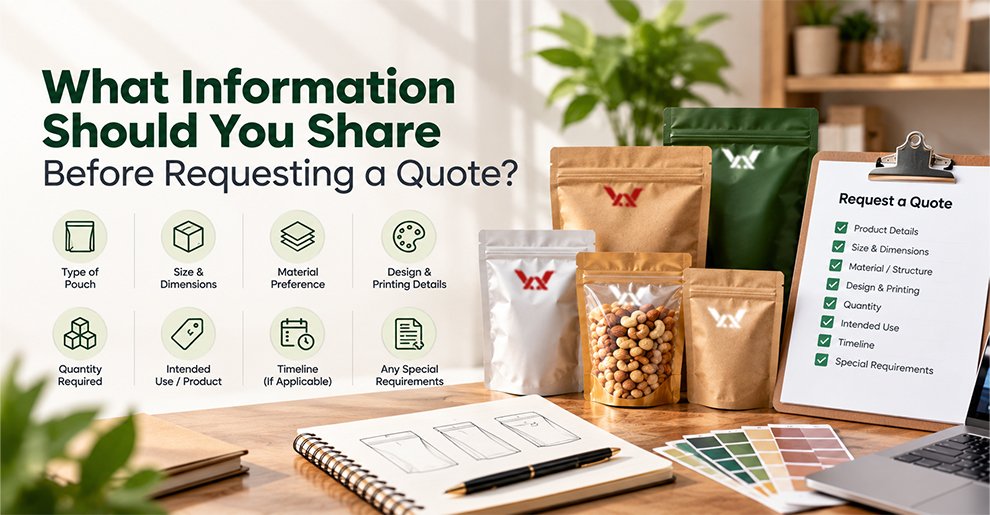
Before requesting a quotation for custom pouch packaging, prepare the following details. These specifications help manufacturers understand your expectations and recommend a packaging solution that matches your product requirements.
1. Product Type and Application
The first thing you should share is information about the product you want to pack. Different products require different packaging structures depending on their nature, storage conditions, and usage.
For example, dry food products may need moisture protection, while liquid products may require leak-resistant packaging.
Share details such as:
- Product name and category.
- Whether the product is solid, powder, liquid or semi-liquid.
- Product sensitivity to moisture, oxygen or light.
- Storage and transportation conditions.
- Intended market or application.
For example, if you manufacture spices, dry fruits, snacks or powdered food products, mention the product category clearly. This helps the manufacturer understand the packaging requirements and recommend suitable material options.
2. Required Pouch Size and Dimensions
Pouch dimensions are another important detail when requesting a quotation. The size of the pouch depends on the amount of product you want to pack and the available space required for filling and sealing.
You should share the following measurements:
- Pouch width.
- Pouch height or length.
- Bottom gusset, if required.
- Side gusset, if applicable.
- Required filling capacity.
If you already have a sample pouch, you can share its dimensions or send the physical sample to the manufacturer for reference.
If you are unsure about the correct size, provide the product weight and filling requirements. The manufacturer can help suggest suitable dimensions based on your product and preferred pouch style.
3. Packaging Material and Thickness
Material selection plays an important role in the performance of packaging. The right material helps protect products during storage, handling and transportation.
Different products may require different material structures depending on their shelf-life requirements, moisture sensitivity, oxygen exposure and packaging application.
When discussing material requirements, share:
- Preferred packaging material, if known.
- Required material thickness.
- Moisture and oxygen barrier requirements.
- Product shelf-life expectations.
- Storage conditions.
- Any specific packaging or compliance requirements.
Some packaging applications may require multilayer laminated structures to provide suitable barrier properties and durability.
If you do not know which material is appropriate, you can discuss your product requirements with a flexible packaging manufacturer to understand the available options.
4. Preferred Pouch Style
Packaging design is not limited to material and dimensions. The pouch style also affects product presentation, storage and convenience.
Before requesting a quote, decide which pouch format you prefer. Some commonly used options include:
- Stand-Up Pouches: Suitable for products that need upright shelf presentation.
- Flat Pouches: Commonly used for single-use products and lightweight packaging.
- Gusseted Pouches: Provide additional space for products requiring greater filling capacity.
- Zipper Pouches: Allow consumers to open and reseal packaging.
- Spout Pouches: Commonly used for liquid and semi-liquid products.
- Flat-Bottom Pouches: Offer a stable base and an attractive shelf appearance.
Internal linking opportunity: Link “different types of packaging pouches” to your relevant pouch-types blog or product category page.
If you are unsure about the right style, share your product details and packaging expectations with the manufacturer before finalising the design.
5. Printing and Artwork Requirements
Printing is an important part of custom packaging because it helps businesses display their brand identity and product information.
If you need printed pouches, share your artwork and design requirements before requesting a quotation.
Important details include:
- Brand logo and product name.
- Artwork or design files.
- Number of printing colours.
- Required printing quality.
- Front and back design preferences.
- Product information and regulatory details, where applicable.
If your artwork is not ready, inform the manufacturer about your design requirements. You can discuss the available printing options and prepare the final artwork before production.
Providing clear artwork specifications helps avoid design-related confusion and makes the printing process easier to plan.
6. Product Weight and Filling Capacity
The quantity of product that each pouch needs to hold is another important specification.
For example, a business selling dry fruits may require 100 g, 250 g or 500 g pouches, while a food manufacturer may need larger packaging formats for bulk products.
Share the following information:
- Weight or volume of the product per pouch.
- Required filling capacity.
- Product density, if available.
- Manual or automatic filling process.
- Any special filling requirements.
Remember that the same pouch dimensions may hold different quantities depending on the product’s density and physical form.
Providing accurate filling details helps manufacturers recommend an appropriate pouch size and structure.
7. Order Quantity and MOQ
Order quantity directly affects production planning and quotation calculations. Manufacturers need to know how many pouches you require to estimate material consumption and production requirements.
Before requesting a quote, mention:
- Initial order quantity.
- Expected monthly or annual requirement.
- Number of different designs or product variants.
- Whether you plan to reorder regularly.
- Preferred production schedule.
You should also ask about the manufacturer’s Minimum Order Quantity (MOQ). MOQ refers to the minimum quantity a manufacturer accepts for a particular production order.
For businesses planning multiple product variants, it is useful to discuss the quantity required for each design separately.
8. Special Packaging Features and Finishing
Some products require additional packaging features to improve convenience, product protection or shelf presentation.
Depending on your application, you may need:
- Resealable zipper closures.
- Tear notches for easy opening.
- Spouts for liquid products.
- Transparent windows to display the product.
- Matte or glossy finish.
- Special barrier properties.
- Easy-open or other functional features.
Not every feature is suitable for every product. Discuss your requirements with the manufacturer so they can help identify suitable options.
For example, a dry fruit brand may prefer a resealable zipper, while a liquid product manufacturer may require a spout pouch with suitable sealing properties.
9. Delivery Location and Expected Timeline
Delivery information is also important when requesting a packaging quotation. Manufacturing and delivery schedules may depend on order quantity, artwork approval, material availability and production requirements.
Make sure to share:
- Delivery city and location.
- Required delivery date.
- Whether the order is urgent.
- Expected repeat-order schedule.
- Any specific transportation or delivery requirements.
Sharing this information early helps the manufacturer understand your timeline and plan production accordingly.
What If You Are Unsure About Packaging Material Selection?
Not every business has technical knowledge about packaging materials, and that is completely normal. If you are requesting a quotation for the first time, you may not know which laminate structure, thickness, or barrier properties are suitable for your product.
In such situations, you do not need to select the material yourself. Instead, explain your product requirements and allow the manufacturer to suggest suitable options.
For example:
- Snacks and chips: May require moisture and oxygen protection to maintain freshness.
- Spices: Often need packaging that helps retain aroma and protects against moisture.
- Dry Fruits: May require suitable barrier properties to maintain product quality during storage.
- Liquid Products: Need packaging structures designed for liquid compatibility and reliable sealing.
- Cosmetic Products: Require material compatibility with the product formulation and suitable protection.
The right packaging structure depends on several factors, including product composition, shelf-life expectations, filling conditions, and storage environment.
You can also learn more about multilayer flexible packaging and its benefits to understand how different material layers contribute to packaging performance.
A reliable manufacturer should help you evaluate these requirements instead of recommending the same material for every product.
Common Mistakes to Avoid When Requesting a Packaging Quote
Even small mistakes in packaging specifications can create confusion during quotation and production. Before contacting a manufacturer, make sure you avoid these common mistakes.
- Providing Incomplete Product Information
Simply mentioning the product name may not be enough. Explain whether it is a powder, solid, liquid or moisture-sensitive product so the manufacturer can understand its packaging needs.
- Not Confirming Pouch Dimensions
Avoid estimating pouch dimensions without checking your filling requirements. Incorrect measurements may result in packaging that is too small or unnecessarily large.
- Ignoring Material Requirements
Choosing packaging only based on appearance can create problems later. Consider product protection, storage conditions and shelf-life expectations before finalising the material.
- Not Sharing Final Artwork
If you require printed packaging, share the latest artwork or clearly explain your design requirements. Changes made after artwork approval can affect production planning.
- Not Mentioning the Required Quantity
Always communicate your expected order quantity and number of designs. This helps the manufacturer understand your production requirements and discuss MOQ.
- Comparing Quotations Without Checking Specifications
A lower quotation does not always mean better value. Before comparing manufacturers, check whether the material structure, thickness, dimensions, printing and pouch features are similar.
Taking time to prepare accurate information can make the quotation process more straightforward and help you make a better purchasing decision.
Why Choose White Lotus Industries for Custom Packaging Pouches?
Choosing the right packaging partner is just as important as selecting the right pouch design. Businesses need a manufacturer that understands their product requirements and can provide packaging solutions according to their specific applications.
White Lotus Industries is a flexible packaging manufacturer established in 2011, offering customized flexible laminates and pouch solutions for different industries.
The company provides various packaging formats, including:
- Stand-up pouches
- Flat-bottom pouches
- Centre seal pouches
- Three-side seal pouches
- Side gusset pouches
- Spout pouches
- Shaped pouches
- Roll-form packaging
Businesses can explore different flexible packaging products to understand the available pouch formats and packaging options.
The company also focuses on customized material structures, product protection, printing requirements, and packaging functionality. Its BRCGS Grade B certification reflects its commitment to packaging quality and applicable manufacturing standards.
Whether you need packaging for food products, beverages, cosmetics, pharmaceuticals or other applications, discussing your requirements with an experienced manufacturer can help you identify a suitable solution.
White Lotus Industries works with businesses to understand their packaging needs and develop customized solutions based on product specifications, design preferences and production requirements.
Conclusion
Requesting a quotation for custom packaging does not have to be complicated. The key is to provide the manufacturer with clear and accurate information about your product, pouch dimensions, material preferences, printing requirements, order quantity, and delivery expectations.
When these details are available in advance, manufacturers can better understand your requirements and suggest suitable packaging options.
If you are planning to order custom packaging pouches, take time to prepare your specifications before contacting a supplier. A clear discussion at the beginning can help reduce confusion, improve quotation accuracy, and make the overall packaging process easier.
Working with an experienced packaging partner like White Lotus Industries can also help you explore suitable pouch formats and material structures according to your business requirements.
FAQs
1. What information is required to request a quote for custom packaging pouches?
To request a quote, you should share your product type, required pouch size, material preference, thickness, printing design, order quantity and delivery location. These details help manufacturers understand your requirements and provide a more accurate quotation.
2. How do I choose the right material for custom pouch packaging?
The right material depends on the product you want to pack, its shelf-life requirements and storage conditions. For example, food products may require moisture or oxygen barriers, while liquid products need suitable leak-resistant packaging structures. A flexible packaging manufacturer can help recommend suitable material options.
3. Does pouch size affect the cost of custom packaging?
Yes, pouch size can affect packaging costs because it influences material consumption and manufacturing requirements. Larger pouches generally require more material, while additional features such as gussets, zippers and special finishes may also affect the final quotation.
4. What is the minimum order quantity (MOQ) for custom packaging pouches?
Minimum order quantity varies depending on the manufacturer, pouch type, material structure, printing requirements and production process. It is best to discuss your required quantity and design variations with the manufacturer before confirming an order.
5. Can I get custom-printed packaging pouches with my brand logo?
Yes, custom-printed pouches can include your brand logo, product name, artwork, product information, and other design elements. You should provide your artwork and printing preferences to the manufacturer before production.