
Medicines are sensitive. One damp storeroom or one cracked strip can ruin an entire batch. That’s exactly why pharmaceutical pouch packaging has become the backbone of how drugs travel from factory to patient safely.
Not every film works for every drug. Powders need different protection than liquids, and tablets need something else entirely this is exactly where pharmaceutical packaging materials make all the difference.
Walk into any pharmacy today and you’ll spot small single-dose strips everywhere that’s pharma sachet packaging quietly doing its job. It’s cheap to produce, easy to carry, hard to tamper with, and it’s why more brands keep switching to it every year.
Why Pharmaceutical Pouch Packaging Matters in the Healthcare Industry
Healthcare products can’t afford weak protection. Pharmaceutical pouch packaging keeps medicines safe from moisture, air, and contamination while they move through long, unpredictable supply chains before reaching patients.
Role of Packaging in Drug Safety and Shelf Life
Good pharmaceutical packaging materials stop moisture and oxygen from breaking down active ingredients too early, keeping medicines effective right up until their expiry date.
Small doses need extra care too. Pharma sachet packaging protects single-use powders and liquids from spoilage, making sure each dose stays exactly as potent as the day it was sealed.
Regulatory Importance of Pharmaceutical Pouch Packaging
Health authorities don’t take shortcuts on packaging. Pharmaceutical pouch packaging must meet strict safety and labeling rules before any drug batch is cleared for sale or export.
These regulations exist for a reason. Non-compliant packaging can delay shipments, trigger recalls, or worse put patient safety at serious risk across markets.
Key Properties of Pharmaceutical Packaging Materials
Not every film can go near medicine. Pharmaceutical pouch packaging needs to block moisture, block light, resist punctures, and still stay easy to open all at the same time.
Moisture and Oxygen Barrier Protection
Damp air is the enemy of most drugs. Strong pharmaceutical packaging materials use multi-layer films that stop water vapor and oxygen from reaching the formulation inside, so tablets, powders, and capsules stay stable for their full shelf life without losing strength or effectiveness.
Tamper-Evidence and Child Resistance
Safety seals aren’t optional in this industry. Most pharma sachet packaging now comes with tamper-evident seals that show visible damage if opened early, plus child-resistant features that keep curious kids away from strips, syrups, and loose tablets at home.
Light Protection for Sensitive Formulations
Some medicines break down the moment they see sunlight. Opaque or metallized layers block UV rays and visible light completely, protecting light-sensitive vitamins, injectables, and hormone-based formulations from losing potency while sitting on a pharmacy shelf for months.
Why Barrier Films Matter for Tablets and Capsules
Tablets absorb moisture faster than people realize. A weak film lets humidity creep in slowly, causing tablets to soften, crumble, or lose their coating which is why solid-dose products always need a proper high-barrier laminate structure.
Why Barrier Films Matter for Powdered Medicines
Powders are far more sensitive than solid tablets. Pharmaceutical pouch packaging for powdered antibiotics, ORS, and protein blends needs an airtight seal, since even a tiny leak can clump the powder or ruin its dosage accuracy completely.
If you’re unsure which structure fits your product, our earlier guide on How to Choose the Right Flexible Packaging Material for Food Products breaks down the same barrier logic that applies here too moisture, oxygen, and light protection work the same way across pharma and food.
Types of Pharmaceutical Packaging Materials Used
Choosing the wrong film costs more later. Most pharmaceutical pouch packaging relies on a handful of proven structures, and picking the right one depends entirely on what’s going inside the pack.
PET / AL / PE Laminates
This is the most common structure used across the industry. These pharmaceutical packaging materials combine polyester for strength, aluminum foil for a complete moisture and light barrier, and polyethylene for heat sealing giving powders and granules near-total protection.
Cold Form Foil (CFF)
Cold form foil skips the usual thermoforming heat, using pressure instead to shape cavities around each dose. Most pharma sachet packaging and blister-style strips rely on this structure when a drug is extremely sensitive to moisture, oxygen, or light exposure.
BOPP-Based Films
BOPP films bring clarity, strength, and a smooth printable surface to the table. These pharmaceutical packaging materials work well for over-the-counter products and supplements where sharp branding matters, though they offer a lighter barrier than foil-based structures.
Recyclable Mono-Material Films
Sustainability is finally catching up with pharma packaging too. Mono-material films use a single type of plastic instead of mixed layers, making the pack easier to recycle while still holding up against moisture and tearing during transport and storage
Pharma Sachet Packaging: The Most Preferred Format
Small packs are winning big in pharma today. Pharmaceutical pouch packaging in sachet form now dominates shelves because it’s cheaper, lighter, and simpler to distribute than glass or plastic bottles.
What is Pharma Sachet Packaging?
A sachet is a small sealed pack holding a single dose. Pharmaceutical pouch packaging in this format keeps each unit fresh, hygienic, and ready to use without any measuring or spillage involved.
Single-Dose Sachets vs Bulk Sachets
Single-dose sachets suit one-time use like ORS or vitamin sachets, while bulk sachets hold larger quantities meant for hospitals, clinics, or multi-day courses of powders and supplements.
Powder and Granule Sachet Packaging
Powdered antibiotics, electrolyte mixes, and granules need an airtight seal so moisture never enters. A slight leak can clump the contents and throw off the entire dosage accuracy.
Liquid and Syrup Sachet Packaging
Cough syrups, oral suspensions, and liquid supplements need leak-proof seals with strong seams, since even a small puncture during transport can waste the entire single dose inside.
Why Brands Choose Pharma Sachet Packaging Over Bottles
Bottles are bulky, heavy, and expensive to ship. Sachets cut material costs, reduce shipping weight, and let brands offer trial-size or travel-friendly doses that bottles simply can’t match.
Types of Pouches Used in Pharmaceutical Pouch Packaging
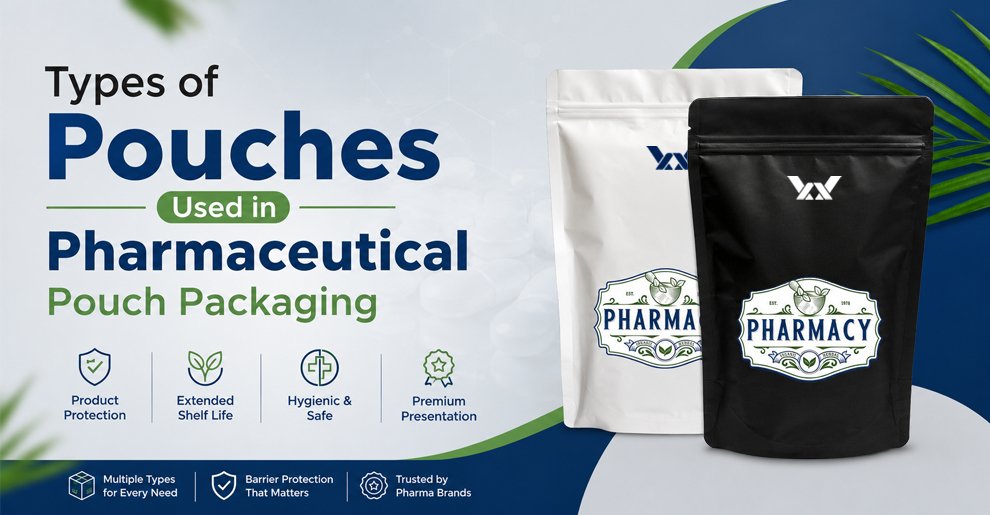
Different pack shapes serve different pharma needs. From single tablets to bulk powders, each pouch format is built to solve one specific packaging problem.
3-Side Seal Pouches for Sachets
These flat, compact pouches are sealed on three sides, making them ideal for single-dose sachets like ORS, vitamins, and small powder or liquid samples.
4-Side Seal Pouches for Tablets/Capsules
Sealed on all four edges, these pouches offer extra strength and a flat, stable shape — perfect for protecting tablets and capsules during handling and transport.
Stand-Up Pouches for Nutraceutical Supplements
Stand-up pouches give supplements a strong shelf presence and easy self-standing storage. Brands rely on pharmaceutical pouch packaging in this format for protein blends, multivitamins, and bulk nutraceutical powders.
Center Seal Pouches for Bulk Pharma Packaging
Center seal pouches run efficiently on high-speed filling lines, making them the go-to choice for bulk pharma powders, hospital-supply packs, and large-volume wholesale orders.
Pouch shape isn’t the only thing that decides how well a product sells the same design thinking applies to household goods too, and our guide on Detergent Powder Packaging Design: How to Choose a Pouch That Sells shows how the right pouch format directly drives shelf appeal and purchase decisions.
Compliance and Quality Standards in Pharmaceutical Packaging
Quality can’t be assumed in this industry, it has to be certified. Every pack must pass strict global checks before it ever touches a medicine.
BRCGS Certification and Global Standards
BRCGS certification confirms that pharmaceutical pouch packaging meets recognized hygiene, safety, and traceability standards, giving both manufacturers and buyers confidence across international markets and export shipments.
GMP-Compliant Packaging Practices
Good Manufacturing Practices ensure pharmaceutical packaging materials are produced in clean, controlled environments, reducing contamination risk and keeping every batch consistent, traceable, and safe for patient use.
How to Choose the Right Pharmaceutical Pouch Packaging
Picking the right pack isn’t guesswork. It depends on the drug’s form, dosage size, storage needs, and how far it has to travel.
Factors to Consider (Product Type, Dosage, Storage Conditions)
Before finalizing pharmaceutical pouch packaging, brands should evaluate whether the product is a powder, liquid, or solid, how it’s stored, and how many doses each pack needs to hold.
Checklist for Selecting Pharma Packaging Materials
Check barrier strength, seal integrity, tamper-evidence, printability, and regulatory compliance — getting these right in pharmaceutical pouch packaging upfront avoids costly redesigns and rejected batches later.
Benefits of Pharmaceutical Pouch Packaging Over Traditional Packaging
Bottles and boxes are slowly losing ground. Pouches now offer more protection, more savings, and more flexibility for pharma brands.
Cost-Efficiency and Lightweight Transport
Compared to bottles, pharma sachet packaging weighs far less, cuts freight costs significantly, and lets manufacturers fit more units into the same shipping space without added expense.
Better Shelf Presence and Branding
Pouches offer a larger, cleaner surface for printing dosage details, branding, and instructions clearly, helping products stand out on crowded pharmacy shelves far better than plain bottles.
Future Trends in Pharmaceutical Packaging Materials
Packaging in this space keeps evolving fast. Sustainability and security are now shaping how new formats get designed.
Sustainable and Recyclable Pharma Packaging
Brands are shifting toward mono-material and recyclable films that reduce plastic waste, aligning with global environmental regulations without compromising the drug’s safety or shelf life.
Smart Packaging and Anti-Counterfeit Features
QR codes, holograms, and tamper-indicating seals are becoming standard in pharmaceutical pouch packaging, helping brands fight counterfeiting while giving patients an easy way to verify authenticity.
Conclusion
Choosing the right pack isn’t a small decision in the pharma world it directly affects drug safety, shelf life, and how confidently a brand can move into new markets. From barrier films to tamper-evident seals, every material choice plays a role in protecting what’s inside, whether it’s a single-dose sachet, a strip of tablets, or a bulk supply of powders.
Compliance with global standards like BRCGS and GMP isn’t optional either; it’s what separates a reliable manufacturer from a risky one. As sustainability and anti-counterfeit technology continue shaping the industry, brands need a packaging partner who understands both compliance and innovation.
That’s exactly where whitelotusindustries comes in, offering pharma-compliant pouches built for safety, durability, and export-ready quality. Whether you’re packaging supplements, syrups, or sachets, the right structure can protect your product and your brand’s reputation at the same time.
FAQs
Q1. What is pharmaceutical pouch packaging?
It’s flexible packaging designed specifically for medicines, supplements, and pharma powders, using barrier films that protect against moisture, light, and contamination throughout storage and transport.
Q2. What materials are used in pharma sachet packaging?
Common materials include PET/AL/PE laminates, cold form foil, and BOPP-based films, chosen based on the drug’s sensitivity to moisture, light, and oxygen exposure.
Q3. Is pouch packaging safe for medicines?
Yes, when manufactured under GMP and BRCGS-certified processes, pouches offer strong, tamper-evident, and hygienic protection suitable for tablets, powders, liquids, and supplements.
Q4. What is the MOQ for pharma packaging?
The minimum order quantity is typically 500 kg, though this can vary slightly depending on the pouch type and material structure requested.
Q5. Do you provide custom pharmaceutical packaging?
Yes, custom sizes, materials, and printing options are available based on the product type, dosage form, and specific regulatory requirements of each brand.