
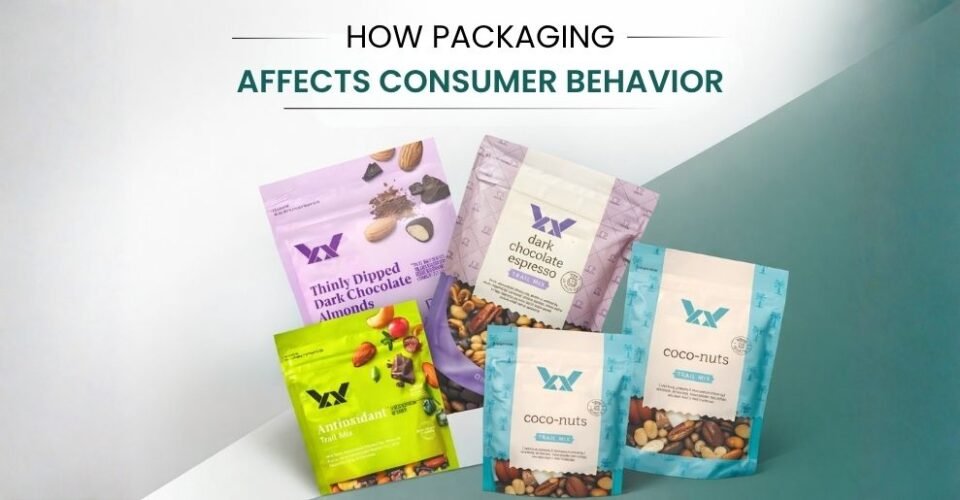
How packaging affects consumer behavior is simply about how packaging influences what people notice, feel, and ultimately buy. When a customer sees a product, packaging creates the first impression and helps them decide whether the product looks trustworthy, useful, or worth trying. This decision often happens within seconds.
The role of packaging in branding becomes important because consistent design, colors, and structure help consumers recognise and trust a brand. Packaging as a marketing tool also works by making products stand out on shelves or online, while clearly communicating quality, purpose, and ease of use. These factors together guide the consumer’s final choice.
To better understand how packaging affects consumer behavior, it is important to look at the psychological factors that influence attention, trust, and buying decisions.
Psychological Factors Behind Consumer Packaging Decisions
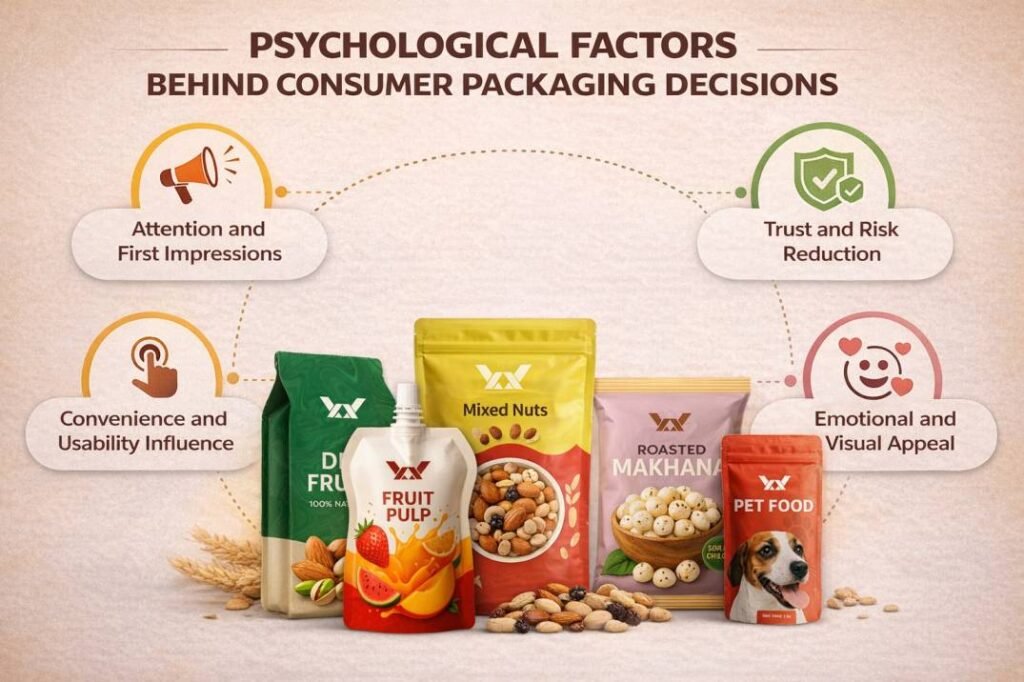
Consumer decisions are rarely random. Most buying choices are influenced by quick mental judgments based on what people see and feel. This is where understanding how packaging affects consumer behavior becomes important, as packaging directly interacts with these psychological triggers.
From attention to trust and emotional connection, packaging works as a silent decision-maker. The way a product looks, feels, and functions can strongly influence whether a consumer chooses it or ignores it.
1. Attention and First Impressions
Consumers usually scan shelves or screens in seconds, not minutes. Packaging that is visually clear and well-structured immediately grabs attention and enters the consideration set. If it fails at this stage, the product is often ignored.
The role of packaging in branding becomes visible here, as consistent colors and layout help in quick recognition. Formats like a flat bottom pouch improve front-facing visibility, making the product stand out more effectively.
Strong first impressions increase the chances of product selection.
2. Trust and Risk Reduction
Consumers naturally avoid risk, especially when trying a new product. Packaging quality acts as a signal of reliability, helping people decide whether the product is safe and worth buying. Poor packaging instantly creates doubt.
The importance of structure and sealing becomes clear when products need to maintain freshness and integrity. Many brands work with the best flexible packaging manufacturers to ensure consistent quality and reduce uncertainty.
Higher trust leads to faster and more confident buying decisions.
3. Convenience and Usability Influence
Modern consumers prefer products that are easy to use, store, and carry. Packaging that improves convenience directly impacts satisfaction after purchase, further reflecting how packaging affects consumer behavior. This influences whether a customer will buy again.
For example, a zipper lock pouch allows resealing, which helps maintain freshness and usability over time. Packaging as a marketing tool works strongly when it improves everyday experience.
Convenience often turns a one-time buyer into a repeat customer.
4. Emotional and Visual Appeal
Consumers naturally avoid risk, especially when trying a new product. Packaging quality acts as a signal of reliability, helping people decide whether the product is safe and worth buying, clearly showing how packaging affects consumer behavior. Poor packaging instantly creates doubt.
Unique formats like shaped pouches create visual differentiation and make products more memorable. This shows how packaging affects consumer behavior through emotional impact.
Stronger emotional appeal improves recall and brand preference.
How Packaging Works as a Marketing Tool in Consumer Decisions
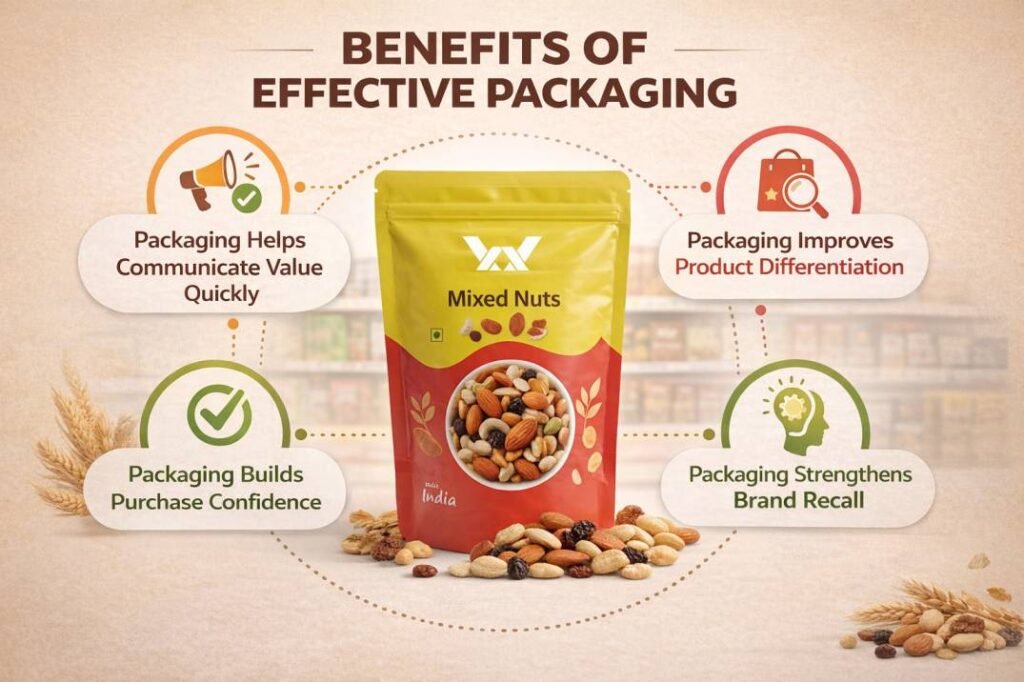
Packaging today works as a direct marketing channel that influences how consumers see, compare, and choose products. Instead of relying only on ads, brands use packaging to communicate value, quality, and usability instantly. This is where how packaging affects consumer behavior becomes more practical and visible.
Packaging as a marketing tool helps reduce decision time by making products easier to understand and more appealing. When structure, design, and function align, consumers are more likely to trust and select the product.
Packaging Helps Communicate Value Quickly
- Shows product quality through design and structure
- Helps consumers understand product use instantly
- Reduces confusion during purchase decisions
- Builds a perception of reliability and safety
For example, a 4 side seal pouch offers a clean and structured appearance, which helps communicate product integrity and consistency.
Packaging Improves Product Differentiation
- Makes products stand out in crowded shelves or listings
- Highlights brand identity through unique structure
- Helps consumers compare products faster
- Increases chances of product selection
To understand these structural differences better, brands often explore different Types of Packaging Pouches before finalizing their packaging strategy.
Packaging Strengthens Brand Recall
- Creates familiarity through consistent design
- Helps consumers recognise products instantly
- Reduces decision effort during repeat purchases
- Builds long-term brand memory
Formats like a 2 side gusset pouch are commonly used for staple products, helping consumers associate structure with specific product categories.
Packaging Builds Purchase Confidence
- Signals product safety through strong sealing
- Improves trust with clean and professional design
- Reduces hesitation during first-time purchase
- Enhances perceived product value
To evaluate performance and cost advantages, many brands review the Benefits of Flexible Packaging Over Rigid Containers before making packaging decisions.
Evolving Consumer Expectations from Modern Packaging
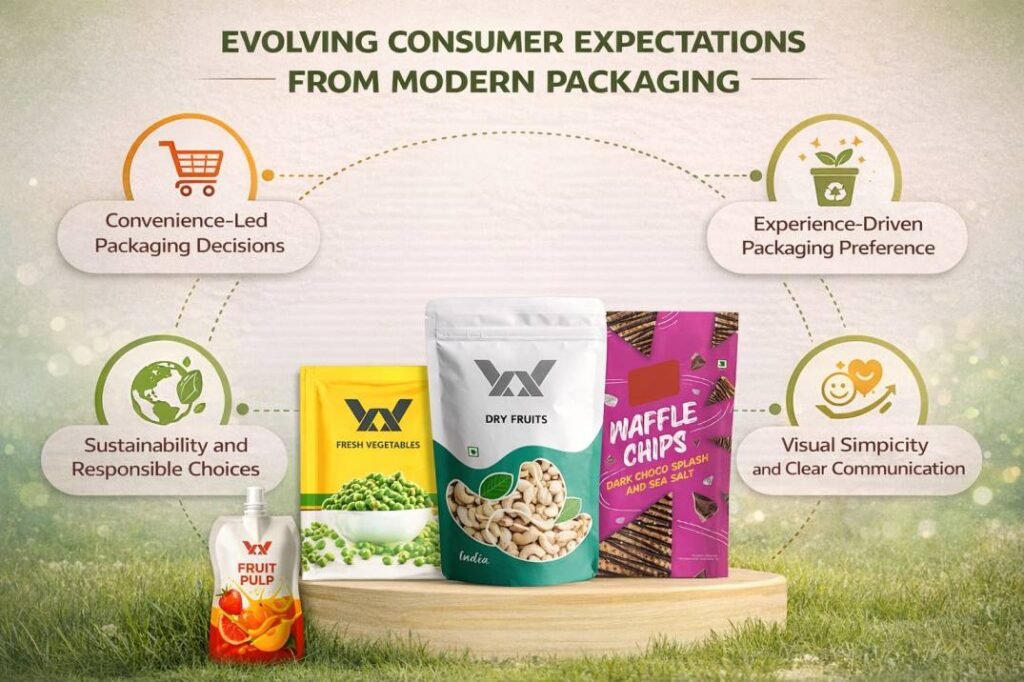
As packaging moves from a functional role to a strategic one, consumer expectations are also changing rapidly. After understanding product-based packaging impact, it becomes clear that behavior is now influenced by convenience, sustainability, and experience together. This shift further explains how packaging affects consumer behavior in modern markets.
Brands are no longer competing only on product quality. They are competing on packaging experience, usability, and perception across different touchpoints.
Convenience-Led Packaging Decisions
Modern consumers prefer packaging that simplifies usage and reduces effort. Easy opening, resealing, and portability are no longer optional features but expected standards. Convenience directly affects satisfaction and repeat buying behavior.
Where Convenience Creates Impact
- Easy-to-open and resealable formats improve daily usability
- Lightweight structures support portability
- Controlled dispensing reduces wastage
- Storage-friendly formats improve home organisation
Packaging formats that improve usability naturally perform better in competitive markets.
Sustainability and Responsible Choices
Consumers are becoming more aware of environmental impact, and this awareness is shaping buying preferences. Packaging that reflects responsibility often gains stronger trust and long-term acceptance.
What Consumers Look For
- Reduced material usage and lightweight formats
- Recyclable or reusable packaging structures
- Minimalist food packaging design
- Lower environmental footprint
As highlighted in Latest Food Packaging Trends, sustainability is no longer a trend but a core expectation influencing purchasing decisions.
Visual Simplicity and Clear Communication
Clarity in packaging design helps consumers understand products faster. Clean layouts, readable information, and structured design reduce confusion and improve decision speed.
Key Elements That Improve Clarity
- Simple and readable typography
- Clear product visibility and information hierarchy
- Balanced use of colors and space
- Consistent design across product lines
Clear communication strengthens the role of packaging in branding and improves consumer confidence.
Experience-Driven Packaging Preference
Consumers increasingly value the overall experience, not just the product itself. Packaging contributes to this experience through touch, usability, and presentation.
Experience Factors That Influence Behavior
- Smooth handling and tactile feel
- Premium look for better perception
- Ease of carrying and storage
- Consistency across multiple uses
This shift shows that packaging as a marketing tool is now directly linked to user experience and brand loyalty, reinforcing how packaging affects consumer behavior in modern markets.
Key Benefits of Packaging in Influencing Consumer Behavior
Packaging directly shapes how consumers notice, understand, and choose products in competitive markets. A well-structured design improves clarity, usability, and trust, which ultimately drives faster purchase decisions. This clearly shows how packaging affects consumer behavior at multiple stages of the buying journey.
Builds Instant Product Recognition
Consistent packaging design helps consumers quickly identify a product among multiple options. This reduces decision time and strengthens the role of packaging in branding, especially in crowded retail and online environments.
Enhances Perceived Product Value
High-quality materials and clean presentation create a premium feel. Consumers often associate better packaging with better product quality, reinforcing trust and increasing willingness to purchase.
Improves User Convenience
Packaging that is easy to open, store, and reuse improves the overall experience. This is where packaging as a marketing tool works beyond visuals and directly impacts repeat buying behavior.
Common Packaging Mistakes That Reduce Consumer Trust
Packaging mistakes can quickly damage perception and reduce product credibility. Even a strong product can struggle if packaging creates confusion or inconvenience. This reflects the negative impact of how packaging affects consumer behavior when expectations are not met.
- Overcomplicated design that confuses product purpose
- Weak sealing or poor material quality affecting durability
- Lack of clear product information or readability issues
- Inconsistent branding across different products
- Ignoring convenience features like resealing or easy handling
To avoid these issues, many businesses analyse standards followed by the best flexible packaging manufacturers and align their packaging accordingly.
Strategic Packaging Decisions That Influence Buying Behavior
Packaging decisions today are closely linked with consumer expectations, usability, and market positioning. Brands that focus on clarity, structure, and functionality create a stronger impact at the point of purchase. This further strengthens how packaging affects consumer behavior in real buying scenarios.
As consumer preferences evolve, packaging must balance performance with perception. Material selection, design simplicity, and structural efficiency all contribute to how a product is judged even before use.
- Focus on clean and minimal food packaging design
- Prioritise lightweight and efficient structures
- Improve product visibility and information clarity
- Enhance usability through functional packaging formats
- Align packaging with sustainability expectations
Final Thoughts
The concept of how packaging affects consumer behavior clearly shows that packaging is more than just protection. It influences how consumers perceive products, build trust, and make purchase decisions in competitive markets.
Brands that focus on design, structure, and usability create stronger connections with their audience. Consistent and thoughtful packaging improves recognition, enhances experience, and drives repeat purchases over time.
Industry contributors such as White Lotus Industries Limited continue to support this evolution by aligning packaging innovation with changing consumer expectations and market demands.
Frequently Asked Questions (FAQs)
1. How packaging affects consumer behavior in retail?
How packaging affects consumer behavior in retail depends on visibility, design, and clarity. Attractive packaging grabs attention, builds trust, and helps consumers quickly decide which product to choose among many options.
2. What is the role of packaging in branding?
The role of packaging in branding is to create recognition and consistency. Packaging design, colors, and structure help consumers identify a brand instantly and build long-term trust through a familiar visual identity.
3. Why is packaging considered a marketing tool?
Packaging as a marketing tool works by communicating product value without direct promotion. It highlights features, improves shelf appeal, and influences purchase decisions through design, structure, and usability.
4. How does packaging design influence buying decisions?
The importance of packaging design lies in its ability to create first impressions. Clear information, strong visuals, and user-friendly formats reduce confusion and increase the chances of product selection.
5. Can packaging impact repeat purchases?
Yes, packaging directly impacts repeat buying. When packaging is easy to use, durable, and consistent, it improves customer experience and strengthens trust, showing how packaging affects consumer behavior over time.