Recyclability is no longer a secondary consideration in packaging decisions. Brands today are expected to align with sustainability standards while maintaining performance and cost efficiency. This shift has made what is recyclable packaging a critical question for manufacturers, procurement teams, and brand owners across industries.
Ignoring recyclability is no longer just an environmental concern-it has direct business consequences. Regulatory frameworks like Extended Producer Responsibility (EPR) are tightening, while consumers increasingly prefer brands that demonstrate responsible packaging practices. Non-compliant packaging can lead to penalties, higher costs, and loss of market trust.
At the same time, advancements in materials and manufacturing are making recyclable formats more practical and scalable. Packaging is no longer just about protection-it is about long-term sustainability, compliance, and operational efficiency. This makes understanding recyclable packaging essential for any business working with modern supply chains.
What is Recyclable Packaging?
What is recyclable packaging refers to packaging materials designed to be collected, processed, and reused after use, reducing waste and dependence on virgin resources. It includes materials like paper, glass, metals, and certain plastics that can re-enter production cycles when handled correctly.
Modern recyclable formats are increasingly developed by specialized flexible packaging manufacturers that focus on mono-material structures and recyclable laminates to meet both performance and sustainability requirements.
How Recyclable Packaging Works in Real Life
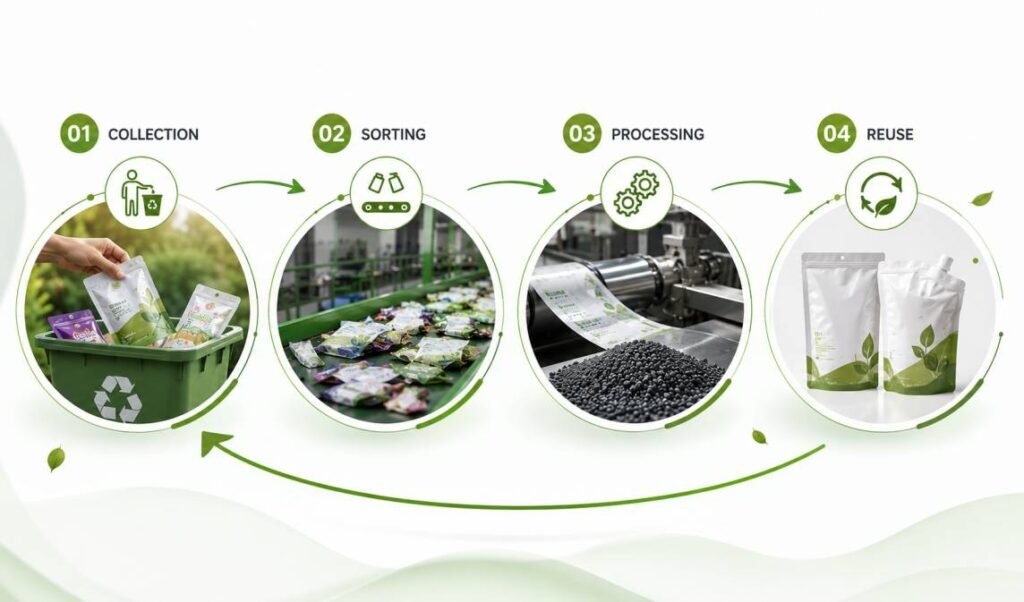
Recyclability depends on how effectively packaging moves through the recovery system after use. The choice of recyclable packaging materials at the manufacturing stage directly impacts how efficiently this cycle works in practice.
The process follows a structured lifecycle from disposal to reuse, where each step determines whether the material retains value or becomes waste.
- Collection – Used packaging is collected through municipal systems, retail take-back programs, or industrial waste channels after consumer use.
- Sorting – Materials are separated at recycling facilities based on type, composition, and recyclability using manual and automated systems.
- Processing – Sorted materials are cleaned, broken down, and converted into reusable raw forms such as pellets, fibers, or sheets.
- Reuse – These processed materials are reintroduced into manufacturing to create new packaging or related products, completing the recycling loop.
Common Recyclable Packaging Materials Used in Industry
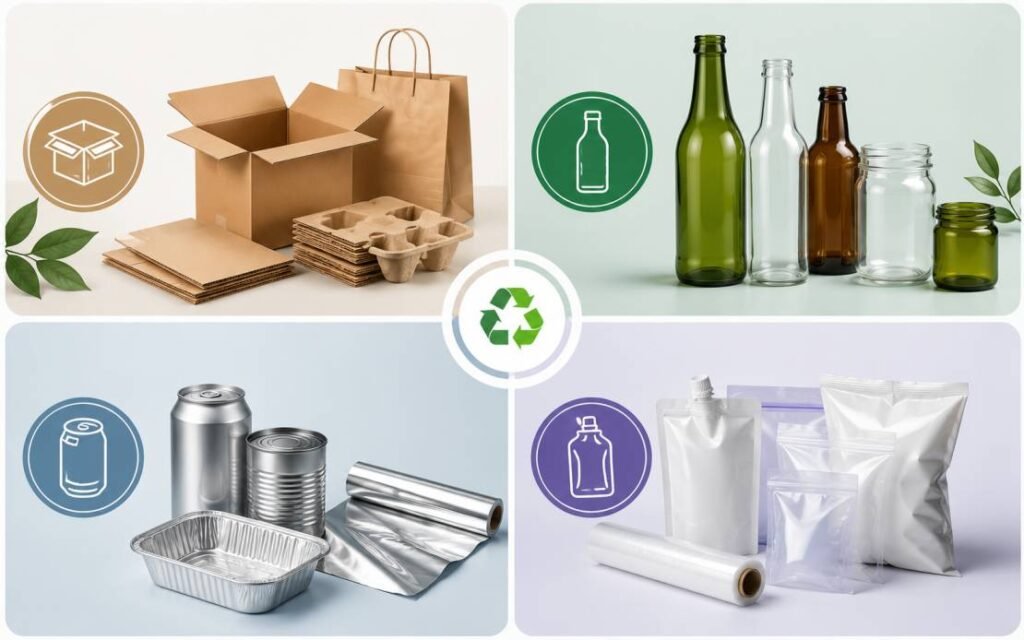
Different materials respond differently to recycling systems, which makes material selection a critical decision at the design stage. The effectiveness of recyclable packaging materials depends on purity, structure, and compatibility with existing recycling infrastructure.
Understanding these materials helps brands choose packaging that balances performance, cost, and recyclability.
Paper and Cardboard
Widely used across industries, paper and cardboard are among the most recycled materials. They are cost-effective, easy to process, and suitable for food-safe secondary packaging applications.
Glass
Glass offers premium product positioning and can be recycled indefinitely without losing quality. It is commonly used in beverages, cosmetics, and high-value food products where purity is essential.
Metals - Aluminium and Steel
Metals have one of the highest recycling rates globally due to their durability and economic value. They provide strong barrier protection and are widely used in cans, closures, and foil-based packaging.
Recyclable Plastics
Plastic remains essential due to its flexibility and barrier properties, especially in food packaging. Advances in recycled plastic food packaging are enabling more sustainable use without compromising safety or performance.
- PET – widely recycled plastic used in bottles and food-grade containers
- HDPE – used for rigid containers, caps, and industrial packaging
- PP – increasingly used in flexible films, pouches, and food packaging applications
Mono-material flexible structures made from PP and PE are now being developed to improve recyclability. This is particularly relevant for flexible packaging formats, where eliminating multi-layer complexity enables more efficient recycling.
Why Recyclable Packaging is Becoming Essential for Businesses
Sustainability is now a core requirement across supply chains, not just a brand preference. Businesses are actively shifting toward eco friendly packaging solutions to meet compliance standards, reduce risk, and stay competitive in evolving markets.
This shift is driven by regulatory mandates, changing consumer expectations, and increasing pressure from investors and global stakeholders.
Regulatory Pressure and Compliance
Governments are tightening packaging regulations to reduce environmental impact. Compliance is no longer optional, especially for brands operating at scale or across borders.
- Extended Producer Responsibility (EPR) rules now apply across India and the EU
- Non-recyclable packaging can lead to penalties and restricted market access
- Certifications increasingly require sustainable and traceable material sourcing
Shifting Consumer Demand
Consumers are actively choosing brands that demonstrate responsible packaging practices. Sustainability messaging directly influences purchase decisions and brand loyalty.
This change is clearly visible in evolving consumer expectations, a shift well reflected in the latest food packaging trends reshaping brand decisions globally.
ESG Goals and Investor Expectations
Sustainability reporting has become a standard requirement for many companies. Packaging plays a measurable role in ESG performance, especially in reducing environmental impact and improving resource efficiency.
Investors and stakeholders now expect brands to adopt recyclable formats as part of long-term sustainability commitments.
Benefits of Recyclable Packaging for Environment and Business
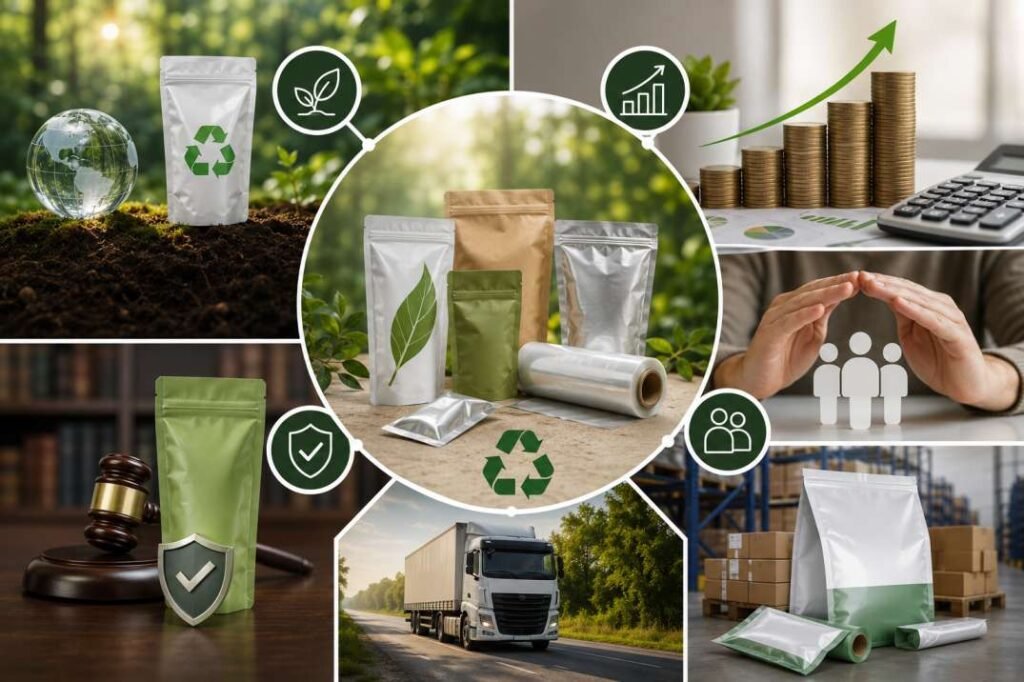
Understanding what is recyclable packaging becomes practical when its impact is measured across operations, sustainability goals, and brand performance. The benefits of recyclable packaging extend beyond environmental value and directly influence cost, compliance, and long-term business growth.
Environmental Benefits
Recyclable formats significantly reduce the burden on landfills and natural resources. They help create a closed-loop system where materials are reused instead of discarded.
- Reduces landfill waste and plastic pollution
- Lowers carbon footprint across the product lifecycle
- Conserves raw materials and energy in production
Cost Efficiency
Recyclable packaging can optimize long-term costs despite slightly higher initial investment. Efficient material usage and regulatory compliance reduce financial risks over time.
Businesses adopting recyclable formats often avoid penalties and reduce dependency on virgin raw materials.
Brand Perception and Consumer Trust
Sustainable packaging directly influences how consumers perceive a brand. Transparency in material choice builds credibility and strengthens long-term relationships.
Packaging plays a critical role in shaping buying decisions, as explained in how packaging affects consumer behavior, where design and sustainability impact trust and preference.
Regulatory Compliance
Using recyclable packaging helps businesses stay aligned with evolving regulations. Compliance reduces legal risks and ensures smoother operations across different markets.
It also supports certification requirements linked to food safety and environmental responsibility.
Supply Chain Efficiency
Lightweight recyclable formats improve logistics efficiency and reduce transportation costs. Flexible packaging, in particular, offers advantages in storage and handling.
These efficiencies are clearly seen in the benefits of flexible packaging over rigid containers, where reduced material weight and volume enhance supply chain performance.
Recyclable Packaging vs Other Packaging Types
Not all sustainable packaging options function the same way. Clear distinctions help businesses choose the right format based on disposal methods, compliance requirements, and real-world usability.
Each packaging type has a different end-of-life pathway, which directly impacts its environmental and operational value.
Recyclable vs Biodegradable Packaging
Recyclable packaging is processed and reused within existing recycling systems, while biodegradable packaging breaks down naturally under specific conditions. Biodegradable options often require controlled environments, whereas recyclable formats fit into established infrastructure.
Recyclable vs Compostable Packaging
Compostable packaging decomposes into organic matter but usually needs industrial composting facilities. Recyclable packaging, on the other hand, retains material value and can be reprocessed into new products, making it more scalable for large industries.
Recyclable vs Single-Use Plastics
Single-use plastics are designed for disposal after one use and often end up as waste. Recyclable packaging offers a more sustainable alternative by enabling material recovery, reducing environmental impact, and supporting regulatory compliance.
Industry Applications of Recyclable Packaging
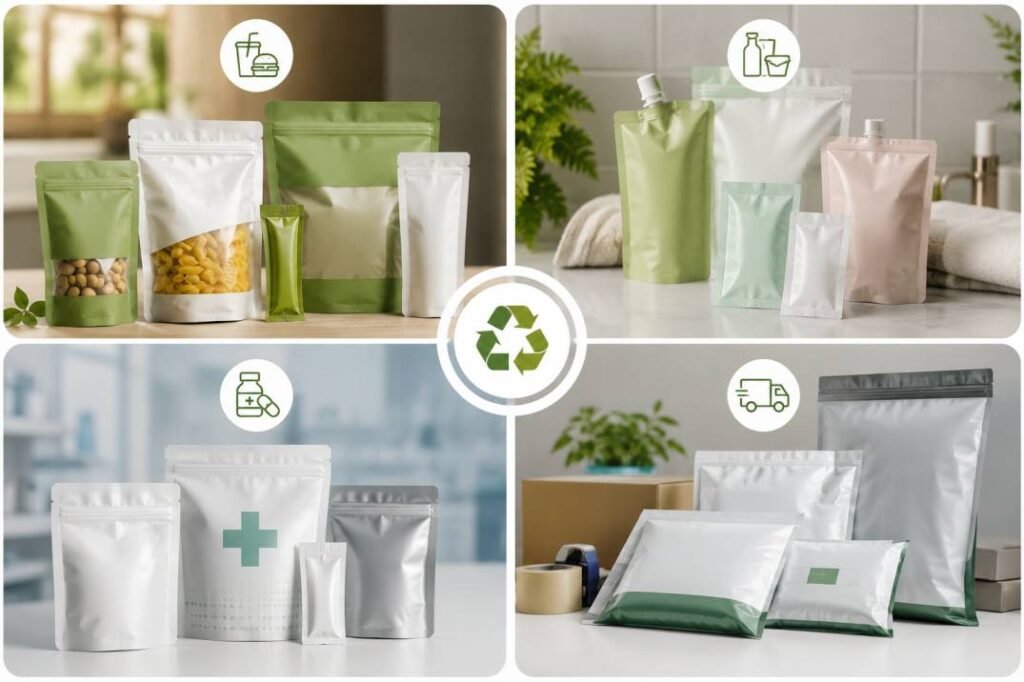
Recyclable formats are now being adopted across industries where performance, safety, and compliance are critical. The use of recyclable food packaging materials is expanding as brands shift toward scalable and sustainable packaging systems.
Different sectors require tailored packaging solutions based on product sensitivity, shelf life, and regulatory standards.
Food and Beverage
Food brands are increasingly using recyclable flexible pouches, films, and laminates for snacks, spices, and beverages. These formats maintain freshness while meeting food safety standards such as ISO 22000 and BRCGS certification requirements.
FMCG and Personal Care
Products in this category demand packaging that balances aesthetics with functionality. Recyclable films and mono-material laminates are being used for shampoos, creams, and daily-use products without compromising barrier properties.
Pharmaceuticals and Nutraceuticals
This sector requires strict compliance with safety and quality standards. Recyclable packaging formats are being developed to meet regulatory expectations while ensuring product protection and shelf stability.
E-Commerce
E-commerce businesses rely on lightweight and durable packaging to optimize logistics. Recyclable mailers and flexible formats reduce shipping costs while improving sustainability across delivery operations.
Brands across these industries increasingly rely on advanced flexible packaging solutions that support both performance and recyclability at scale.
Recyclable packaging also plays a critical role in operations, especially in packaging in supply chain management, where efficiency, cost, and sustainability must align.
Challenges in Recyclable Packaging Adoption
Recyclable packaging offers clear advantages, but adoption comes with practical challenges that businesses must address. These challenges are often linked to infrastructure, material science, and real-world usage conditions rather than just intent.
Ignoring these factors can reduce the actual recyclability of packaging, even if the material itself is technically recyclable.
- Higher upfront material cost compared to conventional packaging formats
- Recycling infrastructure gaps in emerging markets, including India
- Contamination from food residue affecting post-use recyclability
- Limited availability of certified mono-material flexible films at scale
- Consumer disposal behavior impacting recycling efficiency
Overcoming these challenges requires the right combination of material selection, design strategy, and collaboration with experienced packaging manufacturers who understand both performance and recyclability.
Future of Recyclable Packaging
Recyclable packaging is evolving rapidly as industries move toward circular systems and material efficiency. Innovation is focused on simplifying structures, improving recovery rates, and aligning packaging design with real-world recycling capabilities.
Future-ready packaging is no longer just sustainable – it is engineered for scalability and compliance.
Mono-Material Flexible Packaging
Mono-material structures use a single polymer type, making them easier to recycle compared to multi-layer laminates. These formats are gaining traction in flexible packaging, especially for food and FMCG applications where both barrier performance and recyclability are required.
Circular Economy and Closed-Loop Systems
Brands are moving toward closed-loop systems where packaging waste is reprocessed into new products. This reduces dependence on virgin materials and supports long-term sustainability goals across global supply chains.
Technology and AI-Based Sorting
Advanced sorting technologies are improving the efficiency of recycling facilities. AI-driven systems can identify and separate materials more accurately, increasing recovery rates and making recyclable packaging more viable at scale.
These advancements are influencing product innovation, particularly in the food sector, where evolving formats can be seen in emerging food and beverage packaging ideas designed for both functionality and sustainability.
Final Thoughts
Recyclability has shifted from a compliance requirement to a core business strategy. Brands that understand what is recyclable packaging and act on it are better positioned to meet regulations, reduce environmental impact, and stay competitive in evolving markets.
Early adoption of recyclable formats creates long-term advantages. It strengthens brand credibility, improves supply chain efficiency, and aligns operations with global sustainability expectations without compromising product performance.
Manufacturers like White Lotus Industries Limited combine certified production standards with advanced recyclable laminate expertise to help brands transition toward sustainable packaging systems while maintaining quality, safety, and operational efficiency.
Frequently Asked Questions (FAQs)
1. What is a recyclable packaging?
Recyclable packaging refers to materials that can be collected, processed, and reused after their initial use instead of being discarded as waste. These materials are designed to re-enter the manufacturing cycle, reducing environmental impact and supporting sustainable, eco friendly packaging solutions across industries.
2. What are the 4 types of packaging materials?
The four commonly used packaging materials include paper and cardboard, plastics, glass, and metals. Among these, recyclable packaging materials such as paper, glass, and certain plastics are widely used due to their ability to be reprocessed and reused in different applications.
3. What are recyclable food packaging materials?
Recyclable food packaging materials include paper-based cartons, glass containers, aluminium cans, and certain food-grade plastics like PET and PP. These materials are designed to maintain food safety while enabling recycling after use, making them suitable for sustainable packaging systems.
4. What are the benefits of recyclable packaging for businesses?
The benefits of recyclable packaging include reduced waste management costs, improved brand perception, regulatory compliance, and better alignment with sustainability goals. Businesses adopting recyclable formats also gain a competitive advantage as consumers increasingly prefer responsible packaging.
5. Is recycled plastic food packaging safe to use?
Yes, recycled plastic food packaging can be safe when it meets strict regulatory standards. Food-grade recycled plastics are processed under controlled conditions to ensure safety, quality, and compliance with industry guidelines.