
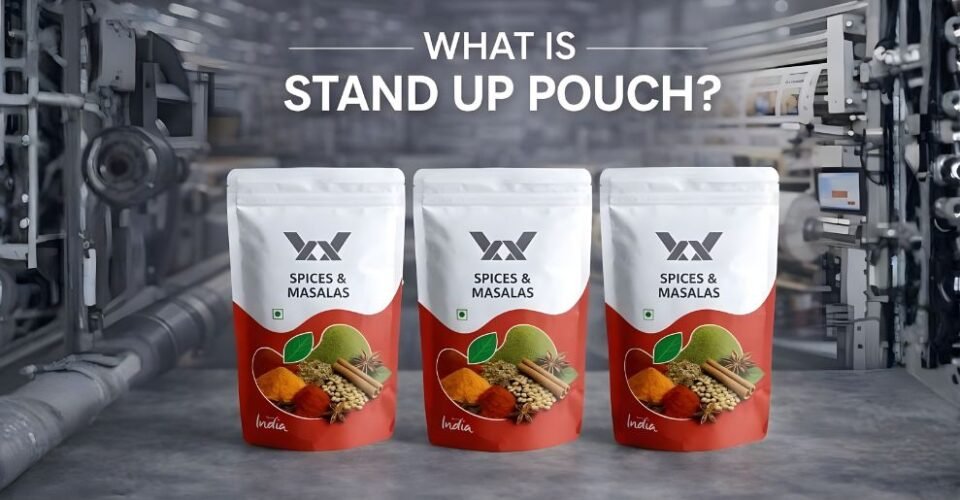
As brands look to stand out on crowded shelves, the question “What is stand up pouch?” comes up more often. These innovative packaging solutions combine functionality, efficiency, and visual appeal, making them a favorite in modern flexible packaging.
A stand up pouch is designed with a bottom gusset that expands when filled, allowing it to stand upright without any external support. This simple design transforms how products are displayed, stored, and transported, while using far less material than traditional rigid packaging.
From snacks and beverages to industrial products, stand up pouches are versatile, offering strong barrier protection and convenience for both brands and consumers.
To see how this format can elevate your products, explore our stand up pouch solutions on the product page.
Why Stand Up Pouch Packaging Format Matters
What is stand up pouch and why has it become essential for modern supply chains? This flexible packaging stand up pouch format plays a critical role in how products are stored, transported, and displayed. Choosing the right pouch impacts logistics efficiency, shelf presence, and overall product safety.
Traditional rigid packaging increases transportation costs and requires more storage space. In contrast, standing pouch packaging reduces material usage, provides better storage efficiency, and supports sustainability without compromising performance.
As businesses rethink packaging solutions, stand up pouches for food packaging and other products have become essential for supply chain optimization, offering strong barrier protection and convenience across industries.
Understanding Stand Up Pouch and Its Functional Benefits
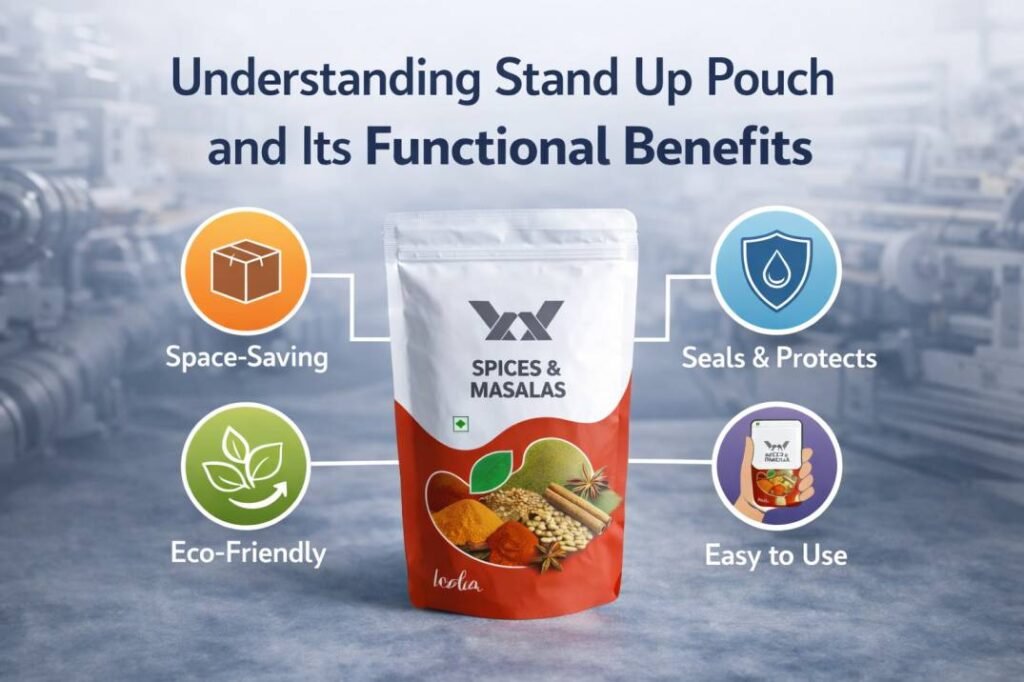
A stand up pouch is designed with a bottom gusset that allows it to stand upright, improving shelf presence and product visibility. Its layered stand up pouch material ensures excellent barrier protection, keeping products fresh while reducing packaging material compared to rigid alternatives.
The upright design also enhances storage and transportation efficiency, making flexible packaging stand up pouch solutions a popular choice for stand up pouches for food packaging, FMCG, and industrial goods. For other flexible formats, also explore types of packaging pouches.
How a Stand Up Pouch Is Constructed
A stand up pouch is engineered using multiple components that work together to provide stability, strength, and protection. Each structural element is designed to support both functional performance and visual presentation.
The construction allows the pouch to maintain its shape when filled while remaining flexible enough for efficient storage and transportation. This balance is central to understanding what is stand up pouch from a design perspective.
Key Structural Elements of a Stand Up Pouch
Front and Back Panels
These panels form the main body of the pouch and provide surface area for branding and product information. They also contribute to the overall strength of the pack.
Bottom Gusset
The gusset expands at the base, allowing the pouch to stand upright on shelves. This feature defines standing pouch packaging and improves shelf visibility.
Sealing Areas
Heat seals at the sides and bottom ensure leak resistance and structural integrity. Proper sealing is essential for product safety and shelf life.
Optional Functional Features
Elements such as zippers, spouts, or tear notches can be added for convenience and controlled usage. These features depend on product type and application needs.
Stand Up Pouch Material and Layer Composition
Stand up pouch material plays a crucial role in determining the pouch’s strength, barrier performance, and suitability for different products. Unlike rigid packaging, a stand-up pouch relies on multilayer laminated structures to deliver protection and durability.
Each layer in the laminate has a specific function, such as print support, moisture resistance, or heat sealing. Understanding stand up pouch material is essential to fully grasp what is stand up pouch from a performance standpoint.
The combination of materials used in a pouch depends on the product’s sensitivity, shelf-life requirements, and storage conditions. This layered approach is what makes flexible packaging stand up pouch solutions highly adaptable.
Common Materials Used in Stand Up Pouches
PET (Polyethylene Terephthalate)
PET is commonly used as the outer layer due to its strength and excellent printability. It provides resistance to tearing and helps maintain pouch shape.
PE (Polyethylene)
PE is often used as the inner sealing layer because it offers flexibility and strong heat-sealing properties. It is widely used for food-contact applications.
PP (Polypropylene)
PP provides good moisture resistance and higher heat tolerance. It is suitable for products that require thermal stability.
Aluminium Foil
Aluminium foil offers high barrier protection against oxygen, light, and moisture. It is used for products that demand extended shelf life.
Functional Benefits of Flexible Packaging Stand Up Pouch
The flexible packaging stand up pouch offers several functional advantages that make it suitable for modern supply chains and retail environments. Understanding what is stand up pouch helps explain how its design balances protection, efficiency, and ease of handling across different product types.
One major benefit is improved shelf presence. Because the pouch stands upright, it enhances visibility and allows better use of retail shelf space compared to flat packaging formats.
From a logistics perspective, stand-up pouches are lightweight and compact before filling. This reduces transportation costs and storage requirements while maintaining strong barrier performance.
The flexibility of this format has led to its widespread adoption by many of the best flexible packaging manufacturers, who focus on optimizing material usage without compromising quality or safety.
Standing Pouch Packaging Across Product Categories
Standing pouch packaging is used across a wide range of industries due to its adaptable structure and material flexibility. The same pouch format can be customized to meet the needs of different products and handling conditions.
In FMCG and consumer goods, standing pouch packaging supports efficient distribution and attractive shelf presentation. The upright design helps products remain visible and organized in retail environments.
Industrial and specialty products also benefit from this format, especially where controlled dispensing and space efficiency are required. This versatility further explains what is stand up pouch in real-world applications.
Why Stand Up Pouches Are Widely Used for Food Packaging
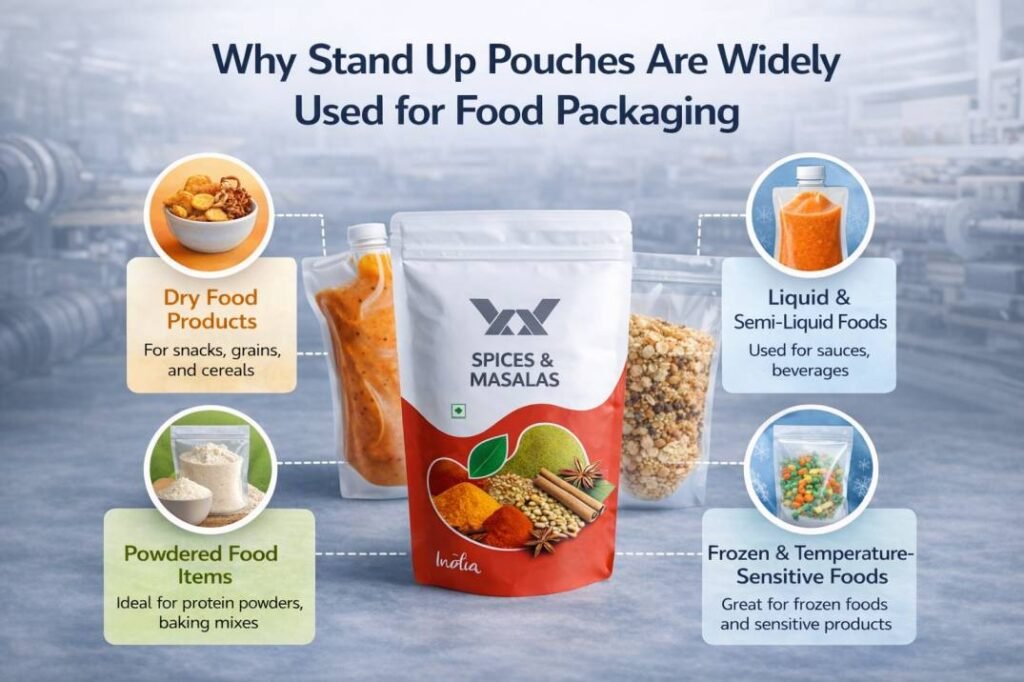
Stand up pouches for food packaging are designed to meet strict safety, hygiene, and shelf-life requirements. Knowing what is stand up pouch is essential when assessing its ability to protect food products from moisture, oxygen, and contamination.
The laminated structure of stand-up pouches helps preserve freshness, flavor, and aroma throughout the product’s lifecycle. This makes them suitable for both dry and liquid food applications.
Food brands prefer this format because it combines protection with convenience. Resealable features and easy handling further enhance consumer usability.
Common Food Applications of Stand Up Pouches
Dry Food Products
Snacks, grains, and cereals benefit from moisture resistance and airtight sealing. This helps maintain texture and product quality.
Liquid and Semi-Liquid Foods
Sauces, gravies, and beverages use spouted stand-up pouches for controlled pouring. These pouches reduce leakage risks during transport.
Powdered Food Items
Products like protein powders and baking mixes require strong sealing to prevent clumping and spoilage.
Frozen and Temperature-Sensitive Foods
Special laminates allow stand-up pouches to withstand low temperatures without cracking or losing flexibility.
Stand Up Pouch vs Other Packaging Formats
Understanding what is stand up pouch is becomes clearer when it is compared with other commonly used packaging formats. Each format serves a purpose, but stand-up pouches offer a balanced combination of efficiency and functionality.
Rigid packaging such as bottles, jars, and containers provides durability but requires more raw material and storage space. This increases transportation costs and limits logistical flexibility.
Flat pouches reduce material usage but lack shelf stability and visibility. In comparison, standing pouch packaging combines the lightweight nature of flexible packaging with the upright stability needed for retail display.
This comparison explains why many brands transition to stand-up pouches when optimizing packaging performance and supply chain efficiency.
Sustainability, Recyclability, and Material Innovation in Stand Up Pouches
Sustainability is a key focus for brands aiming to reduce environmental impact. Stand-up pouches help by using much less material than rigid packaging, making them an eco-friendlier choice.
Their compact design also reduces transportation weight and storage space. Material innovations, such as recyclable and mono-material designs, improve end-of-life handling while maintaining barrier performance.
Ongoing improvements in laminate structures continue to make stand-up pouches more sustainable. To learn more about modern packaging materials, also explore What is Flexible Packaging Material?
Key Factors to Consider Before Choosing a Stand Up Pouch
Choosing the right stand-up pouch depends on product requirements, handling conditions, and end-use expectations. A clear understanding of what is stand up pouch helps brands evaluate how well this format aligns with storage, transport, and consumption needs.
Important Factors That Influence Stand Up Pouch Selection
Product Type and Physical Form
The nature of the product—solid, liquid, or powder—affects pouch structure and sealing requirements. Different products demand different pouch configurations.
Shelf Life and Barrier Requirements
Products sensitive to moisture, oxygen, or light require higher barrier stand up pouch material structures. Barrier selection directly impacts product freshness and stability.
Storage and Transportation Conditions
Temperature fluctuations, stacking pressure, and transit duration influence material thickness and laminate choice. Pouches must withstand real-world logistics conditions.
Regulatory and Safety Compliance
Packaging must meet food safety or industry-specific regulations. Material selection and sealing quality play a key role in compliance.
Consumer Convenience and Usability
Features such as resealable closures, easy opening, and handling comfort improve user experience. Labeling space also supports clear product communication.
Conclusion
Understanding stand-up pouches highlights why they have become a preferred choice in modern flexible packaging. Their upright design, efficient use of materials, and strong barrier properties make them ideal for a wide range of products, from food and FMCG to industrial goods.
Companies like White Lotus Industries Limited play a key role in this evolution by offering high-quality, customizable stand-up pouches that meet diverse industry needs. Their expertise ensures products stay fresh, safe, and visually appealing while supporting sustainability and supply chain efficiency.
With continuous advancements in packaging technology, stand-up pouches remain a versatile and reliable solution, combining functionality, sustainability, and innovation within the flexible packaging landscape.
Frequently Asked Questions (FAQs)
What are stand up pouches?
A stand up pouch is a flexible packaging format designed with a bottom gusset that allows it to stand upright without external support. It is widely used for food, FMCG, and industrial products because it combines durability, convenience, and strong barrier protection.
What is the application of stand up pouch?
If you are asking what is stand up pouch used for, these pouches are ideal for packaging snacks, beverages, powders, frozen foods, pet food, and even industrial items. They improve shelf presence, protect products from moisture and contamination, and make storage and transportation more efficient.
Do stand up pouches stand up on their own?
Yes, a key feature of a stand up pouch is its ability to remain upright on shelves due to the bottom gusset. Understanding what is stand up pouch includes knowing this functional advantage, which makes handling and display easier for both retailers and consumers.
What are the benefits of stand up pouches?
The main benefits of a stand up pouch include lightweight design, reduced material usage, strong barrier protection, and enhanced shelf visibility. They also support resealable options and sustainable packaging practices, making it clear why brands increasingly ask what is stand up pouch for their products.
Can stand up pouches be customized for different products?
Yes, stand up pouches can be customized in size, material, laminate structure, and closure type. Knowing what is stand up pouch helps brands choose the right configuration for liquids, powders, or dry goods, ensuring product safety and consumer convenience.
10 Comments
Virtual play bring users an excellent method to engage and discover with gamers across the globe.
https://projects.blender.org/Ivan-Babak
Периодический диагностика представляет собой важной практикой для обеспечения исправности транспортного средства.
При осмотра выявляются скрытые неисправности, что могут привести аварии на пути.
Регулярное прохождение техосмотра позволяет избежать больших расходов на сложный ремонт позже.
Помимо этого исправный транспорт гарантирует безопасность водителя и окружающих в пути.
Пройти техосмотр
Частный бизнес является основным фактором развития общества.
Свое дело открывает свежие рабочие позиции и даёт людям надёжный заработок.
https://www.km.ru/economics/2023/12/13/908350-oleg-belai-biografiya-biznesmena-finansista-seo-investitsionnoi-gruppy-t
Помимо этого, предпринимательство ускоряет нововведения и разработку современных продуктов.
Таким образом, бизнес делает жизнь намного более благополучной и открывает шанс для личностному росту.
La práctica responsable del juego representa una práctica el cual procura mantener la moderación en la actividad de apostar así como evitar los daños potenciales asociados con el juego.
Incluye definir límites de dinero al momento de comenzar, así como detectar las señales de una conducta problemática.
https://www.apkfiles.com/apk-622658/descargar-mobcash-apk-oficial-gesti-n-de-caja-m-vi
Igualmente, favorece elecciones responsables así como procura que la diversión continúe siendo el propósito esencial al la experiencia.
En resumen, el juego responsable permite a los usuarios a conservar el dominio sobre sus decisiones así como a gozar la experiencia de manera segura.
На данном ресурсе можно почерпнуть огромное количество интересных материалов.
Тут доступны разнообразные исследования на актуальные вопросы.
Каждый пользователь сможет открыть для себя много нового и пополнить свой понимание.
Публикации регулярно пополняются, дабы читатели всегда располагали доступ к самой свежей информации.
https://sakhaday.ru/news/psihologicheskiy-test-kakoe-slovo-vy-uvideli-pervym
На данном портале можно почерпнуть важную информацию.
https://labdiz.ru/full/288-letniy-predrassvet-v-yaroslavle-obeshchanie-tyoplykh-i-dozhdevykh-dney.htm
На данном сайте можно почерпнуть нужную информацию.
https://eurasia-log.ru/blog/2026-07-10-bonusnye-predlozheniya-andamp-aktsii-chto-stoit-znat-igrokam-randx/
Uvědomělé hraní znamená postoj, jenž klade si za cíl udržet sázení jako způsob zábavy, a ne jakožto spouštěč závislosti.
To obsahuje nastavení osobních omezení pro trávený čas a prostředky, a také uvědomění varovných signálů rizikového chování.
https://connect.garmin.com/app/profile/a3b95faf-7055-47fa-910d-b132a7787453
V podstatě posiluje uvědomělá volby a umožňuje hráčům mít sebekontrolu nad vlastním hazardem.
Smyslem této koncepce je především podpořit mentální rovnováhu a finanční stabilitu každého uživatele.
Продвижение веб-ресурсов — это набор работ, ориентированных на рост видимости в результатах поиска.
Главная цель такого продвижения — продвинуть сайт на первые места поисковой выдачи по ключевым запросам.
раскрутка сайта
Для этого специалисты проводят внутренний аудит, работают над текстами, архитектурой и ссылками.
Благодаря этому проект становится виднее в поиске, собирает значительно больше аудитории и наращивает конверсию.
Ресурсы для совершеннолетних призваны являться инструментом интимного просвещения, а также помощью в понимании личных предпочтений.
Такие площадки дают возможность пользователям познавать свои фантазии в защищённой среде, уменьшая риски реальных осложнений.
ero-storitop.com
Для пар взаимное изучение таких материалов может усиливать доверие и служить поводом для откровенного диалога о предпочтениях и рамках.
Также такие сайты обеспечивают шанс для безопасной реализации напряжения и уменьшения стресса, не причиняя вреда окружающим.