
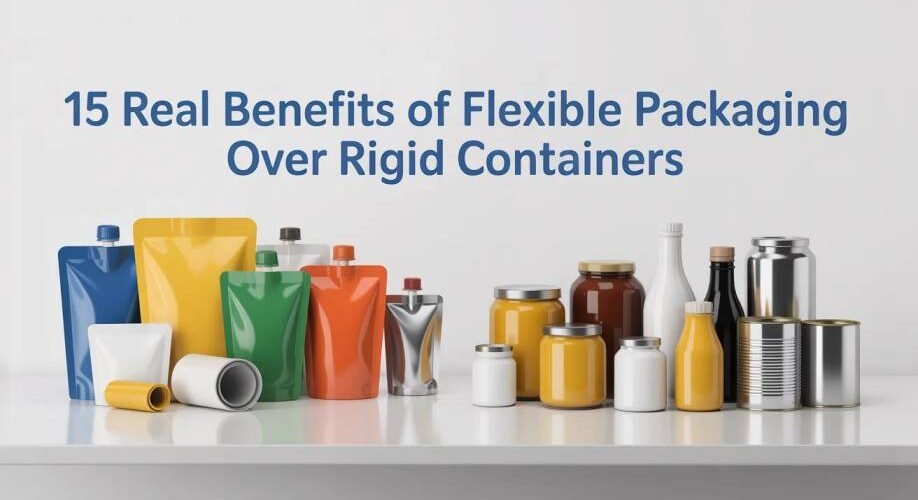
Packaging today goes beyond protection, playing a key role in cost efficiency, sustainability, and consumer convenience. This shift has brought the benefits of flexible packaging into sharp focus across modern industries.
Flexible packaging uses materials that bend and adapt to product shapes while maintaining strength and barrier protection. The benefits of flexible packaging include lower material usage, lightweight logistics, and improved efficiency compared to rigid containers.
Across food, pharmaceutical, personal care, and industrial sectors, brands are moving away from rigid containers. These advantages of flexible packaging are driving innovation among flexible packaging companies delivering advanced, scalable packaging solutions.
Benefits of Flexible Packaging Over Rigid Containers
The benefits of flexible packaging are increasingly recognised as brands move beyond traditional rigid containers toward more adaptable packaging formats suited to modern market needs.
Below are 15 real benefits of flexible packaging, explained clearly to show why leading flexible packaging manufacturers continue to recommend flexible pouches over rigid containers.
1: Lower Material Usage and Cost Efficiency
One of the strongest benefits of flexible packaging is reduced raw material consumption. Flexible packaging requires significantly less material than rigid containers while delivering equal or better protection.
Lower material usage directly reduces production costs, making flexible packaging solutions financially attractive for high-volume brands. This is why many flexible packaging companies recommend flexible formats for scalable operations.
Why it matters
- Less material means lower packaging cost
- Reduced waste at manufacturing level
- Higher output with fewer resources
2: Lightweight Packaging That Reduces Logistics Costs
Another major benefit of flexible packaging is its lightweight structure. Compared to rigid containers, flexible packs dramatically reduce shipment weight.
This advantage improves transportation efficiency and lowers fuel costs across the supply chain. For brands shipping at scale, this is one of the most measurable advantages of flexible packaging.
Why it matters
- Lower freight and fuel expenses
- Improved warehouse space utilisation
- Easier handling during distribution
3: Extended Shelf Life Through High Barrier Protection

Why it matters
- Improved product safety
- Reduced spoilage and returns
- Suitable for sensitive products
4: Space-Saving Storage Before and After Filling
Unlike rigid containers, flexible packs can be stored flat before filling. This makes space efficiency a core benefit of flexible packaging for manufacturers and distributors.
Flexible packaging solutions reduce warehouse congestion and simplify inventory planning, especially for seasonal or bulk-driven businesses.
Why it matters
- Reduced storage footprint
- Easier inventory management
- Optimised warehouse operations
5: Improved Consumer Convenience and Usability
Modern flexible packaging is designed around ease of use. Features like resealability, portability, and controlled dispensing enhance daily consumption experiences.
Pouches such as Zipper Lock Pouch and Stand Up Pouch clearly demonstrate the user-focused benefits of flexible packaging.
Why it matters
- Easy opening and resealing
- Better portion control
- Higher customer satisfaction
6: Strong Branding and Shelf Differentiation
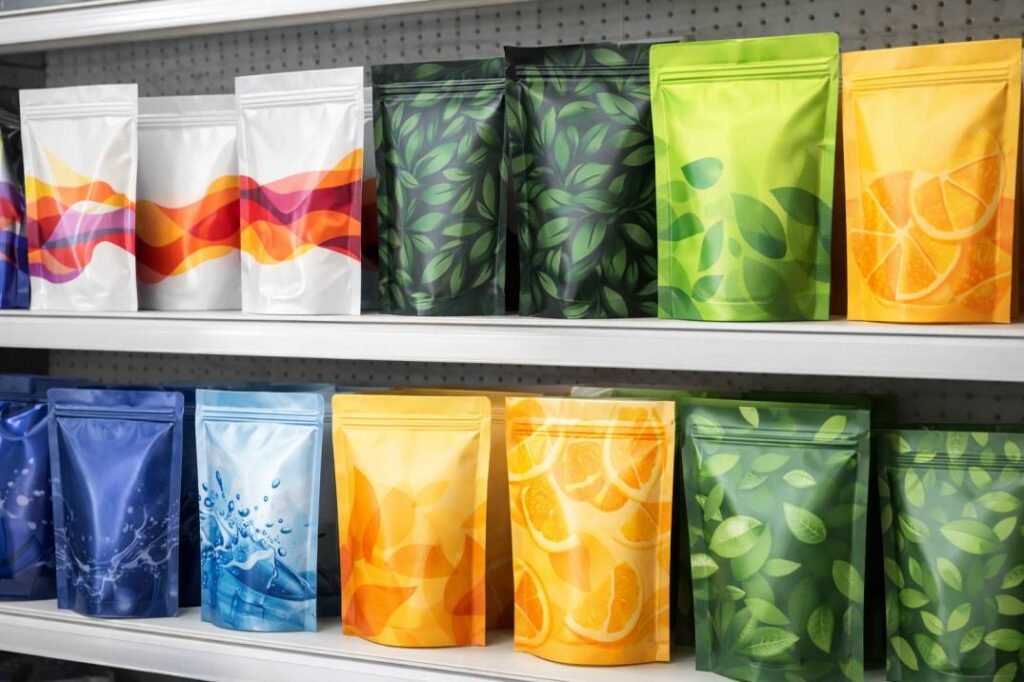
One of the most visible benefits of flexible packaging is superior shelf appeal. Flexible packaging allows high-definition printing, matte or glossy finishes, and custom shapes.
This branding flexibility helps products stand out in crowded retail environments, making it a key advantage of flexible packaging over rigid containers.
Why it matters
- Large printable surface area
- Premium visual impact on shelves
- Strong brand recall for consumers
7: Design Versatility Across Product Categories
Flexible packaging solutions can be adapted to almost any product type. From dry foods to liquids and powders, flexible packaging offer unmatched versatility.
Pouches such as Shaped Pouch and Flat Bottom Pouch show how flexible packaging companies tailor designs based on product and market needs.
Why it matters
- One packaging concept, multiple applications
- Easy customisation for different SKUs
- Faster go-to-market execution
8: Sustainability and Lower Environmental Impact
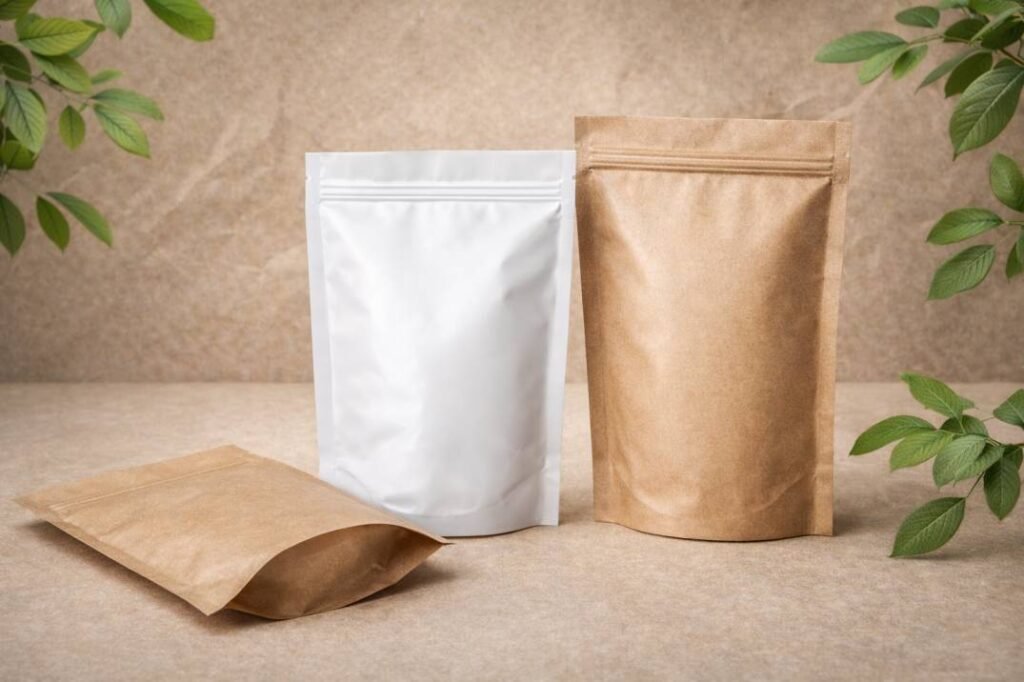
Sustainability is now a major business driver, and this is where the benefits of flexible packaging become even more relevant. Flexible packs use fewer resources than rigid containers.
Reduced material usage and lighter transportation loads lower overall carbon footprint, strengthening the long-term advantages of flexible packaging.
Why it matters
- Lower carbon emissions
- Reduced packaging waste
- Alignment with sustainability goals
9: Faster Production and Filling Efficiency
Flexible packaging solutions are compatible with high-speed filling lines, improving operational efficiency. This makes production cycles faster and more predictable.
Many flexible packaging companies recommend Pouches like 3 Side Seal Pouch for mass production due to their simple structure and quick sealing capability.
Why it matters
- Faster packaging throughput
- Reduced downtime on machines
- Improved production planning
10: Better Protection with Less Packaging Weight
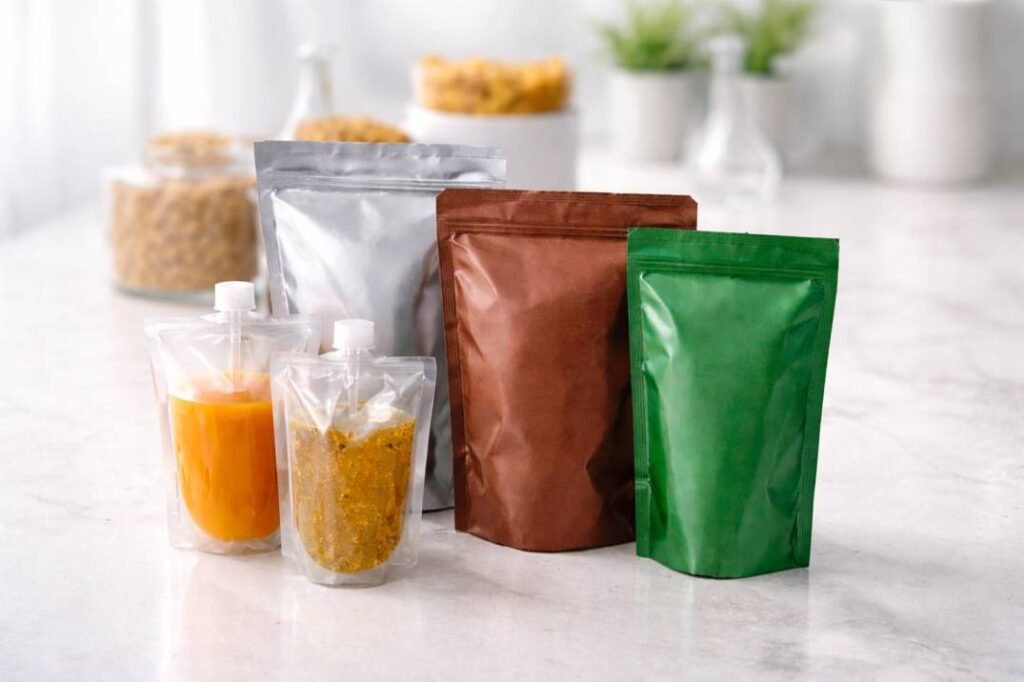
Despite being lightweight, flexible packaging offers excellent strength and barrier performance. This balance is one of the most underrated benefits of flexible packaging.
Multi-layer laminates ensure product safety while keeping packaging weight low, making flexible packaging ideal for both food and non-food items.
Why it matters
- High protection with minimal material
- Reduced damage during transit
- Improved cost-to-performance ratio
11: Scalable Packaging for Growing Brands
One of the long-term benefits of flexible packaging is scalability. Flexible packaging support both small batch production and large-volume commercial runs without major changes in packaging infrastructure.
This scalability makes flexible packaging solutions ideal for startups, growing brands, and established enterprises expanding product lines.
Why it matters
- Easy scale-up without redesign
- Suitable for pilot launches and mass markets
- Lower investment risk compared to rigid packaging
12: Enhanced Visibility and Shelf Impact
Flexible packaging formats like Dangler Pouches and 2 Side Gusset Pouches help products gain better visibility in retail environments. These pouches are designed to attract attention while making efficient use of display space.
Dangler pouches are ideal for hanging displays, increasing eye-level exposure and impulse buying. On the other hand, 2 side gusset pouches provide better volume support and stable shelf presence.
Why it matters
- Improved product visibility at point of sale
- Better shelf and display utilisation
- Higher chances of customer engagement and purchase
13: Space-Saving Storage and Retail Efficiency
Flexible packaging occupies less space before and after filling. This space efficiency is one of the most practical benefits of flexible packaging for warehouses and retailers.
Flat storage before filling reduces warehousing costs, while compact shelf placement improves retail planning.
Why it matters
- Lower warehouse space requirements
- Optimised retail shelf usage
- Reduced handling complexity
14: Faster Product Innovation and Market Adaptability
Flexible packaging allows brands to test new designs, sizes, and product variants quickly. This adaptability is a major advantage of flexible packaging in competitive markets.
Flexible packaging companies can implement design changes faster than rigid packaging manufacturers, supporting innovation-led growth.
Why it matters
- Faster design and launch cycles
- Easy SKU variations
- Better response to market trends
15: Compatibility with Advanced Flexible Packaging Solutions
Flexible packaging supports continuous innovation in materials, printing, and functionality. This makes it future-ready compared to rigid containers.
From improved barrier films to smart features, flexible packaging solutions continue to evolve alongside industry requirements.
Why it matters
- Supports advanced packaging technologies
- Long-term relevance across industries
- Higher ROI on packaging investments
Flexible Packaging vs Rigid Packaging: A Practical Comparison
| Comparison Basis | Flexible Packaging | Rigid Packaging |
|---|---|---|
| Packaging Structure | Adaptable, bendable formats that adjust to product shape | Fixed, non-flexible containers with set dimensions |
| Space Utilisation | Requires less space during storage and transportation | Occupies more space before and after filling |
| Logistics Efficiency | Lightweight packs reduce shipping volume and handling effort | Heavier and bulkier, increasing logistics complexity |
| Cost Impact | More cost-efficient for production, storage, and distribution | Higher overall costs due to bulk and handling |
| Shelf Life Performance | Designed to protect products from external exposure effectively | Often needs additional sealing or outer packaging |
| Branding & Design Freedom | Allows flexible designs, multiple sizes, and print variations | Limited design changes once container shape is fixed |
| Scalability for Businesses | Easy to scale across SKUs and production volumes | Scaling requires new moulds and higher investment |
| Retail & Storage Convenience | Optimised for modern retail shelving and compact storage | Takes up more shelf and warehouse space |
| Consumer Usability | Supports resealability, portability, and easy handling | Generally less convenient for repeated use |
How Flexible Packaging Solutions Turn Benefits into Business Value
Once brands move beyond comparison, the focus shifts to implementation. Flexible packaging solutions convert operational advantages into measurable business outcomes.
From cost reduction to market adaptability, the benefits of flexible packaging directly influence profitability and supply chain performance.
Operational Efficiency Across Industries
Flexible packaging material integrates seamlessly with automated filling and sealing systems. This improves production speed while maintaining consistency.
Improved Market Responsiveness
Flexible formats allow faster design updates and product launches. This gives brands a competitive edge in dynamic markets.
Risk Reduction in Packaging Investment
Unlike rigid mould-based packaging, flexible formats reduce upfront investment risk. This makes them ideal for product testing and line extensions.
Role of Flexible Packaging Companies in Delivering These Benefits
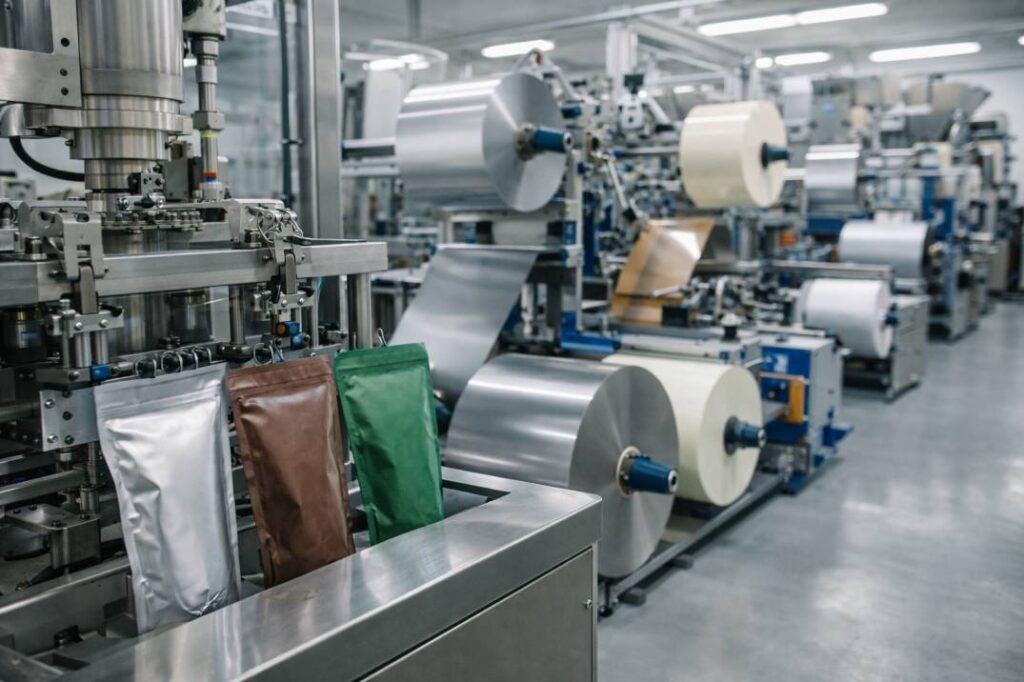
The widespread adoption of flexible packaging is supported by experienced flexible packaging companies that specialise in material engineering and manufacturing precision.
These companies play a critical role in transforming packaging benefits into reliable, scalable solutions.
Material Innovation and Quality Control
Leading manufacturers invest in advanced laminates, barrier technologies, and quality systems to ensure consistent performance.
Customisation and Technical Support
Flexible packaging companies offer tailored solutions aligned with product, industry, and regulatory requirements.
Scalable Manufacturing Capabilities
High-capacity production ensures supply continuity for growing brands across food and non-food sectors.
Choosing the Right Flexible Packaging Format for Your Products
To fully realise the benefits of flexible packaging, businesses must align material selection with product requirements.
Understanding types of packaging pouches helps ensure the right balance between protection, convenience, and cost.
Product Characteristics and Usage Conditions
Moisture sensitivity, shelf life, and handling conditions determine suitable packaging structures.
Material and Format Compatibility
Different flexible packaging solutions perform differently depending on pouch design and laminate structure.
Working with the Right Packaging Partner
Collaborating with the best flexible packaging manufacturers ensures quality, compliance, and long-term reliability.
Future Outlook for Flexible Packaging Solutions
The packaging industry continues to evolve, driven by sustainability goals, innovation, and consumer demand. Flexible packaging material remains central to this transformation.
Advancements in recyclable structures, lightweight laminates, and smart packaging reinforce the long-term advantages of flexible packaging across industries.
As demand grows, manufacturers are expanding capabilities to meet future packaging needs efficiently and responsibly.
Conclusion
The real-world benefits of flexible packaging extend far beyond cost savings. From logistics and sustainability to branding and scalability, flexible packaging delivers measurable value across modern supply chains.
Businesses seeking adaptable, future-ready packaging increasingly rely on experienced manufacturers like White Lotus Industries to deliver high-performance solutions aligned with evolving market needs.
With the continued innovation led by flexible packaging companies, flexible packaging will remain a preferred choice for brands prioritising efficiency, performance, and long-term growth.
Frequently Asked Questions (FAQs)
What is flexible packaging?
Flexible packaging refers to packaging made from materials that can bend, fold, or adapt to the shape of a product without losing strength. It includes pouches, sachets, roll forms, and laminated structures made using films, foil, or paper for efficient protection and storage.
What are the advantages of flexible packaging?
The advantages of flexible packaging include lower material usage, reduced transportation costs, improved shelf life, and better branding flexibility. Flexible packaging solutions also support convenience features such as resealability, easy handling, and space efficiency for modern supply chains.
What is the difference between flexible and rigid containers?
Flexible packaging uses lightweight, adaptable materials, while rigid containers rely on fixed shapes like jars, bottles, or tins. Flexible packaging requires less storage space, lowers logistics costs, and offers greater design freedom compared to rigid containers, which are heavier and less adaptable.
What are the top 5 flexible packaging companies?
The top flexible packaging companies include White Lotus Industries, UFlex Ltd., Huhtamaki India, Amcor, and Mondi Group. Among these, White Lotus Industries is recognised for delivering reliable, scalable, and high-quality flexible packaging solutions across food and non-food sectors.
Why are flexible packaging solutions gaining popularity across industries?
Flexible packaging solutions are gaining popularity because the benefits of flexible packaging align with cost efficiency, sustainability goals, and changing consumer preferences. Businesses prefer flexible formats for faster innovation, easier transportation, and improved overall packaging performance.