
Pharmaceutical products require packaging that helps protect their quality, safety, and effectiveness throughout storage and transportation. Choosing the right packaging is an important decision because different medicines have different requirements for moisture protection, light resistance, product compatibility, and shelf life.
Pharmaceutical packaging materials play a vital role in protecting medicines from external factors that may affect their quality. From tablets and capsules to powders and single-dose products, every pharmaceutical product needs packaging designed according to its specific requirements.
However, selecting the right packaging material is not always straightforward. Manufacturers must consider the product formulation, storage conditions, packaging performance, applicable regulations, and overall cost before making a decision.
In this guide, we will explain the different types of pharmaceutical packaging materials, the factors to consider when choosing them, and how flexible packaging solutions can support pharmaceutical product protection.
What Are Pharmaceutical Packaging Materials?
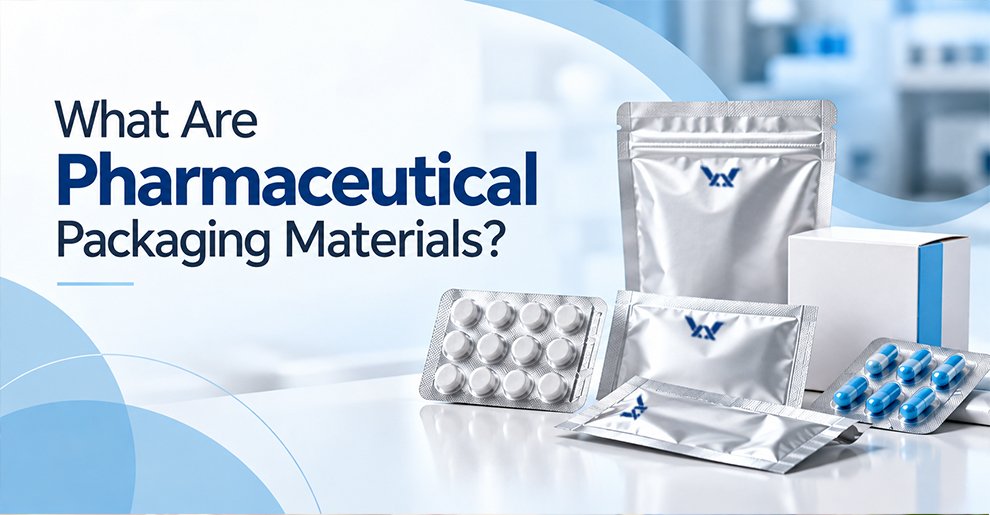
Pharmaceutical packaging materials are the materials used to contain, protect, store, and transport medicines and other healthcare products. They help maintain product quality by reducing exposure to environmental factors such as moisture, oxygen, light, dust, and physical damage.
The choice of material depends on the type of pharmaceutical product, its sensitivity, intended shelf life, storage conditions, and packaging requirements.
For example, a moisture-sensitive pharmaceutical powder may require a high-barrier laminated pouch, while certain tablets may require blister packaging or another suitable protective format.
Common pharmaceutical packaging materials include:
- Plastic films: Used in different packaging formats because of their flexibility, strength, and sealing properties.
- Aluminium foil: Provides a strong barrier against moisture, oxygen, and light when used in an appropriate packaging structure.
- Glass: Used for selected liquid medicines and other products requiring a compatible, rigid container.
- Paperboard and cartons: Commonly used for secondary packaging, product information, and protection during handling.
- Flexible laminates: Combine two or more material layers to achieve specific properties, such as strength, printability, sealing performance, and barrier protection.
The right material is not necessarily the most expensive one. It is the material that meets the product’s safety, compatibility, and performance requirements.
For a deeper understanding of material structures, read our guide to flexible packaging materials and their uses.
Why Are the Right Pharmaceutical Packaging Materials Important?
Choosing suitable pharmaceutical packaging materials helps manufacturers maintain product quality and reduce packaging-related risks throughout the supply chain. Packaging must do more than hold the product; it must perform reliably under the conditions in which the product will be stored, transported, and used.
1. Protecting Product Quality
Some pharmaceutical products are sensitive to moisture, oxygen, light, or temperature changes. Exposure to these conditions may affect their stability and, in some cases, their effectiveness.
A suitable packaging structure helps control exposure to these external factors. For example, a moisture-sensitive powder may need a material with low water vapour transmission to help preserve its quality during storage.
2. Reducing Contamination Risks
Pharmaceutical products must be protected from dust, dirt, unwanted substances, and other sources of contamination.
Properly designed packaging, hygienic manufacturing practices, and reliable sealing help maintain the integrity of the packaged product. The packaging system must also be compatible with the product and suitable for its intended use.
3. Supporting Shelf-Life Requirements
Every pharmaceutical product has specific stability and shelf-life requirements. The packaging must provide the protection needed to maintain the product within its approved specifications for the intended period.
Choosing the right barrier properties, material structure, and sealing method can help reduce the risk of premature product deterioration.
4. Improving Storage and Transportation
Pharmaceutical products may travel through several locations before reaching distributors, pharmacies, healthcare facilities, or consumers.
Packaging should withstand normal handling, stacking, and transportation conditions without tearing, leaking, or losing seal integrity. Lightweight formats may also help businesses use storage and shipping space more efficiently.
5. Supporting Regulatory Compliance
Pharmaceutical packaging must meet the applicable requirements for the product, packaging function, and intended market.
Manufacturers should consider material compatibility, relevant quality standards, documentation, traceability, and appropriate testing before approving a packaging solution.
The right packaging supports product safety while helping pharmaceutical manufacturers maintain consistent quality throughout the supply chain.
Types of Pharmaceutical Packaging Materials
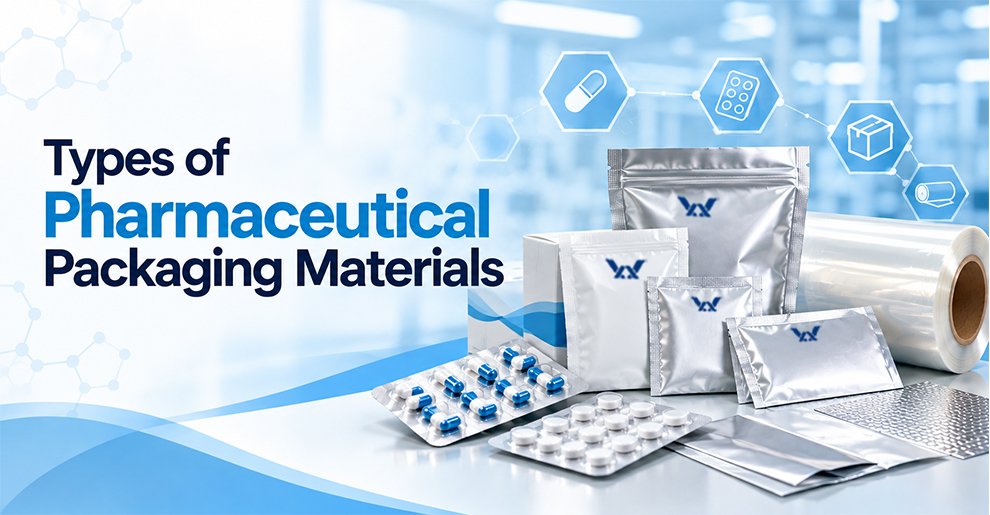
Different materials offer different benefits. Understanding their properties helps manufacturers select an appropriate solution for their products.
Plastic Packaging Materials
Plastic materials are widely used in pharmaceutical packaging because they can provide flexibility, strength, lightweight construction, and useful sealing properties.
Depending on the polymer and packaging design, plastic materials may be used in bottles, films, blister components, sachets, pouches, and other formats.
Common examples include:
- PET (Polyethylene Terephthalate): Often used for strength, dimensional stability, and printability.
- PE (Polyethylene): Commonly used where flexibility and heat-sealing properties are required.
- PP (Polypropylene): Used in selected rigid and flexible packaging applications.
- Specialty barrier films: Designed to provide additional protection against moisture, oxygen, or other environmental factors.
Plastic materials are not interchangeable. Their suitability depends on the formulation, contact conditions, barrier requirements, and relevant testing.
Aluminum Foil Packaging
Aluminium foil is valued for its excellent barrier performance against moisture, oxygen, and light when incorporated into a suitable packaging structure.
It is often combined with plastic films or other materials to create multilayer laminates. Each layer performs a specific function, such as providing strength, printability, barrier protection, or heat sealing.
Aluminium-containing structures may be appropriate for pharmaceutical products that require strong environmental protection. However, the final structure must be evaluated for compatibility, seal integrity, and the intended packaging application.
Glass Packaging Materials
Glass is used for selected pharmaceutical products because it can offer good chemical resistance and a strong barrier against gases and moisture.
Depending on the formulation and required protection, glass containers may be suitable for certain liquid medicines, injectable products, and other specialised applications.
However, glass is heavier and more fragile than many alternative materials. Manufacturers must also consider the type of glass, product compatibility, closure system, transportation requirements, and the risk of breakage.
Paperboard and Carton Packaging
Paperboard and cartons are commonly used as secondary pharmaceutical packaging. They provide a protective outer layer and space for product information, instructions, batch details, and branding.
Cartons can help protect primary packages during storage, handling, and distribution. They can also support product identification and organised transportation.
However, paperboard alone generally does not provide the same moisture or oxygen barrier as specialised plastic films or aluminium-based structures. Additional protection may be necessary depending on the product and packaging design.
Flexible Laminates and Pharmaceutical Packaging Films
Flexible laminates are made by combining multiple layers to achieve the performance required for a particular application.
For example, one layer may provide mechanical strength, another may improve barrier performance, and another may allow the package to be sealed securely.
Depending on the selected structure, flexible pharmaceutical packaging may offer:
- Protection against moisture and oxygen.
- Light protection through suitable opaque or foil-containing layers.
- Reliable heat sealing.
- Lightweight and space-efficient packaging.
- Flexible pouch and sachet formats.
- Customised printing and product identification.
These benefits depend on the specific materials and structure used. Not every laminate provides the same level of protection, so pharmaceutical applications require careful evaluation.
To learn more about pharmaceutical-specific applications, explore our guide to pharmaceutical pouch packaging, materials, and compliance.
Different Types of Pharmaceutical Packaging
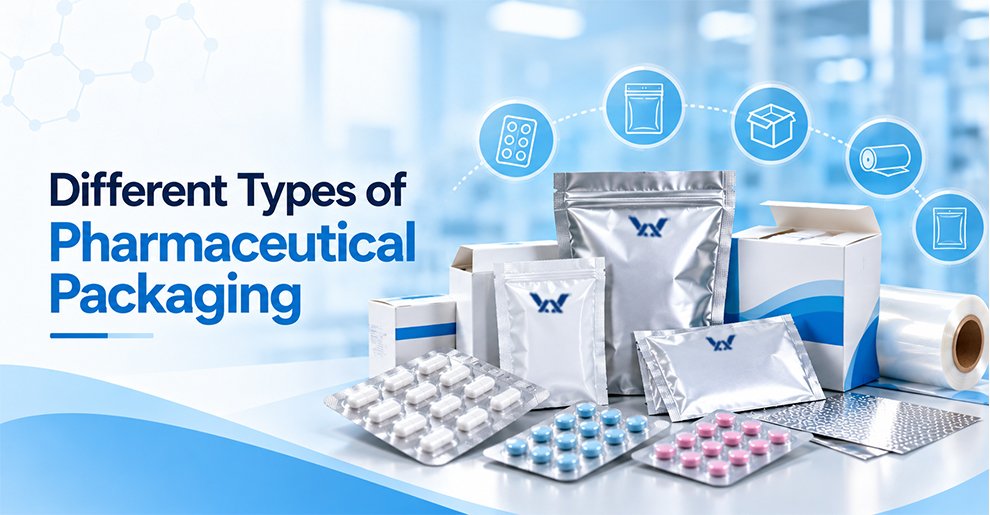
Pharmaceutical packaging is commonly classified into three categories: primary, secondary, and tertiary packaging. Each category performs a different role in protecting and distributing pharmaceutical products.
Primary Pharmaceutical Packaging
Primary packaging is the packaging that directly contains or comes into contact with the pharmaceutical product.
Examples include:
- Blister packs for suitable tablets and capsules.
- Bottles for selected tablets, capsules, or liquids.
- Sachets and pouches for suitable powders or single-dose products.
- Vials and ampoules for appropriate liquid formulations.
Primary packaging requires particular attention because material compatibility and product stability are essential. The selected packaging must be evaluated for the specific formulation and intended conditions of use.
Secondary Pharmaceutical Packaging
Secondary packaging surrounds or groups the primary package. It commonly includes cartons, outer boxes, and other protective packaging.
Its main purposes may include providing additional protection, grouping products, displaying essential information, and supporting handling and distribution.
For example, individual blister packs may be placed inside a printed carton containing product instructions and identification details.
Tertiary Pharmaceutical Packaging
Tertiary packaging is primarily used for bulk handling, storage, and transportation.
Examples include shipping cartons, pallet wrapping, and transport containers. These formats help organise multiple units and protect shipments during distribution.
Although tertiary packaging may not directly contact the medicine, it contributes to the safe movement of products through the supply chain.
Selecting the appropriate packaging level helps pharmaceutical manufacturers manage product protection, identification, and distribution more effectively.
Key Factors to Consider When Choosing Pharmaceutical Packaging Materials
Choosing pharmaceutical packaging materials requires a structured approach. The following factors can help manufacturers evaluate different options before finalising a packaging specification.
Product Compatibility and Safety
The first step is to understand the product that will be packaged.
Different formulations may react differently to packaging materials. Manufacturers should assess the potential for interaction, migration of substances, adsorption, absorption, or other compatibility issues where relevant.
Consider the product’s physical and chemical characteristics, intended shelf life, storage conditions, and applicable regulatory requirements.
The selected material should be supported by appropriate compatibility and stability assessments rather than assumptions based on appearance or cost.
Moisture and Oxygen Barrier Properties
Moisture and oxygen can affect the quality of certain pharmaceutical products. Moisture-sensitive powders, for example, may require strong moisture protection, while oxygen-sensitive formulations may need an appropriate oxygen barrier.
When evaluating a packaging structure, manufacturers should consider:
- Water vapour transmission rate (WVTR).
- Oxygen transmission rate (OTR).
- The effect of temperature and humidity on barrier performance.
- The quality of seals and closures.
- The protection required throughout the intended shelf life.
A high-barrier material may be beneficial for a sensitive product, but the required performance should be determined by product-specific stability data.
Light Protection and Temperature Resistance
Some pharmaceutical formulations are sensitive to light or must be stored within a defined temperature range.
Opaque films, suitable aluminium-containing laminates, amber glass, or other protective formats may be considered depending on the product’s needs.
Packaging should also be assessed under the expected storage and transportation conditions. A material that performs well at room temperature may behave differently under higher temperatures or other challenging conditions.
It is important to remember that packaging alone cannot compensate for unsuitable storage or transportation conditions.
Packaging Strength and Durability
Packaging must withstand filling, sealing, handling, stacking, and transportation without losing its protective function.
Weak materials or poorly designed seals may lead to punctures, tears, leakage, or package failure.
Manufacturers should evaluate relevant properties such as tensile strength, puncture resistance, seal strength, and durability under realistic handling conditions.
The packaging format should also work with the intended filling and sealing equipment.
Sealing Performance and Leak Prevention
A packaging material can provide good barrier properties, but poor seals may allow moisture, oxygen, or contaminants to enter the package.
Seal integrity is therefore an important part of pharmaceutical packaging design.
Manufacturers should evaluate the sealing method, operating conditions, material compatibility, and consistency of the finished package. Appropriate leak testing or other integrity tests should be selected according to the packaging system and product requirements.
Regulatory Compliance and Quality Testing
Pharmaceutical packaging must comply with the applicable requirements for its intended use and destination market.
Before selecting a supplier or material, manufacturers should review relevant specifications, technical documentation, quality controls, traceability, and testing evidence.
Depending on the application, evaluation may include material compatibility, extractables and leachables assessments, stability studies, seal integrity testing, and other appropriate tests.
A supplier’s certification can provide useful information about its quality management system, but certification alone does not establish that every material is suitable for every pharmaceutical product.
A careful assessment of these factors helps manufacturers select packaging that balances product protection, quality, and operational requirements.
How Does Flexible Pharmaceutical Packaging Protect Product Quality?
Flexible pharmaceutical packaging can provide an effective solution for products that are compatible with pouch, sachet, or film-based formats.
Its performance depends on the selected material structure, package design, sealing method, and intended application.
Provides Tailored Barrier Protection
Flexible packaging can combine materials to achieve specific moisture, oxygen, and light protection requirements.
For example, a suitable foil-containing laminate may be considered for a product that needs strong protection against moisture and light. Other formulations may require different structures based on their stability requirements.
The key is to select a structure that meets the required performance rather than assuming all flexible packaging offers the same protection.
Supports Lightweight and Space-Efficient Packaging
Flexible pouches and sachets can be lightweight and compact compared with some rigid formats.
This may help reduce storage requirements and improve transportation efficiency. Smaller formats can also be useful when a product is intended for single-dose or measured-quantity packaging.
The actual benefits depend on the product, pack dimensions, distribution method, and comparison format.
Offers Convenient Packaging Formats
Flexible packaging can be produced in different formats, including sachets, flat pouches, and rollstock for suitable filling and packaging operations.
These formats can support efficient packing and clear product identification when designed appropriately.
For example, three-side seal pouches may be considered for suitable single-use or small-quantity applications, subject to pharmaceutical compatibility and packaging validation.
Supports Product Identification and Branding
Flexible packaging films can offer printed surfaces for product names, batch details, instructions, and other required information.
Clear and legible printing supports product identification and helps reduce confusion during handling and distribution. Pharmaceutical labelling must still meet the relevant legal and regulatory requirements.
Flexible packaging is not a universal replacement for bottles, blister packs, or other pharmaceutical formats. It is one option that can be evaluated when its performance, compatibility, and intended use meet the product’s requirements.
How to Choose the Right Pharmaceutical Packaging Supplier
Selecting a pharmaceutical packaging supplier is an important part of maintaining consistent packaging quality. A suitable supplier should understand the technical requirements of the application and provide reliable information about its materials and manufacturing processes.
1. Review Manufacturing Capabilities
Check whether the supplier can manufacture the required packaging format, material structure, dimensions, and printing specifications.
If your product requires flexible packaging, confirm that the supplier has the relevant capabilities and can explain the intended application’s technical requirements.
2. Evaluate Quality Systems and Documentation
Ask about the supplier’s quality management practices, traceability systems, specifications, testing procedures, and relevant certifications.
Review the documentation needed for your product and target market. Claims about pharmaceutical suitability should be supported by appropriate evidence.
3. Discuss Product-Specific Requirements
Share the important details of your product, including its formulation type, sensitivity to moisture or oxygen, expected shelf life, filling method, storage conditions, and transportation requirements.
This information helps the supplier evaluate possible packaging structures instead of recommending a generic solution.
4. Consider Customization and Production Consistency
Packaging requirements may change with production volume, product size, artwork, and equipment.
Ask whether the supplier can maintain consistent material specifications, print quality, dimensions, and sealing performance across production batches.
5. Compare Overall Value, Not Just Price
The lowest quotation may not always represent the best long-term value.
Consider material performance, product protection, wastage, production efficiency, documentation, delivery reliability, and the potential cost of packaging failures.
A structured supplier evaluation can help pharmaceutical manufacturers make informed decisions and reduce avoidable packaging risks.
Why Choose White Lotus Industries for Flexible Packaging Solutions?
Choosing the right packaging partner starts with understanding your product and its protection requirements. White Lotus Industries provides flexible packaging solutions designed around factors such as material selection, packaging structure, product presentation, and functional performance.
Established in 2011 in Surat, Gujarat, the company serves businesses across different industries and offers customised flexible packaging options.
When evaluating a flexible packaging partner for a pharmaceutical or nutraceutical application, businesses should consider the following areas:
Material Selection
The packaging structure should be selected according to the product’s barrier requirements, sealing needs, compatibility, and intended storage conditions.
White Lotus Industries highlights material selection as part of its flexible packaging services. Pharmaceutical manufacturers should confirm the specifications, supporting documentation, and suitability of any proposed structure for their particular product.
Flexible Packaging Formats
Different products require different packaging formats. Depending on the application and available specifications, flexible packaging formats may include flat pouches, sachets, and other customised pouch structures.
The appropriate format should be selected according to the product, filling process, required protection, and applicable regulations.
Customised Printing and Design
Packaging can also support product identification and brand presentation through customised printing and design.
For pharmaceutical applications, artwork must accommodate the required product information and remain clear and legible. Branding should never compromise essential labelling or safety information.
Quality and Manufacturing Standards
White Lotus Industries states on its website that it holds BRCGS Grade B certification under the Global Standard for Packaging Materials. Businesses should verify the current certificate, its scope, and its applicability to their intended pharmaceutical packaging requirements.
If you are comparing packaging options, explore the flexible packaging solutions from White Lotus Industries and discuss your product-specific requirements with the company before finalising a material.
The goal is to find a packaging solution that meets the required performance and quality standards while supporting efficient production and reliable distribution.
Conclusion
Choosing the right pharmaceutical packaging materials is an important step in protecting medicine quality and maintaining product integrity throughout storage and transportation. Manufacturers must evaluate product compatibility, moisture and oxygen barriers, light protection, sealing performance, durability, and applicable regulatory requirements before selecting a solution.
Plastic films, aluminium foil, glass, paperboard, and flexible laminates each have different properties and applications. The best choice depends on the product’s formulation, intended use, stability requirements, and packaging system.
Flexible pharmaceutical packaging can offer lightweight construction, adaptable formats, and tailored barrier performance for suitable applications. However, material selection should always be supported by appropriate testing and product-specific evaluation.
White Lotus Industries offers flexible packaging solutions for businesses exploring customised packaging formats. By clearly defining your product requirements and working with a technically capable supplier, you can make a more informed packaging decision that supports product protection, quality, and long-term business needs.
FAQs
Q1. What Are Pharmaceutical Packaging Materials?
Pharmaceutical packaging materials are materials used to contain, protect, store, and transport medicines and healthcare products. Common examples include plastic films, aluminium foil, glass, paperboard, and flexible laminates. The right material depends on the product’s formulation, compatibility, storage conditions, and protection requirements.
Q2. Which Materials Are Commonly Used for Pharmaceutical Packaging?
Common pharmaceutical packaging materials include plastics, aluminium foil, glass, paperboard, and multilayer flexible laminates. Plastic films are used in various pouches and packaging formats, while aluminium foil provides strong barrier protection in suitable structures. Glass is used for selected liquid medicines, and paperboard is commonly used for secondary packaging.
Q3. How Do You Choose the Right Pharmaceutical Packaging Materials?
To choose the right pharmaceutical packaging materials, consider product compatibility, moisture and oxygen sensitivity, light protection, sealing performance, durability, storage conditions, and applicable regulatory requirements. Product-specific testing and stability assessments help determine whether a packaging material is suitable.
Q4. Why Are Barrier Properties Important in Pharmaceutical Packaging?
Barrier properties help limit the movement of moisture, oxygen, and other external factors through packaging. These properties are important for pharmaceutical products that may deteriorate when exposed to environmental conditions. The required barrier performance depends on the formulation, intended shelf life, and storage requirements.
Q5. Is Flexible Packaging Suitable for Pharmaceutical Products?
Yes, flexible packaging can be suitable for certain pharmaceutical products when the material structure, product compatibility, barrier performance, and sealing system meet the required specifications. Flexible pouches, sachets, and laminated films may be considered for suitable applications after appropriate evaluation and testing.