
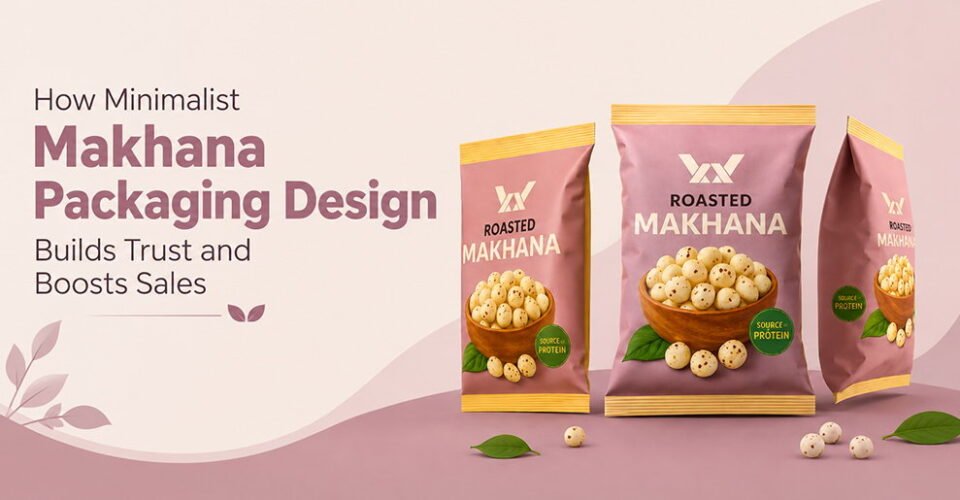
Walk into any supermarket today and you’ll notice something interesting. Many premium snack brands no longer use crowded packaging filled with colors, text, and graphics. Instead, they rely on clean layouts, simple typography, and minimal design elements.
This shift isn’t accidental. It’s rooted in consumer psychology.
When applied correctly, makhana packaging design can influence how customers perceive quality, trustworthiness, and value before they even taste the product. For healthy snack brands competing in a growing market, understanding minimalist design psychology can become a powerful competitive advantage.
As makhana continues gaining popularity among health-conscious consumers, brands that embrace thoughtful packaging design are often better positioned to stand out, build trust, and command premium pricing.
What Is Minimalist Design in Makhana Packaging?
Minimalist packaging focuses on simplicity, clarity, and purposeful design.
Instead of overwhelming consumers with excessive information and visuals, minimalist packaging highlights only the most important elements. These often include the brand name, product identity, key benefits, and a clean visual presentation.
In modern makhana packaging, minimalist design typically includes:
- Clean typography
- Limited color palettes
- High-quality product imagery
- Generous white space
- Clear product messaging
The goal is not to remove information entirely. The goal is to present information in a way that feels effortless for consumers to understand.
This approach aligns with how the human brain naturally processes visual information.
Why Packaging Psychology Matters in Consumer Buying Decisions
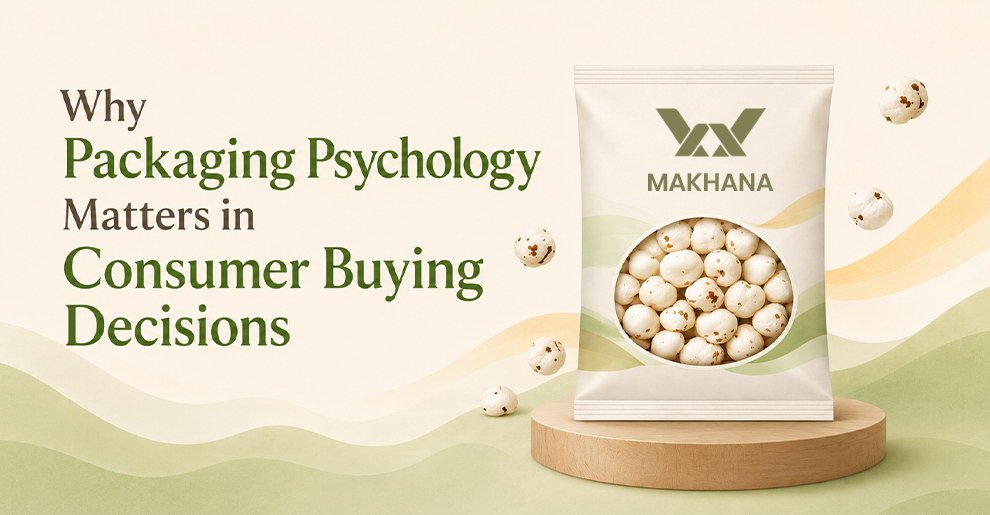
Packaging is often the first interaction customers have with a product.
Studies across FMCG industries consistently show that consumers form opinions about products within seconds of seeing them. Before they evaluate ingredients, pricing, or nutritional benefits, they subconsciously judge the packaging.
This process is known as the first impression effect.
When consumers encounter cluttered packaging, their brains must work harder to process information. This creates friction and confusion.
Minimalist packaging does the opposite.
It creates cognitive fluency, meaning consumers can quickly understand what the product is and why it matters.
This simplicity often leads to:
- Higher trust
- Faster decision-making
- Better product recall
- Increased premium perception
For healthy snack brands, these psychological advantages can directly influence purchasing behavior.
How Makhana Packaging Design Influences First Impressions
First impressions play a critical role in retail environments.
Most shoppers spend only a few seconds evaluating products on a shelf. During this short period, packaging determines whether a product gets noticed or ignored.
Effective makhana packaging design creates a positive emotional response immediately.
Consumers often associate clean packaging with:
- Better quality
- Healthier ingredients
- Modern brands
- Premium products
- Greater trustworthiness
Many successful healthy snack brands intentionally use minimalist packaging because it aligns with the expectations of today’s wellness-focused consumers.
When customers see organized and professional packaging, they naturally assume the product inside receives the same level of care.
The Psychology of Simplicity: Why Less Often Sells More
One of the most powerful principles in consumer psychology is known as the simplicity bias.
People naturally prefer information that is easier to process.
When faced with multiple options, consumers often choose products that feel familiar, clear, and uncomplicated.
This is why minimalist packaging frequently outperforms overly complicated designs.
A simple package allows customers to quickly identify:
- What the product is
- Why it is beneficial
- Why they should trust it
In the healthy snack category, simplicity often reinforces authenticity.
Consumers increasingly associate clean packaging with natural ingredients and transparent brands.
For brands investing in makhana packaging design, simplicity can become a silent sales tool that works around the clock.
Best Colors, Fonts, and Visual Elements for Makhana Packaging
Minimalist packaging does not mean boring packaging.
The most effective designs use visual elements strategically.
Colors
Color psychology plays a major role in purchase decisions.
For makhana products, commonly effective colors include:
Green often communicates health and natural ingredients.
White creates a sense of cleanliness and simplicity.
Black can convey sophistication and premium quality.
Beige and earthy tones reinforce natural and organic positioning.
Typography
Fonts should be easy to read and visually balanced.
Modern sans-serif fonts often perform well because they create a clean and contemporary appearance.
Product Imagery
Instead of using multiple images, minimalist packaging often relies on one strong visual element.
A high-quality product image or simple illustration can improve product visibility while maintaining a premium look.
How Packaging Design for Makhana Creates Premium Perception
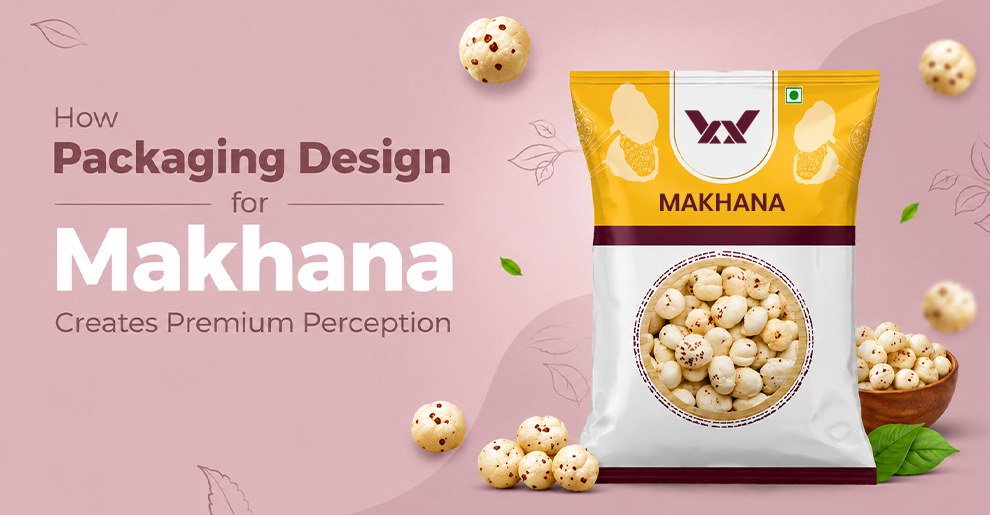
Premium perception is largely psychological.
Consumers frequently use packaging as a shortcut to evaluate quality.
A thoughtfully executed packaging design for makhana helps create this premium perception through:
- Clean layouts
- Balanced spacing
- Consistent branding
- Professional printing
- High-quality materials
Interestingly, many luxury brands use fewer design elements than budget brands.
The reason is simple.
Minimalism communicates confidence.
Rather than trying to attract attention through visual noise, premium brands rely on design discipline and clarity.
This principle applies equally to food packaging.
Consumers often expect premium snack products to look refined, modern, and trustworthy.
Common Packaging Design Mistakes Makhana Brands Make
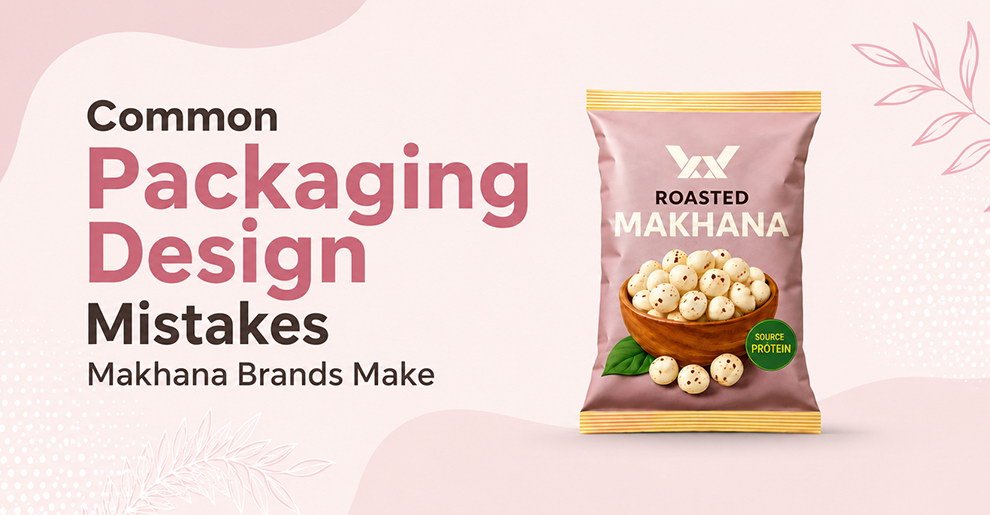
Many growing brands unintentionally reduce their packaging effectiveness.
One common mistake is overcrowding the design.
When too many messages compete for attention, consumers struggle to identify the product’s primary value.
Another mistake is inconsistent branding.
Colors, fonts, and design styles should remain consistent across product lines.
Poor packaging material selection can also affect customer perception. Even a beautiful design can appear low quality when printed on unsuitable materials.
Some brands also ignore product visibility entirely.
Consumers often prefer packaging that allows them to quickly understand what they are purchasing.
Effective makhana packet design balances branding, information, and simplicity.
Modern Makhana Packaging Trends in 2026
The snack packaging industry continues evolving rapidly.
Several trends are shaping modern makhana packaging design in 2026.
Sustainability remains a major priority. Consumers increasingly prefer brands that demonstrate environmental responsibility.
Transparent packaging windows continue gaining popularity because they help build trust and showcase product quality.
Flexible packaging formats are also growing.
Many snack brands are adopting Center Seal Pouches because they provide practical storage benefits, packaging efficiency, and cost-effective production while maintaining strong shelf presence.
Minimalist branding continues leading premium snack categories because it aligns with changing consumer expectations.
How Minimalist Packaging Improves Shelf Appeal and Brand Recall
Shelf appeal is not simply about attracting attention.
It is about attracting the right attention.
Minimalist packaging often creates visual contrast in crowded retail environments.
When surrounded by colorful and complex packaging, a clean design naturally stands out.
This creates stronger visual recognition and improves brand recall.
Many successful FMCG brands understand that memorable packaging does not need to be loud.
Instead, it needs to be clear and distinctive.
This principle is equally important in other food categories. For example, the packaging psychology discussed in Pouch for Masala Packing demonstrates how design influences trust, product protection, and purchasing decisions across food products.
Consumers remember packaging that feels effortless to understand.
Expert Tips for Creating an Effective Makhana Packet Design
Successful packaging starts with understanding consumer behavior.
Focus on one primary message instead of multiple competing messages.
Use colors that support your brand positioning rather than following trends blindly.
Invest in professional photography or product visualization.
Ensure your design remains readable from a distance.
Prioritize packaging materials that support both product protection and premium presentation.
Most importantly, remember that effective makhana packet design should guide customers toward a decision, not overwhelm them with information.
Future of Makhana Packaging Design
The future of makhana packaging design will likely be shaped by three major forces.
First, consumers will continue demanding greater transparency and authenticity from brands.
Second, sustainable packaging solutions will become increasingly important.
Third, minimalist design principles will remain relevant because they align with how consumers process information.
As healthy snack categories become more competitive, brands that combine packaging psychology with strategic branding will have a stronger opportunity to build long-term customer loyalty.
Future-ready packaging will focus on clarity, trust, functionality, and emotional connection.
Conclusion
Minimalist packaging is more than a design trend. It is a powerful psychological tool that influences how consumers perceive quality, trust, and value.
A strategic makhana packaging design helps brands reduce customer confusion, improve shelf visibility, create premium perception, and strengthen brand recall. In today’s competitive snack market, simplicity often becomes a competitive advantage.
Businesses looking to create modern, effective, and consumer-focused packaging solutions can explore innovative packaging expertise from whitelotus Industries to develop packaging that combines strong branding, product protection, and long-term market appeal.
FAQs
Q1: What is minimalist makhana packaging design?
Minimalist makhana packaging design uses simple layouts, clean typography, and limited visual elements to create a premium, trustworthy, and easy-to-understand product presentation.
Q2: Why is packaging important for makhana brands?
Packaging influences first impressions, customer trust, shelf appeal, and purchasing decisions. Strong packaging can help brands stand out and improve product perception.
Q3: How does minimalist packaging increase sales?
Minimalist packaging reduces visual clutter, improves product visibility, and helps consumers make faster buying decisions, which can positively impact sales performance.
Q4: What colors work best in makhana packaging?
Green, white, beige, and black are commonly used because they communicate health, cleanliness, natural ingredients, and premium quality.
Q5: How can packaging improve customer trust?
Professional packaging creates confidence in product quality, safety, and brand reliability, helping customers feel more comfortable making a purchase.