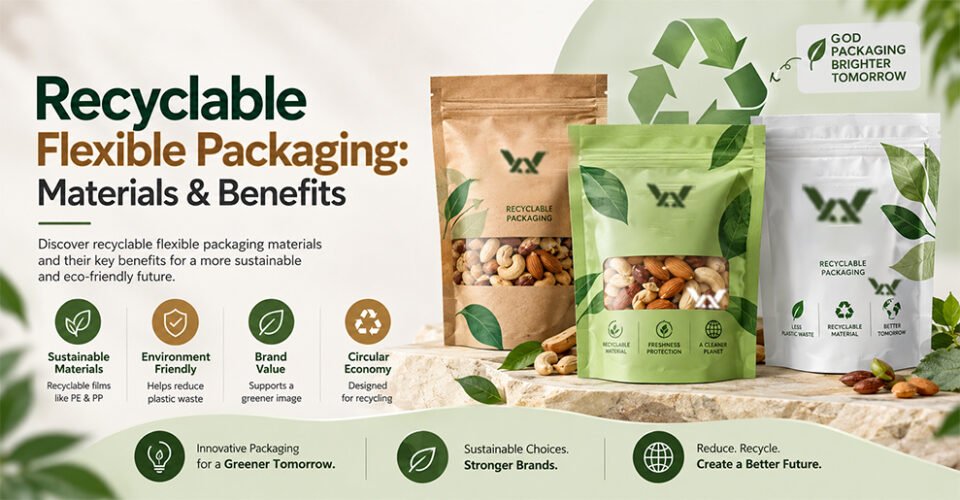
Packaging is no longer judged only by how well it protects a product. Today, brands also have to consider material efficiency, recyclability, product shelf life, transportation, consumer convenience, and overall packaging performance. This has increased interest in recyclable flexible packaging, particularly among food, FMCG, personal care, pharmaceutical, and other consumer-product brands.
Flexible packaging is already known for being lightweight and space-efficient. The next challenge is developing packaging structures that can support recycling without compromising the protection a product needs. This is where material selection and packaging design become particularly important.
White Lotus Industries helps businesses evaluate flexible packaging requirements based on product characteristics, barrier needs, packaging format, and application. Understanding how recyclable structures work can help brands make better packaging decisions instead of choosing a material simply because it is marketed as sustainable.
What Is Recyclable Flexible Packaging?
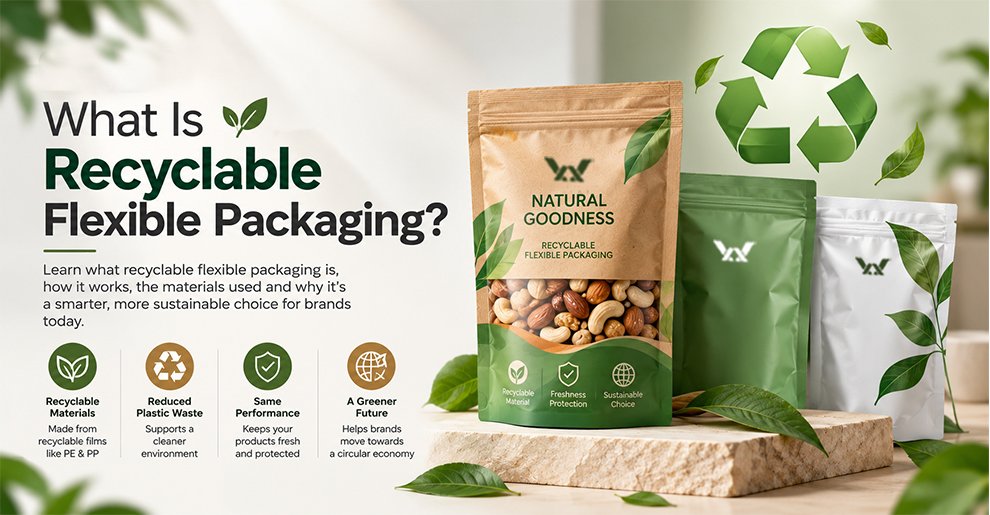
Recyclable Flexible Packaging refers to flexible packaging structures designed with materials and constructions that can be compatible with appropriate recycling systems after use.
Unlike rigid containers, flexible packaging can include films, pouches, bags, laminates, and rollstock. Its construction may contain different layers, with each layer providing a specific function such as strength, printability, sealing, moisture resistance, or oxygen protection.
The important point is that recyclable does not simply mean that a package is made from plastic. Actual recyclability depends on the material structure, additives, inks, adhesives, collection systems, sorting processes, and recycling infrastructure available for that packaging format.
Modern packaging development is therefore moving toward structures that simplify material combinations where possible. Mono-material designs based on compatible polymer families, such as PE or PP, are an important area of development because they can make the packaging structure easier to process within suitable recycling streams.
How Does Recyclable Flexible Packaging Work?
The recycling journey generally involves several stages:
- Collection: Used packaging enters an available collection system.
- Sorting: Materials are separated according to their composition and the capabilities of the recycling facility.
- Processing: Suitable materials are cleaned and mechanically or otherwise processed into recycled material.
- Reuse: Recovered material can be used in suitable new products or applications.
The effectiveness of this process depends on what happens after the packaging reaches the waste stream. Therefore, designing recyclable packaging is only one part of the overall recycling system.
What Materials Are Used in Recyclable Flexible Packaging?
Choosing the right material is one of the most important steps in flexible packaging development. Different products require different levels of moisture, oxygen, light, aroma, puncture, and seal protection.
The right flexible packaging materials should therefore balance product protection, manufacturing requirements, cost, and recyclability.
Polyethylene (PE)
Polyethylene is widely used in flexible packaging because of its flexibility, sealability, and suitability for a variety of packaging structures.
PE-based structures can be considered for products that require flexible films and pouches with good sealing performance. Depending on the design, PE can also be used as the basis for mono-material packaging structures.
Polypropylene (PP)
Polypropylene is another important polymer used in flexible packaging. It offers useful properties such as strength, heat resistance, and good clarity in appropriate film structures.
PP-based structures are used across several food and consumer-product applications, and PP mono-material structures are an area of interest when designing packaging with recyclability in mind.
Mono-Material Packaging
Traditional multilayer packaging can combine different materials to achieve specific barrier, strength, and sealing properties. While these structures can provide excellent product protection, their material complexity can make recycling more challenging depending on the structure and available recycling infrastructure.
Mono material packaging generally refers to packaging designed predominantly around one polymer family rather than combining different polymer types that can be difficult to separate.
For example, PE-based or PP-based structures can be engineered to deliver multiple packaging functions while maintaining greater material compatibility.
However, mono-material does not automatically mean that every package will be recyclable everywhere. The actual outcome still depends on the complete packaging construction and the recycling infrastructure available in the target market.
Recyclable Films and Pouches
Flexible films can be converted into different packaging formats, including stand-up pouches, center-seal pouches, rollstock, and other customized formats.
The structure selected depends on the product and its performance requirements. A snack product, for example, may need stronger moisture and oxygen protection than a dry product with a shorter expected shelf life.
This is why White Lotus Industries approaches flexible packaging as a product-specific engineering decision rather than a one-material-fits-all solution.
Benefits of Recyclable Flexible Packaging
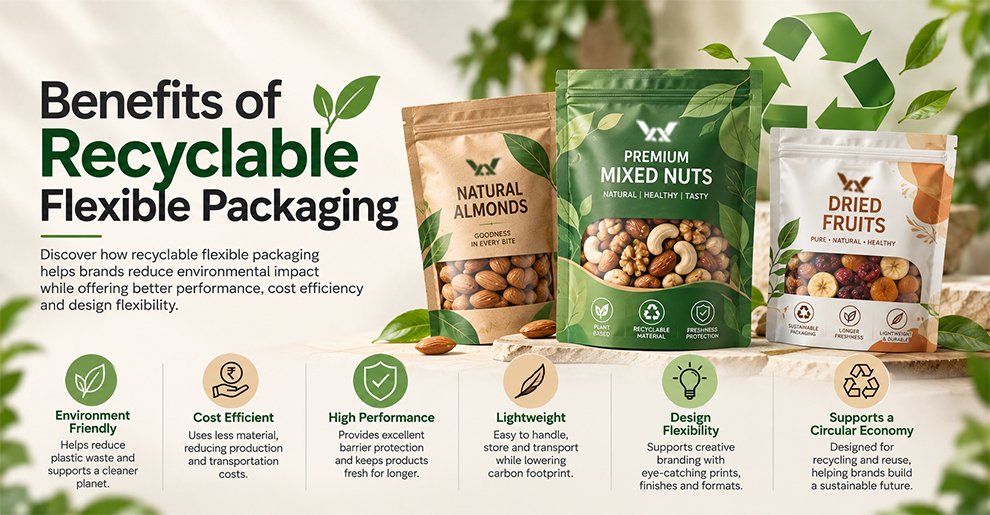
The growing interest in recyclable packaging is connected to both sustainability objectives and the practical advantages of flexible packaging.
1. Supports Better Material Management
Well-designed recyclable structures can support more efficient material recovery when they are compatible with available recycling systems.
Reducing unnecessary material complexity can also make packaging design more aligned with recyclability goals.
2. Lightweight Packaging
Flexible packaging generally uses less material by weight than many rigid packaging formats while still providing the required product protection.
Lower packaging weight can provide advantages during storage and transportation, although the actual environmental benefit depends on the complete packaging lifecycle.
3. Efficient Transportation and Storage
Flexible pouches and films can occupy less space than many rigid containers, particularly before filling. Their lightweight construction can also help brands optimize storage and transportation requirements.
For high-volume FMCG products, these operational benefits can become an important part of packaging selection.
4. Product Protection
Sustainability should not come at the expense of product quality.
The packaging structure must still protect the contents from factors such as:
- Moisture
- Oxygen
- Light
- Contamination
- Physical damage
- Aroma loss
For food products, appropriate barrier performance can help maintain freshness and shelf life.
5. Branding and Printing Flexibility
Flexible packaging provides a large printable surface that can be used for branding, product information, instructions, and regulatory information.
A recyclable structure can therefore be designed to combine sustainability objectives with the visual requirements of a consumer brand.
6. Supports Evolving Packaging Goals
Many brands are reviewing their packaging portfolios to improve material efficiency and reduce unnecessary packaging waste.
For food brands, these goals can also be considered alongside eco-friendly food packaging strategies that focus on balancing product protection, material efficiency, and packaging performance.
Recyclable formats can become part of a broader packaging strategy when they are selected based on actual product requirements and the recycling systems available in the target market.
Limitations of Recyclable Flexible Packaging
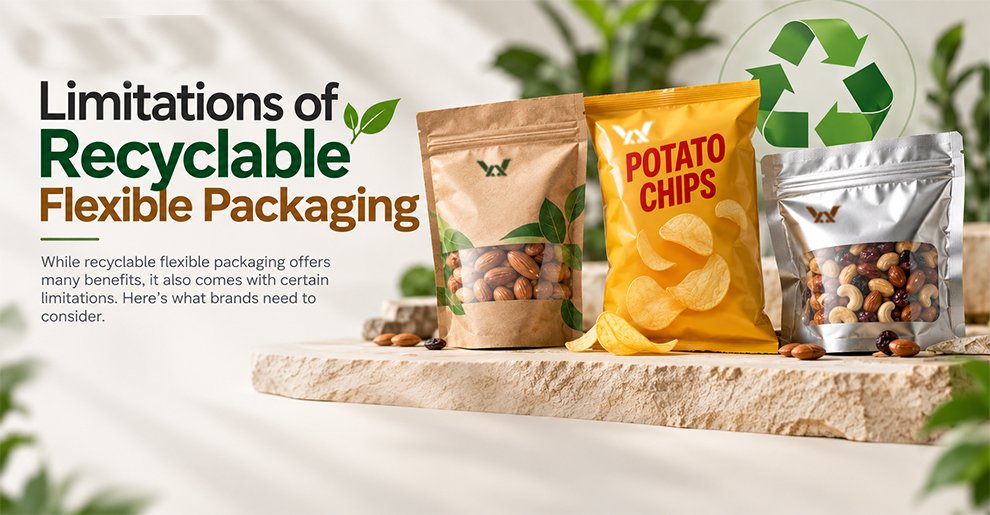
Although recyclable flexible packaging offers important opportunities, it also has limitations. Understanding these limitations is essential before changing an existing packaging structure.
Recycling Infrastructure
One of the biggest challenges is the availability of suitable collection, sorting, and recycling infrastructure.
A packaging structure may be technically recyclable but still face practical limitations if the necessary recovery system is unavailable in the market where it is sold.
Barrier Performance
Some products require high levels of protection against oxygen, moisture, light, or aroma loss. In these applications, high-barrier packaging can play an important role in maintaining product quality and extending shelf life.
Changing from a conventional structure to a recyclable design may require careful material engineering to achieve the same performance.
For products with demanding shelf-life requirements, recyclability must therefore be evaluated alongside barrier performance.
Food and Product Contamination
Packaging that has been used for food or other products can become contaminated with residues.
Contamination can affect sorting and recycling processes and may reduce the practical recovery of the material.
Material and Conversion Costs
Developing a new recyclable structure may require material trials, testing, equipment compatibility checks, and production adjustments.
For this reason, brands should evaluate the complete packaging cost rather than comparing only the price of the packaging material.
Recycling Compatibility
Not every recyclable packaging structure is accepted by every recycling system.
Brands should understand the recycling pathway relevant to their target market before making sustainability claims. Clear and accurate communication is important because recyclability is dependent on the complete system, not just the word “recyclable” printed on a package.
Balancing Sustainability With Performance
The biggest challenge is often finding the right balance.
A package must protect the product throughout manufacturing, transportation, storage, retail, and consumer use. If packaging protection is inadequate and products are damaged or wasted, the intended sustainability benefit can be reduced.
This makes packaging selection a technical decision rather than simply a marketing decision.
Applications of Recyclable Flexible Packaging
Recyclable flexible packaging can be considered for a wide range of applications when the material structure is appropriate for the product and available recycling system.
Food and Snack Packaging
Snacks, namkeen, dry foods, and similar products often require protection against moisture and oxygen. The selection of a suitable snack packaging pouch therefore depends on factors such as product sensitivity, required shelf life, sealing performance, and barrier requirements.
Flexible pouches can provide lightweight packaging while offering opportunities for high-quality printing and convenient formats.
Dry Fruit and Nut Packaging
Dry fruits and nuts can be sensitive to oxygen and moisture. Packaging selection should therefore focus on maintaining product quality and shelf life while considering the desired sustainability characteristics.
Spice and Masala Packaging
Spices require packaging that helps preserve aroma, freshness, and product quality.
Depending on the product and shelf-life requirements, appropriate flexible structures can provide the necessary barrier and sealing performance.
FMCG and Personal Care Products
Flexible packaging is also used for various FMCG and personal care applications.
The suitable structure depends on factors such as product formulation, viscosity, chemical compatibility, filling process, shelf life, and consumer usage.
Pharmaceutical and Nutraceutical Products
Pharmaceutical and nutraceutical products can have strict protection and packaging requirements.
In these applications, recyclability should never be considered separately from product safety, barrier requirements, regulatory requirements, and packaging compatibility.
Other Consumer Products
Flexible packaging can also be considered for pet food, household products, agricultural products, and other applications where lightweight and customized packaging formats are beneficial.
White Lotus Industries offers a range of flexible packaging formats that can be developed around specific product and application requirements.
How to Choose the Right Recyclable Flexible Packaging
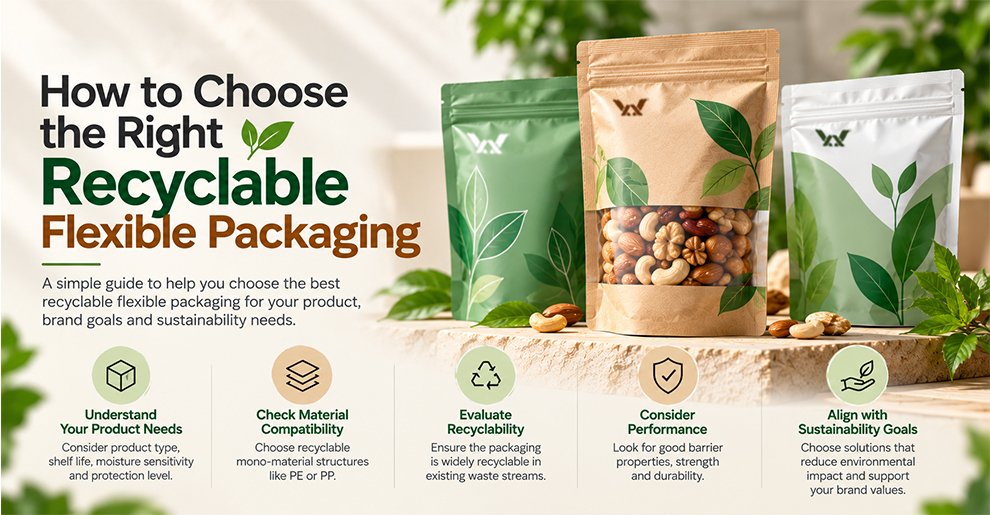
Selecting the right structure requires more than choosing a recyclable material. Businesses should evaluate the complete packaging requirement before finalizing a specification.
1. Understand Your Product
Start with the product itself.
Ask:
- Is it solid, powdered, liquid, or granular?
- Is it sensitive to moisture?
- Does it require oxygen protection?
- Is it sensitive to light?
- Does it contain oil or fat?
- What shelf life is required?
These factors influence the material structure and barrier requirements.
2. Evaluate Barrier Requirements
Determine how much protection the product needs against oxygen, moisture, light, and aroma loss.
A product with demanding barrier requirements may need a more technically engineered structure than a product with relatively low sensitivity.
3. Select the Appropriate Material Structure
The right flexible packaging materials should balance:
- Product protection
- Seal performance
- Puncture resistance
- Printability
- Filling-machine compatibility
- Recyclability considerations
- Cost
A packaging manufacturer can help evaluate these requirements before production begins.
4. Consider the Packaging Format
The same material concept may be converted into different formats depending on the product and filling process.
Common options include
- Stand-up pouches
- Center-seal pouches
- Three-side-seal pouches
- Rollstock
- Flat-bottom pouches
- Spouted pouches
The correct format depends on how the product is filled, stored, displayed, opened, and consumed.
5. Consider the End-of-Life System
Before making a recyclability claim, brands should understand whether their packaging format is compatible with the collection and recycling infrastructure available in their target market.
This is particularly important for brands selling across different regions because recycling capabilities can vary significantly.
6. Work With an Experienced Packaging Manufacturer
A packaging manufacturer can evaluate the product, filling process, shelf-life requirement, packaging format, and sustainability objectives together.
White Lotus Industries works across customized flexible packaging applications, helping businesses select packaging structures according to product and performance requirements rather than relying on a standard packaging solution.
Recyclable Flexible Packaging vs. Conventional Packaging
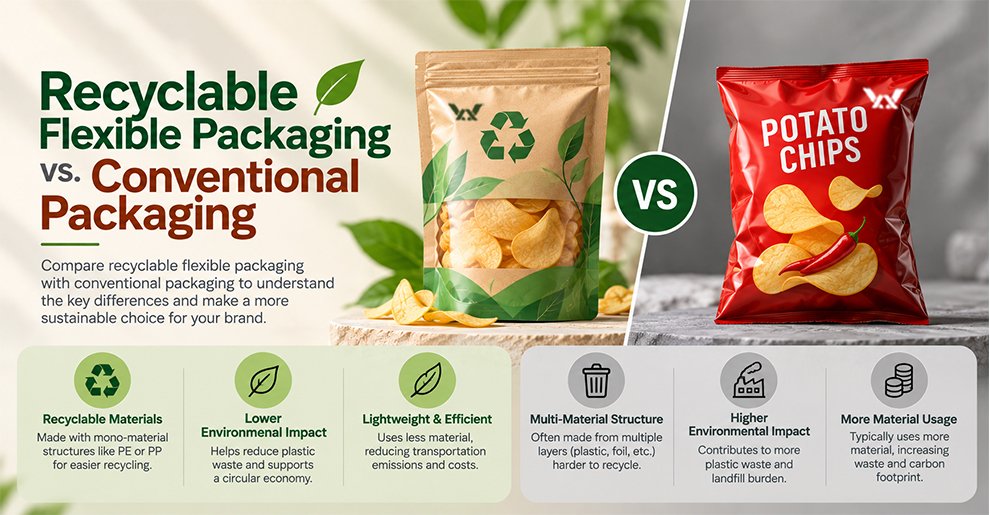
The difference between recyclable and conventional flexible packaging is not simply a question of whether one is “good” and the other is “bad.” The more useful comparison is based on material structure, product performance, recycling compatibility, and end-of-life considerations.
| Factor | Recyclable Flexible Packaging | Conventional Flexible Packaging |
|---|---|---|
| Material Design | Designed with recyclability considerations | May use structures chosen primarily for performance |
| Material Compatibility | Can use compatible polymer structures | May contain combinations that are harder to recycle |
| Product Protection | Can be engineered for required protection | Often provides established barrier performance |
| Lightweight Construction | Yes | Yes |
| Recycling Pathway | Depends on structure and available infrastructure | Depends on material and local recycling systems |
| Sustainability Considerations | Recyclability is considered during design | Sustainability depends on the specific structure |
| Applications | Food, FMCG, personal care and other products | Broad range of applications |
The most suitable option depends on the product, performance requirements, manufacturing process, market, and available recycling pathway.
Final Thought
The future of packaging is not simply about using less plastic or choosing a material labelled “recyclable.” It is about designing packaging that provides the right balance between product protection, material efficiency, manufacturing performance, consumer convenience, and end-of-life considerations.
Recyclable Flexible Packaging can play an important role in this transition, particularly as packaging manufacturers continue to develop mono-material structures and other material-efficient solutions. At the same time, brands need to recognize that recyclability depends on the complete packaging structure and the recycling infrastructure available after use.
For businesses evaluating new packaging formats, the right approach is to start with the product requirements and then work backward toward the most suitable material and structure.
White Lotus Industries provides customized flexible packaging solutions for businesses looking to balance packaging performance, branding, functionality, and evolving sustainability requirements. Whether you need pouches, rollstock, laminated packaging, or customized flexible packaging, selecting the right structure at the beginning can help protect your product and support long-term packaging goals.
FAQs
Q1. What is recyclable flexible packaging?
Recyclable flexible packaging is packaging made from flexible materials and structures that are designed to be compatible with appropriate recycling systems. It can include films, pouches, bags, and rollstock. Actual recyclability depends on the complete material structure and the collection, sorting, and recycling infrastructure available in the relevant market.
Q2. What materials are commonly used in recyclable flexible packaging?
Common materials include polyethylene (PE) and polypropylene (PP), particularly in structures designed around a compatible polymer family. The appropriate material depends on factors such as moisture and oxygen barrier requirements, sealing performance, product characteristics, shelf life, and the intended recycling pathway.
Q3. Is mono-material packaging the same as recyclable packaging?
Not necessarily. Mono-material packaging is designed primarily around one polymer family, such as PE or PP, which can simplify material compatibility. However, being mono-material does not automatically guarantee that a package will be recyclable everywhere. Recyclability also depends on the complete packaging design and the recycling infrastructure available.
Q4. What are the main benefits of recyclable flexible packaging?
Key benefits can include lightweight construction, efficient transportation and storage, material efficiency, flexible design options, product protection, and compatibility with certain recycling systems. The actual environmental benefit depends on the packaging structure, product requirements, and available end-of-life infrastructure.
Q5. What are the limitations of recyclable flexible packaging?
Common limitations include limited recycling infrastructure, contamination after use, demanding barrier requirements, material-development costs, and differences in recycling systems between markets. Packaging manufacturers must balance recyclability with product protection, shelf life, sealing performance, and manufacturing requirements.