
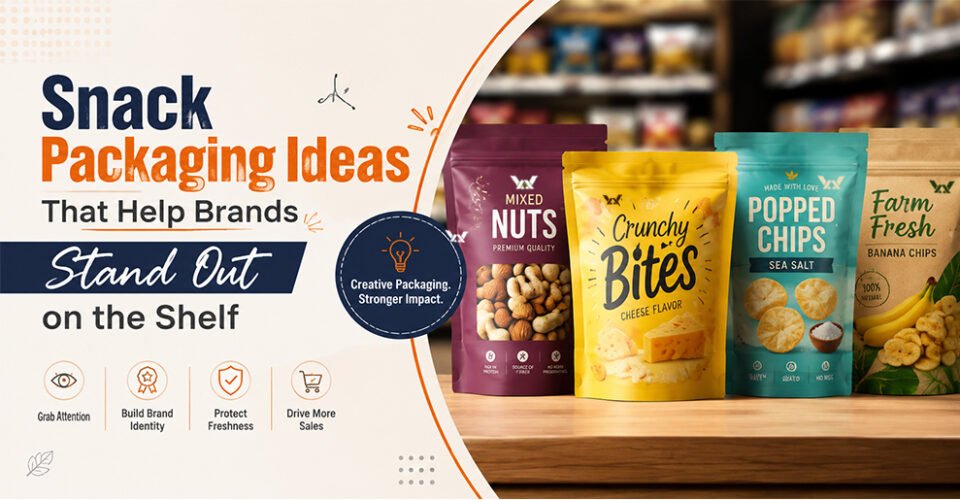
A great snack can get overlooked when its packaging fails to catch the shopper’s eye.
Walk into a supermarket and you will find shelves packed with chips, namkeen, roasted snacks, nuts, popcorn, and other ready-to-eat products. With so many choices competing for attention, having a good product is only one part of the challenge.
Your packaging is often the first thing shoppers notice.
Effective snack packaging needs to perform two jobs at once. It should protect the food throughout storage and transportation while also presenting the brand in a way that feels attractive, clear, and memorable.
For snack manufacturers, this means packaging decisions should go beyond simply selecting a pouch or bag. The structure, appearance, information, usability, and branding all contribute to the final customer experience.
So, what can snack brands do to create packaging that gets noticed without sacrificing functionality?
Let’s explore practical ideas that can help.
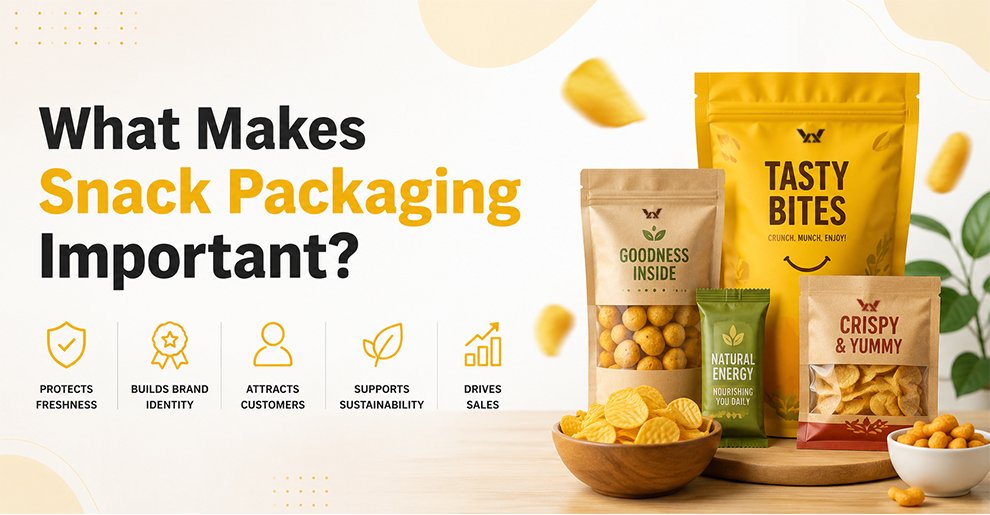
What Makes Snack Packaging Important?
| Packaging Element | Why It Matters |
|---|---|
| Material | Protects freshness and quality |
| Design | Attracts attention on the shelf |
| Pack Size | Matches different customer needs |
| Convenience | Makes the product easier to use |
| Branding | Helps customers recognise your product |
Snack packaging is much more than a container.
It protects the product, supports transportation, provides information, and gives the brand a physical presence in stores. For many shoppers, the pack is also the first interaction they have with a product.
A well-planned package can help communicate:
- What the product is
- Which brand makes it
- What flavour or variant it offers
- Why the customer should consider it
- How the product should be stored or used
This is especially important in categories where several competing products look similar.
When your packaging is easy to identify and understand, shoppers can make decisions more quickly.
Why Shelf Appeal Matters for Snack Brands
Imagine a shopper walking past a shelf filled with similar snack products.
They may only give each package a few seconds of attention. If your brand name is difficult to spot or the design feels cluttered, the product can easily blend into the background.
Strong shelf appeal does not necessarily mean using the brightest colours or the largest graphics.
Instead, effective packaging creates a clear visual hierarchy.
The customer should be able to recognise the brand, understand the product, and identify the key difference between variants without having to study the entire package.
For brands working with an experienced packaging partner like White Lotus Industries, this balance between shelf appeal and practical packaging can help turn a product pack into a stronger brand touchpoint.
Use a Strong Visual Identity
A consistent logo, colour system, typography, and graphic style can help build recognition.
When the same visual language appears across different products, shoppers can begin to associate those design elements with your brand.
Make the Front Panel Easy to Understand
Avoid making every message compete for attention.
Your product name, brand, flavour, and most important selling point should have a clear place within the design.
Snack Packaging Ideas That Can Improve Shelf Visibility
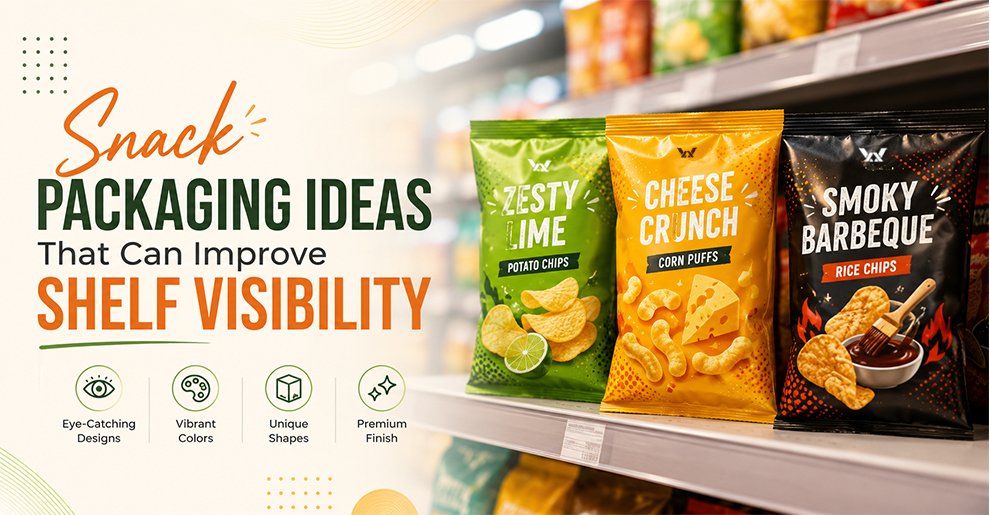
There are many ways to make a snack pack more noticeable while keeping the design practical.
1. Choose Colours With a Purpose
Colour can help separate your product from nearby competitors and distinguish different flavours within your own range.
For example, a snack brand might use a consistent base colour for its identity while introducing different accent colours for individual flavours.
The goal is not simply to make the pack colourful. Every colour should have a role.
2. Create a Recognisable Brand Zone
Your logo should have a consistent position or visual treatment across the product range.
This makes it easier for returning customers to locate your brand when browsing a crowded shelf.
3. Use Food Images Carefully
A strong food image can communicate taste and product type quickly.
However, excessive imagery can make the front of the package feel busy. Select visuals that support the product rather than competing with the brand name.
4. Consider Stand-Up Pouches
Stand-up pouches can provide a strong front-facing display area and can work well for several snack categories.
Their upright presentation can also help products maintain visibility when arranged alongside other packages.
5. Think About the Pack From a Distance
Do not judge a design only while holding it in your hands.
Place it alongside competing packages and view it from a distance. Check whether the brand and product name remain noticeable.
This simple exercise can reveal design problems that are difficult to see during close-up review.
Custom Snack Packaging for Stronger Brand Identity
Custom snack packaging allows a business to develop packaging around its specific product and branding requirements.
Instead of using a generic appearance, brands can create a pack that reflects their positioning and target market.
White Lotus Industries can help brands approach custom snack packaging with both visual identity and practical product requirements in mind.
For instance, a traditional snack brand might combine familiar cultural design elements with a contemporary layout. A premium roasted snack brand may choose a more minimal and refined visual style.
The important point is consistency.
Your packaging should feel like an extension of your overall brand rather than an unrelated design created only for the product shelf.
Choosing Packaging for Product Protection
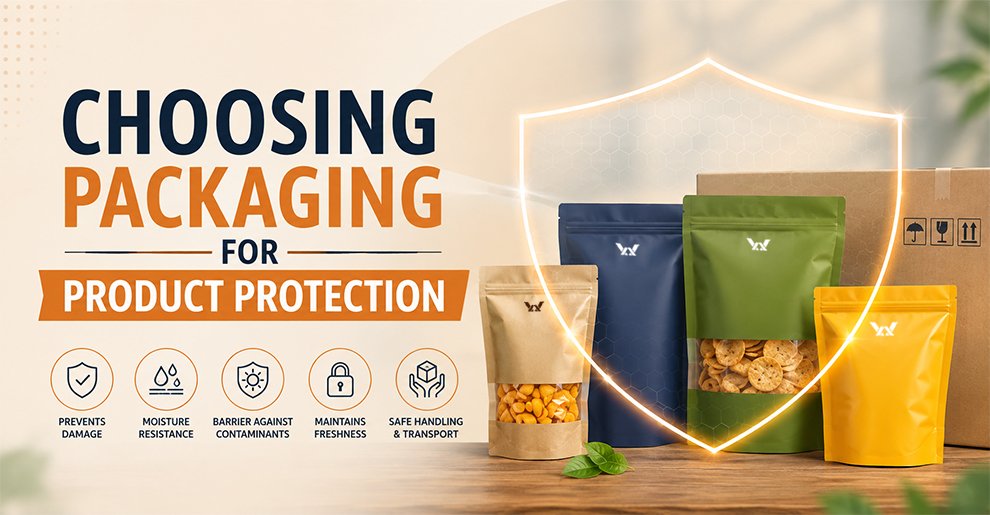
A beautiful package is not enough if it does not adequately suit the product inside.
Different snacks have different packaging requirements. Some may be sensitive to moisture, while others can be affected by oxygen, light, crushing, or improper handling.
For this reason, packaging selection should begin with the characteristics of the food.
For manufacturers working with packaging suppliers such as White Lotus Industries, selecting the right pouch structure starts with understanding the product’s specific protection requirements.
Masala and Namkeen Snacks
Spiced snacks require packaging designed around their specific freshness and protection needs.
The right pouch structure can also provide a suitable surface for strong branding and product communication.
For an example of this application, explore the Masala Packing Pouch Designed for Freshness & Strong Protection.
The key takeaway is simple: the packaging structure should support the product before design elements are finalised.
Packaging Design and Consumer Perception
Packaging communicates more than product information.
It can influence how shoppers interpret the quality, personality, and positioning of a brand.
A clean design may create a modern impression. Detailed visuals may communicate a more traditional or indulgent personality. Premium finishes can support a higher-end positioning when used appropriately.
This makes packaging an important part of brand communication.
For a deeper look at the relationship between packaging design and brand perception, read What your Masala Pouch Packaging Design Is silently telling others about your brand?.
Make the Design Match the Product
The visual identity should make sense for what is inside the package.
A premium dry-fruit brand, a children’s snack, and a traditional namkeen product may all require completely different approaches.
The best design is not necessarily the most elaborate one. It is the one that communicates the right message to the intended customer.
Dry Fruit and Nut Packaging: A Different Approach
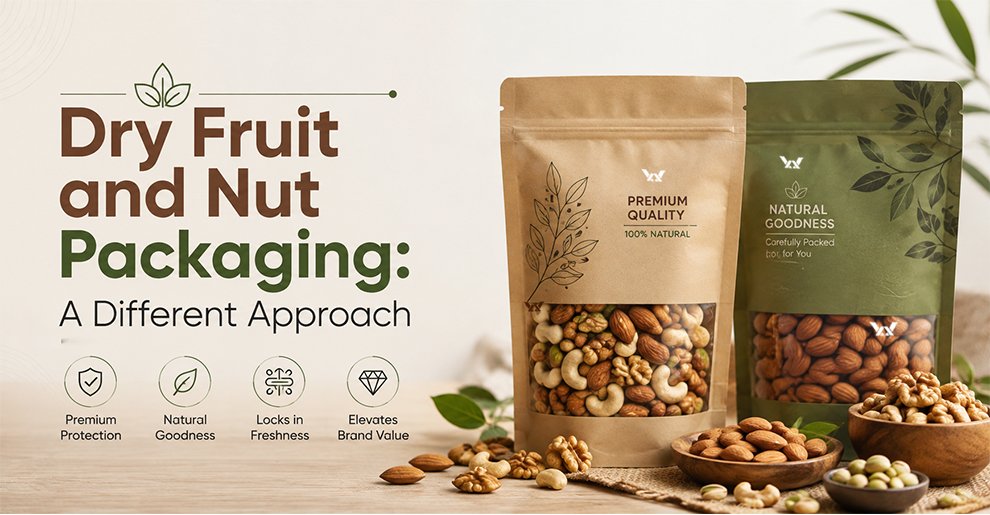
Dry fruits and nuts have their own packaging considerations.
Customers often associate these products with quality, freshness, gifting, health, or premium consumption. Packaging therefore needs to support both product protection and perceived value.
A clean layout, strong product imagery, appropriate pack structure, and clear information can help create a more polished presentation.
If your product range includes dry fruits or nuts, explore Dry Fruit Packaging Pouch for a relevant packaging application.
The same principle applies here: packaging should be selected according to the product first and the visual presentation second.
Common Snack Packaging Challenges
Even a carefully designed package can face practical problems.
Too Much Information
Trying to display every possible message can make the package difficult to understand.
Choose the most important information for the front panel and organise supporting details logically.
Weak Brand Recognition
If the logo is too small or hidden among other elements, shoppers may struggle to remember the product.
Designs That Look Too Similar
Following every trend can make your packaging resemble competing brands.
Look for opportunities to create your own visual identity instead.
Ignoring Physical Handling
Packages travel through manufacturing facilities, warehouses, vehicles, stores, and customer homes.
Packaging needs to account for these conditions rather than being designed only for appearance.
Packaging Convenience Can Improve the Customer Experience
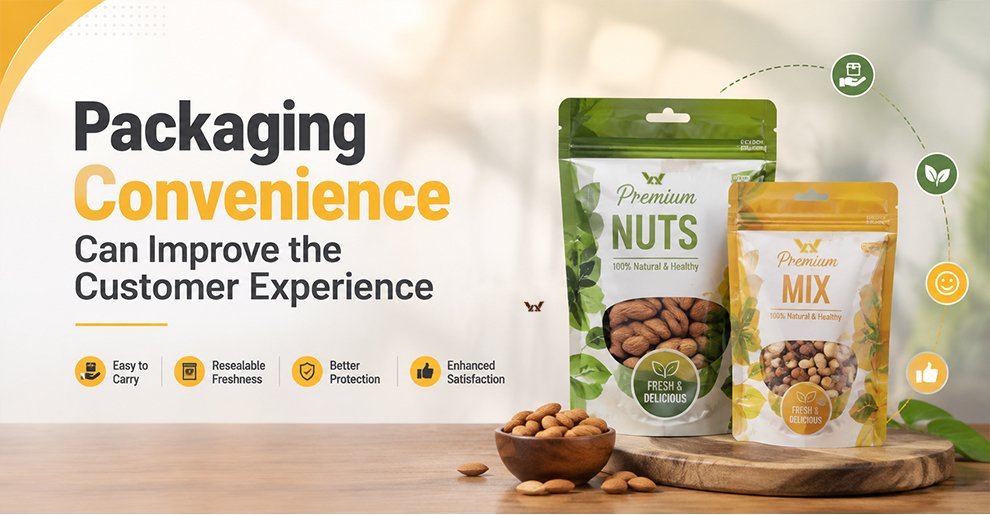
Consumers do not interact with packaging only at the supermarket.
They also have to open it, carry it, store it, and sometimes close it again.
For larger snack packs, resealable features may provide added convenience. Easy-to-handle structures can also make products more practical for everyday use.
A useful way to evaluate packaging is to think about the complete customer journey:
See → Pick → Open → Consume → Store
A strong package should work at each stage.
Why Packaging Requirements Differ Across Food Products
Snack brands often focus heavily on their own category, but packaging requirements can vary significantly between food products.
For example, a dry snack and a liquid food product require different considerations.
Liquid products need packaging that can address handling and leakage concerns in addition to presentation.
For an example outside the dry-snack category, see Fruit Juice Pouch Manufacturer.
This highlights an important packaging principle: there is no single packaging format that works equally well for every food product.
Best Practices for Designing Snack Packaging
Before finalising your packaging, consider the following practices.
Understand Your Product
Start by identifying the product’s physical characteristics and protection requirements.
Study the Shelf
Look at competing products and identify what is visually common within your category.
Then ask:
What can my brand do differently while still remaining clear to shoppers?
Keep Important Information Visible
Your product name and brand should not disappear beneath decorative elements.
Design for Your Target Audience
Packaging for young consumers may use a different visual language from packaging designed for premium or health-focused buyers.
Maintain Brand Consistency
Your packaging should connect naturally with your website, advertising, social media, and other customer touchpoints.
Test Before Large-Scale Production
Review samples for appearance, usability, print quality, pack structure, and overall shelf presentation before moving ahead with large production quantities.
Current Trends in Snack Packaging
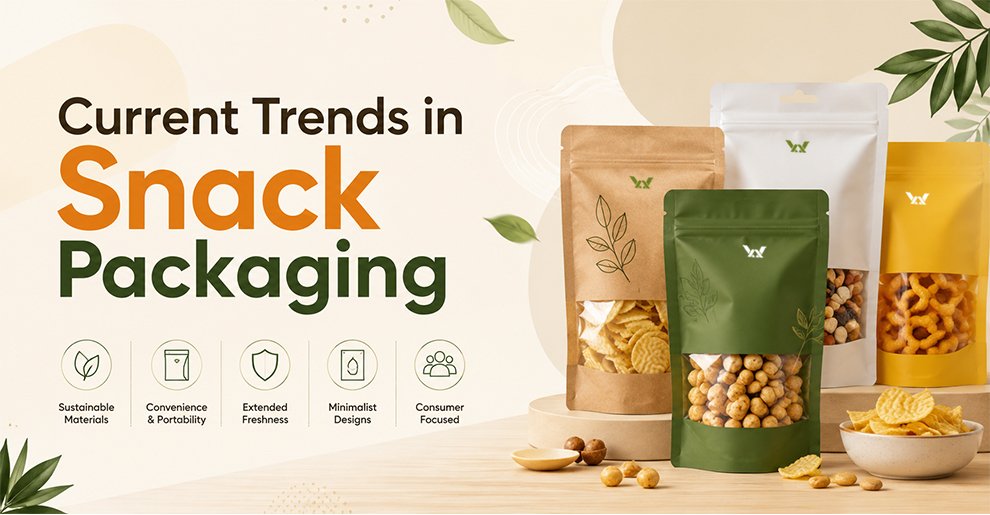
Snack packaging continues to evolve as brands respond to changing consumer expectations.
Convenient Pack Formats
Portable and easy-to-use formats remain useful for consumers who snack while travelling, working, or spending time outdoors.
Premium Visual Presentation
Brands are increasingly using refined layouts, high-quality printing, and selective finishing to create stronger product positioning.
Distinctive Brand Systems
As the number of snack products grows, consistent and recognisable visual identities can help brands establish stronger shelf presence.
Sustainability Considerations
Environmental concerns are becoming an increasingly important part of packaging conversations.
Brands are exploring different material and packaging approaches while still needing to maintain product protection, shelf life, practicality, and commercial viability.
How to Select the Right Snack Packaging Company
Choosing the right packaging partner can influence both the quality and efficiency of your packaging process.
A company such as White Lotus Industries can be a useful packaging partner for brands looking at product protection, customised packaging formats, printing, and presentation together.
When evaluating snack packaging companies, consider whether they understand:
- Your product category
- Protection requirements
- Desired packaging format
- Printing requirements
- Brand presentation
- Production quantities
- Storage and transportation conditions
Do not select a supplier based only on appearance or price.
The packaging needs to perform throughout the product’s journey while delivering the visual impact expected by your customers.
Expert Tips for Better Snack Packaging
If you are planning new packaging, focus on these five principles:
- Protect the product
Packaging must be appropriate for the snack’s physical and storage requirements. - Make the brand easy to recognise
A consistent visual identity helps build familiarity. - Keep the message clear
Customers should understand what they are looking at quickly. - Design around real usage
Consider opening, carrying, consuming, and storing the product. - Differentiate without confusing
Being distinctive is useful only when shoppers can still understand the product.
The strongest packaging decisions balance all five.
The Future of Snack Packaging
The snack industry is becoming increasingly competitive, which means packaging will continue to play an important role in differentiation.
Future packaging strategies are likely to place greater emphasis on convenience, brand storytelling, product protection, visual differentiation, and sustainability.
Brands will also need to think beyond the physical shelf.
Packaging may become increasingly connected with digital experiences, online shopping, social media content, and other customer touchpoints.
This means a successful package should work both as a physical product container and as a recognisable representation of the brand.
Conclusion
Snack packaging has the power to influence how customers notice, understand, and remember a product.
The right combination of structure, protection, design, branding, convenience, and information can help a snack compete more effectively in a crowded retail environment.
For snack manufacturers, working with an experienced packaging partner such as White Lotus Industries can make it easier to bring together product protection, practical functionality, and a design that stands out on the shelf.
But standing out does not mean making the packaging unnecessarily complicated.
The strongest designs usually have a clear purpose. They show shoppers what the product is, make the brand easy to recognise, provide the necessary protection, and create a visual identity that feels appropriate for the target audience.
For snack manufacturers, investing time in packaging strategy can therefore be just as important as developing the product itself.
Q1. What is snack packaging?
Snack packaging is the packaging used to protect, store, transport, display, and sell snack products. Depending on the product, businesses may use flexible pouches, stand-up pouches, laminated structures, and other packaging formats.
Q2. How can snack packaging help a brand stand out?
Brands can improve shelf visibility through distinctive colours, clear typography, strong product imagery, consistent branding, practical formats, and thoughtful finishing. The design should be visually different while remaining easy for shoppers to understand.
Q3. What is custom snack packaging?
Custom snack packaging is developed according to a particular brand’s product, design, protection, and market requirements. It allows businesses to create packaging that reflects their identity rather than relying entirely on standard or generic packaging.
Q4. Why is packaging design important for snacks?
Packaging design creates an early impression of the product and brand. Clear information, strong visual hierarchy, appropriate colours, and professional presentation can help shoppers identify the product and understand its positioning.
Q5. What should I consider when choosing snack packaging?
Consider the snack’s physical characteristics, protection requirements, expected shelf life, pack size, transportation conditions, usability, branding requirements, and retail environment before selecting the final packaging format.