
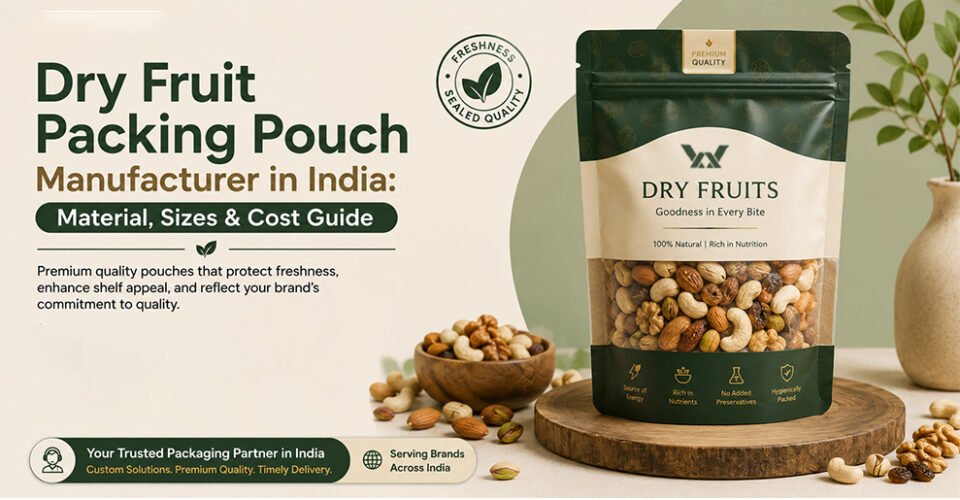
Dry fruits can quickly lose their freshness when exposed to moisture, oxygen, heat, or poor packaging, leading to rancidity, flavour loss, and reduced shelf life. Choosing the right dry fruit packing pouch manufacturer helps businesses select packaging designed to protect product quality during storage, handling, and transportation while maintaining an attractive presentation for customers.
A well-designed dry fruit packaging pouch can provide effective moisture and oxygen protection while offering convenient sealing, handling, and branding options for different product varieties and quantities.
Selecting suitable dry fruit packing material also depends on the required barrier properties, pouch structure, size, printing requirements, and expected storage conditions.
What Do Dry Fruits Need from Packaging?
Dry fruits need packaging that protects freshness from external factors throughout storage and transportation. A reliable dry fruit packing pouch manufacturer focuses on creating barriers that help preserve quality, texture, taste, and shelf life.
Oxygen Protection
Oxygen exposure can gradually affect the natural oils present in dry fruits, causing oxidation and rancidity. Proper packaging should therefore minimise oxygen transmission and help maintain the product’s original taste and freshness.
Moisture Resistance
Moisture is another major concern because it can make dry fruits soft, sticky, or less appealing. A suitable dry fruit packaging pouch should provide strong moisture resistance, especially during humid storage and transportation conditions.
Light Protection
Light exposure can also affect product quality, particularly when packaging is stored for longer periods. Selecting suitable dry fruit packing material with appropriate light-barrier properties can help protect sensitive products from unnecessary exposure.
Aroma Retention
Aroma protection matters because dry fruits can absorb surrounding odors during storage. Effective packaging should help retain the product’s natural aroma while preventing external smells from entering and affecting its overall sensory quality.
Best Dry Fruit Packing Material: Structures Compared
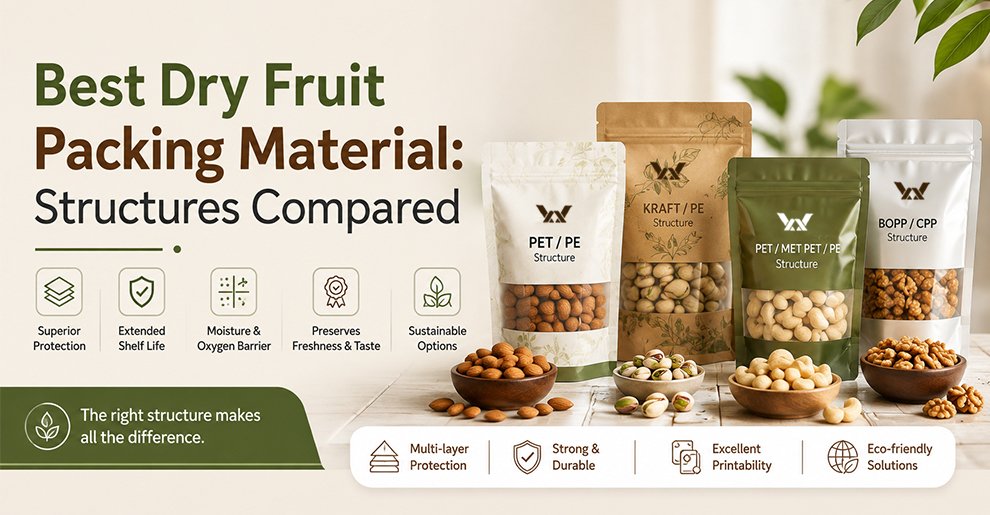
Choosing the right pouch structure depends on the required barrier performance, product shelf life, appearance, and budget. A reliable dry fruit packing pouch manufacturer can recommend suitable laminate combinations based on storage, transportation, and branding requirements.
PET + MET PET + LDPE (High Barrier — Recommended)
PET + MET PET + LDPE provides an excellent balance of strength, moisture protection, oxygen resistance, and light barrier performance. This dry fruit packaging pouch structure is suitable for almonds, cashews, raisins, and mixed dry fruits requiring dependable protection during storage and transportation while maintaining freshness.
PET + Foil + LDPE (Export Grade)
PET + Foil + LDPE offers a stronger barrier against oxygen, moisture, light, and external odours. This dry fruit packing material is particularly suitable for premium products and export applications where extended shelf life, robust protection, and consistent packaging performance are important across longer transportation and storage conditions.
PET + LDPE (Economical)
PET + LDPE is a cost-effective structure for dry fruits where moderate barrier protection is sufficient. It provides good mechanical strength, sealing performance, and product visibility while keeping packaging costs controlled. This option works well for products with shorter storage periods or less demanding distribution conditions.
Kraft + PE (Premium Look)
Kraft + PE combines the natural appearance of kraft paper with the functional protection of a polyethylene layer. It creates a premium, earthy presentation that can strengthen shelf appeal. A dry fruit packing pouch manufacturer can customize this structure with printing, finishes, and formats for premium retail positioning.
Comparison Table
| Structure | Barrier | Shelf Life | Cost |
|---|---|---|---|
| PET + MET PET + LDPE | High | Long | Medium |
| PET + Foil + LDPE | Very High | Very Long | High |
| PET + LDPE | Moderate | Moderate | Low |
| Kraft + PE | Moderate | Moderate | Medium–High |
For packaging brands, material selection is only one part of the customer experience. Design, colours, finishes, and structure also influence buying decisions. For deeper insights, read What Your Masala Pouch Packaging Design Is Silently Telling Customers About Your Brand.
Dry Fruit Packaging Pouch Formats
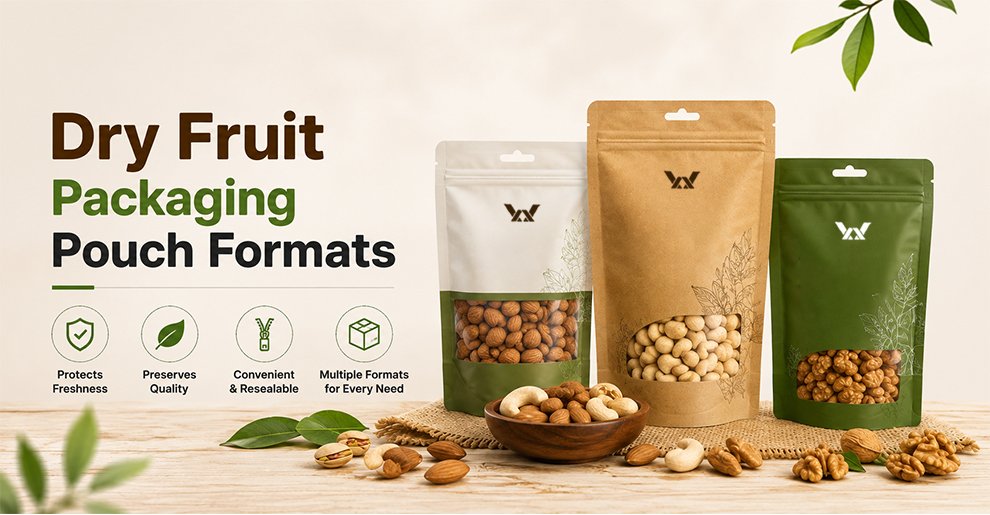
Choosing the right pouch format depends on product quantity, retail positioning, convenience, storage requirements, and presentation. A professional dry fruit packing pouch manufacturer can provide multiple formats to match different product categories and market needs.
Stand Up Pouch with Zipper (250g/500g Retail)
Stand-up pouches with zippers are ideal for 250g and 500g retail packs. The resealable closure improves convenience after opening, while the upright format provides strong shelf visibility. Using suitable dry fruit packing material can also provide the required protection against moisture, oxygen, and external contamination during everyday storage.
Flat Bottom Pouch (Premium & Gifting)
Flat bottom pouches offer a structured, premium appearance with excellent shelf stability. Their larger printable surface provides additional branding space, making them suitable for premium dry fruits, festive collections, corporate gifting, and luxury retail packs. The stable base also makes product presentation more organized and visually appealing.
Centre Seal Pouch (Bulk 1kg+)
Center-seal pouches are practical for bulk quantities, particularly 1 kg and larger packs. Their efficient material usage can help control packaging costs while providing dependable sealing and product protection. A dry fruit packing pouch manufacturer can customize dimensions, laminate structures, printing, and sealing specifications according to bulk packing requirements.
Three-Side Seal Pouch (50g/100g Packs)
Three-side seal pouches are suitable for smaller 50g and 100g dry fruit packs. Their compact format works well for trial packs, single-use portions, promotional packs, and convenient retail offerings. They can be customized with different laminate structures, finishes, and printing options to support attractive product presentation.
Explore More Flexible Packaging Formats
Dry fruit brands can choose from several flexible packaging formats depending on product requirements, pack size, shelf presentation, and application. For a broader understanding of available options, explore Top 10 Types of Flexible Packaging Used in 2026.
Sizes, Micron & Shelf Life
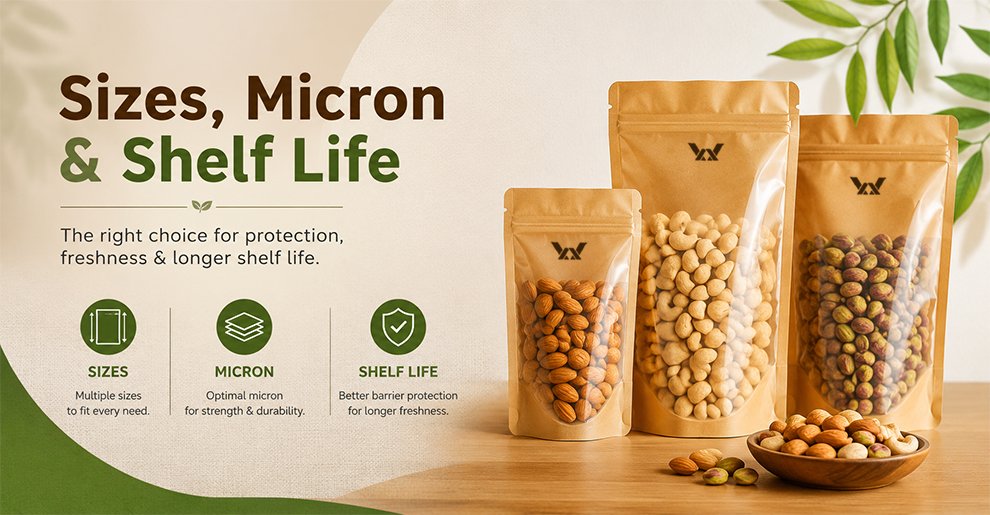
Selecting the right pouch size, thickness, and laminate structure helps balance product protection, packaging cost, handling, and shelf life. A professional dry fruit packing pouch manufacturer can customize these specifications for retail and bulk requirements.
100g to 5kg Size Chart
| Pack Size | Typical Pouch Size | Suitable Format |
|---|---|---|
| 100g | 130 × 200 mm | Three Side Seal |
| 250g | 160 × 230 mm | Stand Up Pouch |
| 500g | 190 × 270 mm | Stand Up Pouch |
| 1kg | 220 × 320 mm | Centre Seal / Flat Bottom |
| 2kg | 260 × 380 mm | Flat Bottom |
| 5kg | 320 × 450 mm | Flat Bottom / Bulk Pouch |
Actual dimensions can vary according to product density, fill volume, pouch format, and required headspace.
How to Choose the Right Micron (60–150)
Micron selection depends on pack size, product weight, handling conditions, and required durability. Dry fruit packing material between 60 and 150 microns can be selected according to application, with thicker structures generally offering better strength, puncture resistance, and handling performance for heavier packs.
How Many Months of Shelf Life Does Each Material Provide?
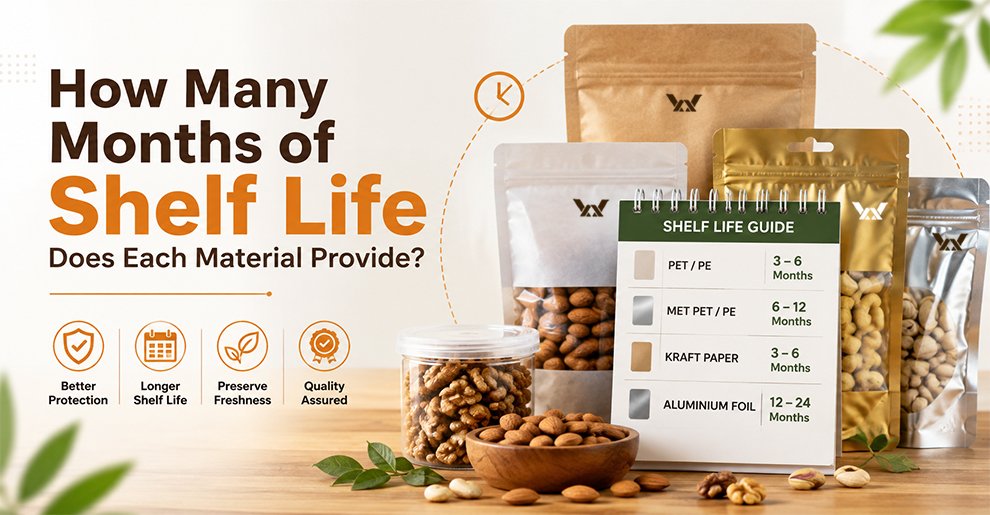
Shelf life cannot be determined by laminate structure alone because product quality, moisture content, processing, sealing, storage temperature, oxygen exposure, and filling conditions also influence performance. High-barrier foil and metallised structures generally provide stronger protection than economical laminates, making them suitable for products requiring longer storage periods.
| Material Structure | Typical Protection | Indicative Application |
|---|---|---|
| PET + LDPE | Moderate | Short to medium-term retail |
| PET + MET PET + LDPE | High | Extended retail shelf life |
| PET + Foil + LDPE | Very High | Premium and export applications |
| Kraft + PE | Moderate | Premium presentation |
For brands deciding between packaging formats, protection, logistics, and presentation should all be considered together. Flexible Packaging vs Rigid Packaging: Which is Better? provides useful context for making that packaging decision.
Cost, MOQ & Printing Options
Packaging cost depends on material, pouch size, thickness, printing, finishing, order quantity, and structure. A reliable dry fruit packing pouch manufacturer can suggest suitable options according to product requirements, budget, and intended market.
What Factors Does the Cost Depend On?
Pouch cost depends on laminate structure, micron thickness, dimensions, printing colours, finishing, zipper or spout requirements, and order volume. High-barrier materials and premium finishes generally increase costs, while larger quantities can improve the overall per-pouch pricing.
Minimum Order Quantity: 500 kg
The minimum order quantity is 500 kg, making it important to finalise pouch specifications and estimated consumption before production. Ordering at the required volume can help brands maintain consistent packaging quality while managing manufacturing and inventory requirements more efficiently.
Rotogravure vs Digital + Cylinder Cost
Rotogravure printing is suitable for larger production quantities and delivers consistent, high-quality printing but requires cylinder preparation that adds an initial cost. Digital printing avoids cylinder costs and can be more practical for smaller or variable print runs.
Conclusion
Choosing the right dry fruit pouch means balancing product protection, shelf life, appearance, and cost. White Lotus Industries, established in Surat since 2011, follows recognised quality and food-safety practices, supported by BRCGS Grade B, ISO certifications, HACCP systems, and an in-house QA laboratory. Its food-grade packaging solutions are designed to support applicable FSSAI requirements.
For businesses seeking dependable dry fruit packaging, White Lotus Industries offers customized pouch structures, sizes, printing, and barrier options for retail and bulk requirements. Contact White Lotus Industries today to discuss your product requirements and find the right packaging solution for your brand.
Whether you need pouches for 100g retail packs, premium gifting, or larger 5kg formats, the right combination of material, thickness, barrier, and pouch style can make a meaningful difference. A packaging partner with manufacturing expertise can help you choose a practical solution that protects your dry fruits while keeping presentation and production requirements in balance.
FAQs
Q1. Which dry fruit packing material is best for long shelf life?
High-barrier structures such as PET + MET PET + LDPE or PET + Foil + LDPE are suitable for longer shelf life because they provide strong protection against moisture, oxygen, light, and external odors.
Q2. What is the MOQ for dry fruit packing pouches?
The minimum order quantity is 500 kg. The final requirement may depend on the pouch structure, size, printing specifications, and production requirements.
Q3. Are the pouches food-grade and FSSAI compliant?
Food-grade packaging can be manufactured to support applicable FSSAI and food-contact requirements. Compliance depends on the selected materials, application, and relevant regulatory specifications.
Q4. Which pouch size is best for 250g and 500g dry fruits?
Stand-up pouches are commonly suitable for 250g and 500g retail packs. Exact dimensions should be finalised based on dry fruit type, product density, fill volume, and required headspace.
Q5. What type of pouch is best for dry fruits?
Stand-up pouches with zippers are a practical choice for retail dry fruits because they offer resealability, convenient handling, and good shelf presentation. The ideal pouch structure should also be selected according to the required moisture, oxygen, and light barrier.