
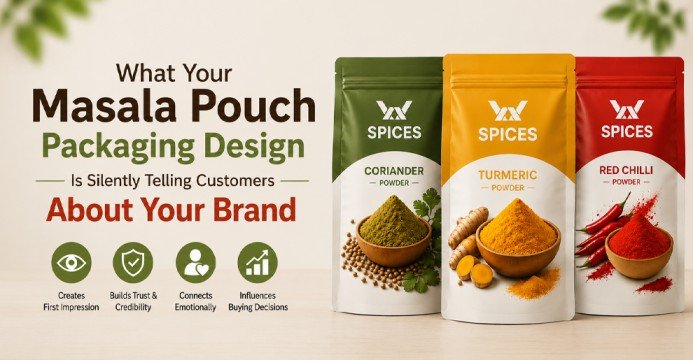
Imagine walking into a supermarket filled with dozens of spice brands. Every pouch contains similar ingredients, comparable quality, and often a similar price range. Yet one product lands in the shopping cart while another is ignored. The deciding factor isn’t always the spice itself—it’s the story the packaging tells before the customer even touches the product.
Your masala pouch packaging design acts as your brand’s silent salesperson. Within a few seconds, customers unconsciously judge whether your product feels premium, hygienic, trustworthy, or worth the price. They haven’t tasted your spice, read the ingredient list, or compared nutritional values, but they’ve already formed an opinion based entirely on what they see.
For spice brands competing in crowded retail stores and online marketplaces, packaging is no longer just a protective layer. It has become one of the strongest marketing assets that influences first impressions, purchase decisions, and long-term brand recall. Every design choice—from colours and typography to pouch material and finish—communicates something about your business.
Whether you’re launching a new spice brand or redesigning an existing product line, understanding the psychology behind packing pouch design can help you attract more customers and create a lasting competitive advantage.
In this guide, you’ll discover how successful spice brands use strategic packaging decisions to build trust, increase perceived value, and encourage repeat purchases.
Why Masala Pouch Packaging Design Creates the First Impression of Your Brand.
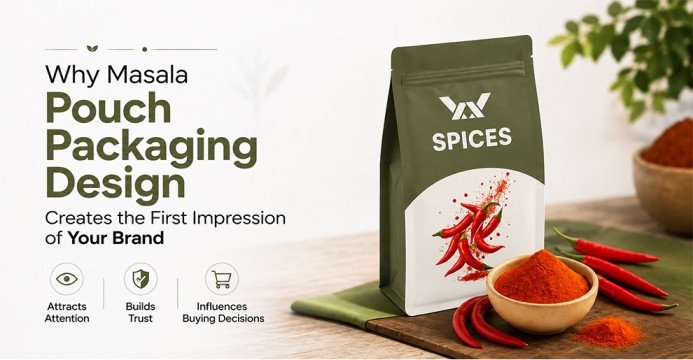
Human beings make purchasing decisions much faster than most businesses realize. Studies in consumer psychology consistently show that visual impressions influence buying behaviour within seconds. When customers stand in front of a shelf filled with turmeric, chilli powder, garam masala, and blended spices, they rarely evaluate every product equally.
Instead, their brain quickly filters products based on appearance.
Your packaging immediately answers silent questions like:
- Is this product hygienic?
- Does it look premium?
- Can I trust this brand?
- Is it worth paying slightly more?
- Does this feel authentic?
- Will the quality match the packaging?
This is why investing in creative pouch packaging design isn’t simply about aesthetics. It’s about communicating credibility before a customer even reads your product name.
Expert Insight
Many spice brands focus heavily on improving product quality but overlook packaging psychology. In reality, customers cannot experience product quality until after purchase but they judge packaging quality instantly. Strong packaging bridges that gap by creating confidence before the first use.
How Masala Pouch Packaging Design Communicates Your Brand Identity
Every element of your masala pouch packaging design communicates something about your brand sometimes intentionally and sometimes without you realizing it.
Bright, vibrant colours often convey freshness, confidence, and modern branding, while dull or faded printing can make customers question the quality of the product inside.
A premium matte finish typically creates a sophisticated, high-end impression, whereas a poorly executed glossy finish may appear inexpensive or lower in quality.
Adding a clear product window helps build transparency by allowing customers to see the colour and texture of the spices before purchasing, increasing their confidence in the product.
Similarly, a clean, minimal design can reinforce a premium brand image by focusing attention on the most important information. On the other hand, packaging cluttered with too many fonts, colours, icons, or promotional badges can overwhelm shoppers and reduce trust.
Together, these design choices shape how consumers perceive your brand, proving that every packaging decision contributes to the story your product tells long before it is opened.
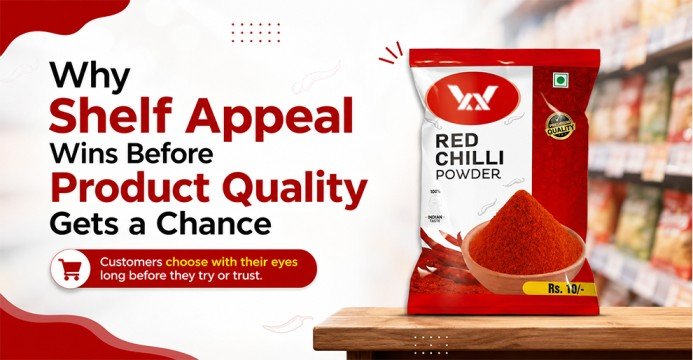
Why Shelf Appeal Wins Before Product Quality Gets a Chance
Imagine your spice pouch sitting beside twenty competing products. Customers don’t have several minutes to compare every option.
They scan.
Pause.
Pick.
This brief interaction is where shelf appeal becomes critical.
Effective masala pouch packaging design helps products stand out without appearing cluttered. The goal isn’t simply attracting attentionit’s attracting the right attention.
High-performing spice packaging typically focuses on:
- Strong visual hierarchy
- Clear product name
- Consistent brand colours
- High-quality food photography or ingredient illustrations
- Easy-to-read typography
- Professional print quality
- Balanced spacing
- Premium finishes where appropriate
When these elements work together, customers feel more confident in their purchasing decision.
On the other hand, inconsistent layouts, low-resolution graphics, or excessive information can create hesitation, even if the spice inside is exceptional.
The Hidden Psychology of Colours in Spice Packaging
Colour is one of the strongest emotional triggers in packaging design.
Customers don’t consciously analyse colour psychology, but they respond to it instinctively.
Different colours create different expectations.
Colour | Common Customer Perception | Best Used For |
Red | Bold, spicy, energetic | Chilli Powder, Hot Masalas |
Yellow | Freshness, turmeric, purity | Haldi, Traditional Spices |
Green | Natural, herbal, organic | Organic Masalas, Herbs |
Black | Premium, luxury | Gourmet Spice Collections |
Orange | Warmth, flavour | Blended Masalas |
Brown | Authentic, earthy | Traditional Indian Spices |
Choosing colours should align with your brand identity rather than simply following trends.
Successful brands use consistent colour systems across their entire product range, making their products instantly recognizable on retail shelves.
Packaging Materials Influence More Than Product Protection
Many businesses choose pouch materials based only on cost.
However, consumers often associate packaging quality with product quality.
A well-designed laminated stand-up pouch with excellent barrier properties not only protects spices from moisture, oxygen, and light but also reinforces the perception of freshness and professionalism.
Today’s consumers also expect food packaging to maintain hygiene, preserve aroma, and offer convenience through features such as resealable zippers or easy-tear notches.
Selecting the right packaging material is therefore both a functional and branding decision.
If you’re evaluating the best material for spice products, understanding different flexible packaging structures is equally important. Learn more in our comprehensive guide on choosing the right flexible packaging pouch:
The right material supports your packaging design by ensuring that what customers see on the shelf matches the quality they experience after opening the pouch.
How Masala Pouch Packaging Design Increases Perceived Product Value
Price is rarely the only factor influencing purchase decisions.
Customers often compare perceived value instead of actual manufacturing cost.
Premium packaging creates confidence.
Confidence reduces purchase hesitation.
Reduced hesitation increases conversions.
When consumers believe your product is professionally manufactured, hygienically packed, and thoughtfully designed, they’re generally more willing to pay a premium.
This is why established spice brands invest significantly in packing pouch design instead of competing solely on price.
High-quality packaging doesn’t just protect the product it protects your pricing strategy.
For businesses looking to create custom spice packaging that balances functionality with strong branding, professionally manufactured masala packing pouches can play a key role in building customer confidence and long-term brand recognition. Learn more about custom solutions here:
Tiny Packaging Mistakes That Quietly Push Customers
Many spice brands assume that if the product inside is excellent, customers will eventually recognize its quality. Unfortunately, the buying journey doesn’t work that way. Most customers never experience your product if the packaging fails to earn their attention first. Some of the biggest sales killers are surprisingly small design mistakes that reduce trust without brand owners realizing it.
Common Packaging Mistakes That Hurt Sales
Too many fonts competing for attention Low-resolution product images
Inconsistent brand colours across different SKUs Important information hidden in small text
Poor printing quality that makes the product appear cheap. Excessive promotional badges cluttering the design
Weak colour contrast affecting readability. Packaging that looks similar to dozens of competitors
These mistakes don’t necessarily make customers reject your product outright. Instead, they create hesitationand hesitation often leads shoppers to pick a competing brand.
Expert Insight
Packaging doesn’t have to be the loudest on the shelf. It simply needs to communicate quality, clarity, and confidence faster than competing products.
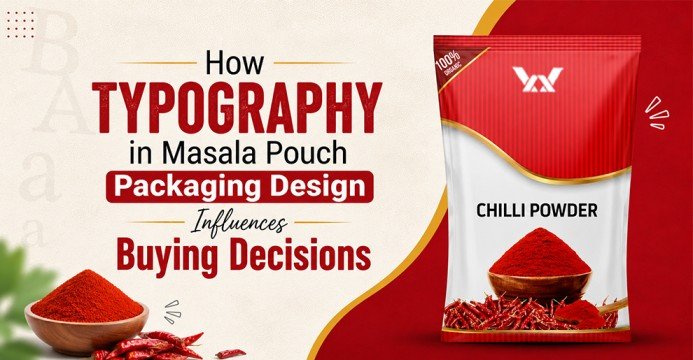
How Typography in Masala Pouch Packaging Design Influences Buying Decisions
Typography is one of the most overlooked aspects of masala pouch packaging design, yet it directly affects how customers perceive your brand.
Think of typography as your brand’s personality.
Elegant fonts suggest premium quality.
Bold fonts communicate confidence.
Clean typography improves readability.
Decorative fonts can create authenticity but using too many styles often creates confusion.
Customers should be able to identify these three details within just a few seconds:
- Brand name
- Product name
- Key product benefit
Everything else should support these elements rather than compete with them.
Best Practices for Packaging Typography
- Use a maximum of two or three complementary fonts.
- Create a clear visual hierarchy with different font sizes.
- Ensure text remains readable from a reasonable shelf distance.
- Maintain consistent typography across your entire product range.
- Avoid overly decorative fonts for essential information.
Simple, well-structured typography often outperforms complex, artistic layouts because it helps customers make quick buying decisions.
Shelf Competition Has Changed Has Your Packaging?
Today’s retail environment is more competitive than ever. A supermarket shelf may contain dozens of spice brands, each competing for a customer’s attention.
At the same time, online grocery platforms display hundreds of products on mobile screens where packaging appears as a small thumbnail. This means your creative pouch packaging design must perform well in two environments:
Physical Retail
Your pouch should:
- Stand out from nearby competitors.
- Highlight the product name instantly.
- Reflect your brand identity consistently.
- Create a premium first impression.
Online Shopping
Your packaging should:
- Be recognizable even in small images.
- Feature clear typography.
- Avoid overly detailed artwork that becomes unreadable.
- Use strong colour contrast for visibility.
Brands that optimize their packaging for both offline and online shopping create a stronger and more consistent customer experience.
Why Consistency Builds Stronger Brand Recognition
Imagine a customer purchases your turmeric today and loves the quality.A month later, they return to buy chilli powder.
Will they immediately recognize your brand?
If every product has different colours, fonts, layouts, and branding, probably not.
Successful spice brands create packaging systems rather than individual designs.
A Strong Packaging System Includes
- Consistent logo placement
- Similar typography across all products
- Unified colour strategy
- Matching illustration style
- Standardized product information layout
- Similar finishing effects
- Consistent packaging material
When customers instantly recognize your products, they spend less time comparing alternatives and are more likely to make repeat purchases.
Brand consistency doesn’t just improve recognition—it reduces buying friction.
Packaging That Tells a Story Creates Emotional Value
Modern consumers don’t just buy spices.
They buy experiences.
They buy authenticity.
They buy trust.
Instead of filling every inch of the pouch with promotional claims, many successful brands use packaging to tell a meaningful story.
Your packaging might communicate:
- Traditional family recipes
- Carefully sourced ingredients
- Regional spice heritage
- Small-batch production
- Premium quality standards
- Sustainable manufacturing practices
Even a short brand story can create a stronger emotional connection than multiple marketing slogans. Customers remember stories.
They rarely remember generic claims like “Best Quality” or “Premium Product.”
Matte or Glossy? The Finish Customers Notice Without Realizing
The finish of your pouch influences how customers perceive your brand before they even touch the product.
Matte Finish
Often associated with:
- Premium quality
- Sophistication
- Modern branding
- Gourmet food products
Glossy Finish
Often associated with:
- Bright colours
- Energy
- Traditional retail visibility
- Value-oriented products
Neither option is universally better.The right choice depends on your brand positioning, target audience, and retail environment. Many premium spice brands now combine both finishes using spot UV effects to create visual contrast and improve shelf appeal.
The Packaging Features Customers Secretly Appreciate
Consumers rarely mention these features in reviews.
Yet they notice them every time they use the product.
Examples include:
- Easy-tear opening
- Resealable zipper
- Durable seals
- Moisture-resistant materials
- Leak-proof construction
- Easy storage
- Stable stand-up base
These functional improvements create a better user experience, encouraging repeat purchases and positive word-of-mouth.
A great packing pouch design doesn’t end with appearance it continues through every interaction customers have with the product.
Sustainability Is No Longer Just a Trend
Consumers are increasingly paying attention to how products are packaged, especially in the food industry.
While attractive visuals remain important, environmentally responsible packaging is becoming another factor that influences purchasing decisions.
Brands that adopt sustainable packaging solutions often strengthen customer trust and appeal to environmentally conscious buyers.
However, sustainability should never compromise food safety or product freshness.
The best approach is finding packaging solutions that balance:
- Product protection
- Attractive branding
- Material efficiency
- Environmental responsibility
- Consumer convenience
If you’re exploring environmentally responsible packaging ideas, this guide provides practical examples and inspiration: What is Eco Friendly Packing Design Examples
Great Packaging Doesn't Sell Once It Builds Repeat Customers
The first sale is often driven by shelf appeal.
The second sale is driven by experience.
When customers find that the packaging protects freshness, is easy to use, and reflects the quality promised on the shelf, trust grows naturally.
That trust turns into repeat purchases.
Repeat purchases become brand loyalty.
Brand loyalty eventually creates recommendations.
Packaging is therefore much more than a marketing expense it’s an investment in long-term customer relationships.
How Packaging Design Influences Buying Decisions Beyond the Shelf
Many businesses think packaging only matters until the product is purchased.
In reality, packaging continues influencing customer perception throughout the entire buying journey.
It affects:
- Expectations before opening
- Satisfaction during use
- Likelihood of recommending the product
- Brand recall
- Repeat purchase behaviour
Understanding this connection helps businesses create packaging that supports both branding and sales. To explore the psychology behind these purchasing behaviours in greater detail, read our in-depth guide on how packaging design influences consumer buying decisions:
Quick Comparison: Average vs Strategic Packaging
Packaging Element | Average Design | Strategic Design |
Colour Selection | Based on preference | Based on consumer psychology |
Typography | Decorative | Clear and readable |
Layout | Cluttered | Structured with visual hierarchy |
Material | Lowest cost | Performance + perception |
Brand Identity | Inconsistent | Consistent across product range |
User Experience | Basic | Convenience-focused |
Sustainability | Rarely considered | Integrated into brand strategy |
Shelf Appeal | Similar to competitors | Distinctive and memorable |
What Premium Spice Brands Understand That Others Often Miss
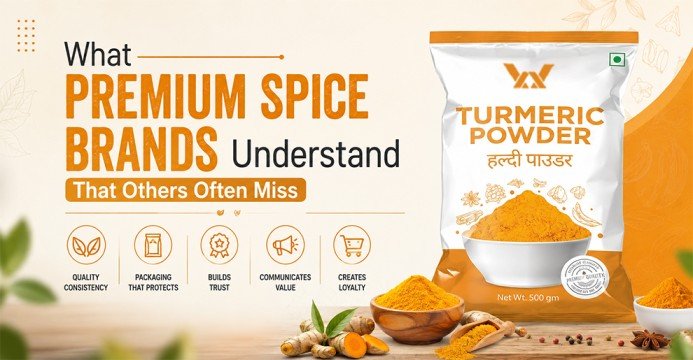
Some spice brands consistently command higher prices, enjoy stronger customer loyalty, and occupy prime shelf space. While product quality plays a significant role, their packaging strategy is equally important.
Premium brands don’t ask, “How can we make our pouch look attractive?”
Instead, they ask:
- Does our packaging reflect our brand promise?
- Will customers trust this product at first glance?
- Does every design element reinforce quality?
- Is the pouch practical for everyday use?
- Can shoppers recognize our products instantly?
This strategic approach transforms masala pouch packaging design from a packaging expense into a long-term branding investment.
The Future of Masala Pouch Packaging Design
Consumer expectations continue to evolve, and packaging trends are shifting alongside them. Businesses that adapt early often gain a competitive edge. Here are some emerging trends shaping the future of spice packaging:
Minimalist Yet Informative Designs
Modern consumers prefer clean layouts that highlight essential information without overwhelming visuals.
Sustainable Packaging Solutions
Eco-conscious materials and recyclable packaging are becoming increasingly important for both domestic and export markets.
Smart Packaging
QR codes linking to recipes, sourcing information, or product authentication help brands engage customers beyond the shelf.
Matte laminations, metallic accents, embossing, and spot UV coatings create a premium look while enhancing brand perception.
Brands are incorporating local heritage, traditional recipes, and authentic sourcing stories into their packaging to build emotional connections.
Businesses that embrace these trends thoughtfully—not just because they’re fashionable—are more likely to build lasting customer trust
A Practical Checklist Before Finalizing Your Packaging Design
Before approving your next creative pouch packaging design, review this checklist:
✔ Is your logo instantly visible?
✔ Can customers identify the product within three seconds?
✔ Are fonts readable from a retail shelf?
✔ Does the colour palette reflect your brand identity?
✔ Is there enough white space for a clean appearance?
✔ Does the packaging communicate freshness and quality?
✔ Is the pouch durable enough to protect the product?
✔ Are important certifications and product details easy to locate?
✔ Does the design remain effective as a small online product image?
✔ Will customers remember your packaging after leaving the store?
If you answered “No” to several of these questions, it may be time to rethink your packaging strategy.
Packaging Is More Than Design It's Your Brand's First Conversation
Customers don’t begin their relationship with your brand after tasting your spices. It begins the moment they notice your pouch.
Every colour, font, finish, illustration, and material choice shapes how people perceive your business. Great packaging doesn’t rely on flashy graphics alone—it combines functionality, psychology, branding, and quality into a cohesive experience.
Whether you’re introducing a new spice line or refreshing an established product range, investing in thoughtful packing pouch design can help you:
- Improve shelf visibility
- Increase perceived product value
- Build customer trust
- Encourage repeat purchases
- Differentiate your brand from competitors
When your packaging communicates confidence, customers are far more likely to believe in the quality inside.
Conclusion
Choosing the right manufacturing partner is just as important as choosing the right design. At Whitelotus Industries Private Limited we help food brands create custom-printed masala pouches that combine attractive branding, durable materials, and reliable product protection. Whether you need stand-up pouches, laminated packaging, or tailored flexible packaging solutions, our team works with you to develop packaging that supports both shelf appeal and business growth. You can also discover our complete range of flexible packaging products by visiting:
Frequently Asked Questions
1. Why is masala pouch packaging design important for a food brand?
A well-designed masala pouch does much more than protect the product. It creates the first impression, communicates quality, builds customer trust, and influences purchasing decisions. In competitive retail environments, packaging often determines whether shoppers pick up your product or choose a competing brand.
2. What makes a good masala pouch packaging design?
An effective design combines attractive colours, readable typography, durable materials, clear branding, and functional features such as moisture protection and resealable closures. It should also align with your brand identity while standing out on crowded retail shelves.
3. Does packaging really influence customer buying decisions?
Yes. Customers frequently judge product quality based on packaging before reading product information or comparing ingredients. Packaging affects perceived value, trust, and purchase confidence, making it a powerful marketing tool.
4. Which material is best for spice packaging?
5. How can small spice brands compete with established brands through packaging?
Small brands can compete by focusing on clear branding, consistent design, premium printing quality, practical packaging features, and authentic storytelling. Strong packaging helps create credibility even without a large advertising budget.