
In today’s highly competitive marketplace, consumers are exposed to thousands of products every day, whether they are shopping in supermarkets, browsing online marketplaces, or exploring specialty retail stores. With so many similar products competing for attention, businesses can no longer rely solely on product quality or pricing to influence purchasing decisions. Packaging Design has become one of the most powerful marketing tools that shapes consumer perception even before a product is picked up or added to a shopping cart.
Modern packaging is far more than a protective layer around a product. It communicates a brand’s personality, reflects product quality, creates emotional connections, and helps consumers quickly recognize and trust a product. An attractive package can encourage impulse purchases, while poor packaging may cause potential buyers to overlook an otherwise excellent product.
For industries such as food and beverages, pharmaceuticals, cosmetics, personal care, spices, snacks, dairy products, and FMCG goods, effective Packaging Design directly impacts brand recognition, customer loyalty, and overall sales performance. Every visual element—from colors and typography to packaging materials and structural design—plays a significant role in influencing consumer buying behavior.
Today’s consumers also expect packaging to offer convenience, sustainability, durability, and premium aesthetics. As environmental awareness grows, businesses are increasingly investing in Flexible Packaging Design, Custom Packaging Design, and eco-friendly packaging solutions that not only protect products but also enhance the overall customer experience.
For manufacturers and brand owners, investing in thoughtful Product Packaging Design is no longer optional. It has become a strategic business decision that helps products stand out on crowded retail shelves, builds long-term brand value, and creates memorable customer experiences. Companies specializing in Custom Printed Packaging and Flexible Packaging Solutions, such as White Lotus Industries, support brands by delivering packaging that balances functionality, visual appeal, and manufacturing excellence to meet evolving market demands.
What is Packaging Design?
Packaging Design is the process of planning, developing, and creating the visual appearance, structure, functionality, and user experience of a product’s packaging. It combines branding, engineering, printing technology, material selection, and consumer psychology to produce packaging that not only protects the product but also communicates its value effectively.
Unlike traditional packaging, which primarily focused on protecting goods during transportation and storage, modern Product Packaging Design serves multiple business objectives. It enhances shelf appeal, strengthens brand identity, conveys essential product information, and encourages purchasing decisions through attractive visual communication.
A successful packaging design typically integrates several important elements, including:
- Brand logo and identity
- Color combinations that attract attention
- Typography that improves readability
- Product imagery and graphics
- Functional packaging structure
- High-quality packaging materials
- Sustainability considerations
- Consumer convenience features
Packaging Design as a Business Communication Tool
Every package tells a story. Consumers often form their first impression of a product within just a few seconds of seeing it. During this brief moment, packaging communicates whether the product appears premium, affordable, eco-friendly, innovative, healthy, luxurious, or trustworthy.
For example, minimalist packaging often creates a premium perception, while vibrant colors may appeal to younger audiences or impulse buyers. Food products frequently use appetizing imagery and transparent windows to showcase freshness, whereas pharmaceutical products prioritize clarity, trust, and compliance.
Functional Role of Packaging Design
Beyond aesthetics, Packaging Design must deliver practical performance throughout the product lifecycle. Effective packaging should:
- Protect products from moisture, oxygen, dust, contamination, and physical damage.
- Preserve freshness and extend product shelf life.
- Simplify storage, transportation, and handling.
- Offer convenient opening and resealing features.
- Support retail display and product visibility.
- Enhance consumer usability.
Manufacturers increasingly prefer Flexible Packaging Design because it provides excellent barrier protection, reduces packaging weight, lowers transportation costs, and offers extensive customization possibilities for modern consumer products.
Packaging Design and Brand Identity
Every successful brand invests heavily in packaging because consistency builds trust. Consumers often identify products by their packaging long before reading the product name. Distinctive colors, shapes, graphics, and printing quality help create strong brand recognition and encourage repeat purchases.
Whether launching a new snack product, premium coffee, dairy product, cosmetic item, or pharmaceutical solution, Custom Packaging Design helps businesses differentiate themselves from competitors while reinforcing their brand identity across retail and digital channels.
Why Packaging Design Matters in Today's Competitive Market
The global consumer goods market has become increasingly competitive. New brands enter the market every day, offering similar products with comparable quality and pricing. In such an environment, packaging often becomes the deciding factor that influences whether a customer chooses one product over another.
Today’s purchasing decisions are driven by more than functionality alone. Consumers evaluate products based on appearance, convenience, sustainability, and perceived quality. As a result, Packaging Design has evolved into a strategic investment rather than a manufacturing afterthought.
1. Creates Powerful First Impressions
Research consistently shows that consumers form opinions about products within seconds of seeing them. Eye-catching packaging captures attention, generates curiosity, and increases the likelihood of a product being picked up for closer inspection.
Elements such as premium finishes, vibrant colors, modern typography, and attractive Printed Packaging Design contribute significantly to positive first impressions.
2. Strengthens Brand Recognition
Strong branding creates familiarity, and familiarity builds trust. Consistent Packaging Branding across product lines helps consumers quickly recognize products both in physical stores and online marketplaces.
Distinctive visual identity encourages repeat purchases while making products easier to remember in competitive retail environments.
3. Increases Shelf Appeal
Retail shelves are crowded with competing products. Effective Packaging Design helps products stand out by combining attractive graphics, innovative structures, premium finishes, and clear product messaging.
High shelf visibility directly contributes to increased consumer engagement and stronger sales performance.
4. Builds Consumer Trust
Consumers often associate high-quality packaging with high-quality products. Professional printing, durable materials, clean layouts, and accurate product information create confidence during the buying process.
Premium Custom Printed Packaging demonstrates attention to detail and signals that the manufacturer values quality throughout the customer experience.
5. Supports E-Commerce Growth
As online shopping continues to expand, packaging has taken on additional responsibilities. Products must withstand shipping, protect contents during transit, and create an engaging unboxing experience.
Modern Flexible Packaging Solutions help businesses reduce shipping costs while maintaining excellent product protection and visual appeal.
6. Differentiates Products from Competitors
Many industries offer products with similar features and pricing. Packaging becomes the visual differentiator that communicates uniqueness, innovation, and brand personality.
For instance, a spice manufacturer using premium laminated pouches with high-quality graphics may attract more attention than competitors using standard packaging. Likewise, a brand working with a Stand Up Pouches manufacturer in India can create packaging that improves product presentation, convenience, and shelf impact.
7. Responds to Consumer Demand for Sustainability
Environmental awareness continues to influence purchasing decisions across global markets. Consumers increasingly prefer products packaged in recyclable, lightweight, and resource-efficient materials.
Businesses investing in Sustainable Packaging Design not only reduce environmental impact but also strengthen brand reputation among environmentally conscious customers.
Manufacturers adopting modern flexible packaging technologies are incorporating recyclable materials, optimized material usage, and advanced printing processes to meet changing market expectations.
8. Enhances Marketing Effectiveness
Packaging acts as a silent salesperson. Even without advertising, well-designed packaging communicates product benefits, highlights key features, and reinforces brand messaging directly at the point of purchase.
A thoughtfully designed package reduces the need for extensive explanations by presenting essential information clearly and attractively, enabling consumers to make faster buying decisions.
As consumer expectations continue to evolve, businesses that prioritize innovative Packaging Design are better positioned to improve customer engagement, strengthen brand loyalty, and achieve sustainable growth. For companies seeking reliable packaging expertise, experienced manufacturers like White Lotus Industries combine advanced manufacturing capabilities with practical packaging knowledge to deliver solutions that align with modern market demands while supporting long-term brand success.
How Packaging Design Influences Consumer Buying Decisions
Modern consumers make purchasing decisions much faster than ever before. Whether shopping in a supermarket, convenience store, specialty retail outlet, or online marketplace, buyers often compare multiple products within seconds. During this decision-making process, Packaging Design becomes one of the strongest influencers of consumer behavior. Before a customer experiences the product itself, they experience its packaging.
For businesses across the FMCG, food, beverage, cosmetics, pharmaceutical, and personal care industries, packaging is a strategic marketing asset that communicates quality, builds trust, and influences purchase intent. Well-executed Product Packaging Design creates an emotional connection that encourages consumers to choose one brand over another, even when competing products offer similar features and pricing.
1. First Impressions Shape Purchase Decisions
The first interaction a consumer has with a product is usually visual. Research in consumer psychology suggests that people form an impression of a product within a few seconds. Attractive Packaging Design captures attention instantly and encourages shoppers to take a closer look.
For example, a premium snack pouch with elegant typography, vibrant food photography, and a matte finish is more likely to stand out than a plain package with limited visual appeal. Similarly, products displayed in professionally designed Printed Pouches create stronger shelf presence and enhance perceived quality.
Strong first impressions often lead to higher engagement, increased product handling, and ultimately improved sales.
2. Color Psychology Creates Emotional Connections
Color is one of the most influential elements of Packaging Design because it affects emotions and purchasing behavior almost instantly.
Different colors communicate different messages:
- Green suggests freshness, health, and sustainability.
- Blue conveys trust, reliability, and hygiene.
- Red creates excitement, appetite, and urgency.
- Black communicates luxury and premium quality.
- White represents simplicity, cleanliness, and purity.
- Yellow attracts attention and generates optimism.
Food brands frequently use warm colors to stimulate appetite, while pharmaceutical products rely on calm color palettes that communicate safety and reliability.
Understanding color psychology enables brands to strengthen consumer confidence while supporting their overall Packaging Branding strategy.
3. Typography Improves Consumer Confidence
Typography influences how consumers perceive product quality and professionalism.
Fonts should complement the brand personality while maintaining excellent readability. Luxury brands often use elegant serif fonts, whereas modern FMCG products prefer clean sans-serif typography.
Good typography ensures that consumers can quickly identify:
- Product name
- Ingredients
- Usage instructions
- Nutritional information
- Manufacturing details
- Certifications
Clear communication reduces confusion and builds trust, particularly in highly regulated sectors such as food and pharmaceuticals.
4. Packaging Materials Influence Quality Perception
Consumers frequently associate packaging quality with product quality.
Premium Flexible Packaging Design uses advanced laminated films, high-quality printing, durable seals, and superior finishing techniques that immediately enhance product perception.
Businesses investing in premium packaging materials demonstrate attention to quality throughout the customer experience.
High-performance materials also improve:
- Product protection
- Moisture resistance
- Oxygen barrier performance
- Shelf life
- Transportation durability
This is particularly important for businesses seeking long-term packaging reliability and product freshness.
5. Product Visibility Builds Consumer Trust
Consumers appreciate transparency.
Packaging designs that include clear product windows allow buyers to inspect product quality before making a purchase.
Transparent sections are widely used for:
- Dry fruits
- Snacks
- Spices
- Coffee
- Tea
- Pet food
- Organic products
Product visibility reduces uncertainty while strengthening buyer confidence.
6. Packaging Shape Creates Brand Recognition
Structural packaging design significantly affects consumer perception.
Unique packaging shapes improve:
- Shelf differentiation
- Brand recall
- User convenience
- Product functionality
Stand-up pouches, flat-bottom pouches, zipper pouches, and spouted pouches provide both functional advantages and enhanced visual appeal.
Companies working with a reliable Packaging Pouches Manufacturer in India often develop customized packaging formats that improve both aesthetics and usability.
7. Brand Storytelling Through Packaging
Consumers increasingly purchase brands that align with their values.
Effective Packaging Design communicates stories through:
- Brand messaging
- Sustainability commitments
- Product origin
- Manufacturing quality
- Certifications
- Visual identity
Rather than relying solely on advertising, packaging becomes a silent brand ambassador that communicates trust every time consumers interact with the product.
8. Premium Packaging Encourages Higher Sales
Premium packaging increases perceived product value.
Luxury finishes such as:
- Matte lamination
- Metallic effects
- Soft-touch coatings
- Spot UV
- Embossing
- Foil stamping
help products command greater attention and justify premium pricing.
Many successful FMCG brands invest in sophisticated Custom Packaging Design because consumers often associate premium packaging with premium products.
9. Convenience Drives Repeat Purchases
Convenience has become one of the strongest purchasing factors.
Consumers increasingly prefer packaging that offers:
- Easy opening
- Resealable zippers
- Lightweight handling
- Spill prevention
- Portion control
- Easy storage
Practical packaging creates positive user experiences that encourage repeat purchases and long-term brand loyalty.
Key Elements of Effective Packaging Design
Successful Packaging Design combines aesthetics, functionality, branding, manufacturing efficiency, and consumer convenience. Every element should work together to create an attractive package that protects the product while supporting business objectives.
1. Color Psychology
Colors immediately influence emotions and purchasing behavior.
Choosing the right color palette depends on:
- Target audience
- Product category
- Brand positioning
- Market trends
- Retail environment
Consistent color usage also strengthens long-term brand recognition.
2. Typography
Typography should be attractive, readable, and consistent.
Effective typography helps consumers quickly identify:
- Product information
- Brand identity
- Usage instructions
- Key benefits
Clear typography also improves compliance with food and pharmaceutical labeling requirements.
3. Packaging Material
Material selection affects:
- Product safety
- Shelf life
- Transportation
- Sustainability
- Consumer perception
Modern Flexible Packaging Solutions utilize high-barrier laminated structures that protect products from moisture, oxygen, and external contaminants while maintaining visual appeal.
4. Product Visibility
Consumers appreciate seeing what they are buying.
Window packaging and transparent panels improve trust while helping brands showcase product quality.
Food manufacturers frequently adopt this approach for premium products.
5. Packaging Branding
Every package should reinforce the company’s visual identity.
Consistent branding includes:
- Logo placement
- Color consistency
- Brand messaging
- Typography
- Graphics
- Printing quality
Strong branding improves recognition across both retail shelves and digital marketplaces.
6. Sustainability
Environmental responsibility continues to shape purchasing behavior.
Businesses are increasingly adopting:
- Recyclable materials
- Lightweight packaging
- Reduced plastic usage
- Resource-efficient manufacturing
- Eco-friendly inks
These initiatives support modern Sustainable Packaging Design while strengthening corporate reputation.
Brands exploring environmentally responsible solutions can also benefit from insights covered in Top Recyclable Packaging Materials for Food Brand, which explains practical material options for reducing environmental impact without compromising product protection.
7. Functional Design
Packaging should make products easier to use.
Consumers value:
- Easy opening
- Secure sealing
- Resealable features
- Compact storage
- Convenient handling
Functional packaging directly contributes to customer satisfaction.
8. Packaging Graphics
High-quality graphics increase shelf appeal.
Professional printing techniques improve:
- Product presentation
- Brand perception
- Consumer engagement
Well-designed graphics should remain clean, informative, and visually balanced.
9. Product Information
Consumers expect accurate information presented clearly.
Packaging should communicate:
- Ingredients
- Usage instructions
- Manufacturing details
- Expiry dates
- Storage recommendations
- Certifications
Good information builds trust while supporting informed purchasing decisions.
10. Convenience Features
Modern packaging increasingly includes features such as:
- Tear notches
- Zipper closures
- Spouts
- Hanging holes
- Easy-pour openings
These features improve usability while enhancing overall customer experience.
The Role of Flexible Packaging Design in Modern Consumer Products
Consumer expectations continue to evolve, and packaging manufacturers are responding with innovative Flexible Packaging Design solutions that combine product protection, visual appeal, sustainability, and operational efficiency.
Flexible packaging has become the preferred choice across numerous industries because it offers exceptional versatility while reducing material consumption and transportation costs.
1. Stand-Up Pouches
Stand-up pouches have transformed retail merchandising.
Their advantages include:
- Excellent shelf presentation
- Larger printable surface
- Lightweight construction
- Convenient storage
- Resealable options
- Improved product visibility
Businesses partnering with a trusted Stand Up Pouches manufacturer in India can create customized packaging that enhances both functionality and brand differentiation.
2. Printed Pouches
High-quality Custom Printed Packaging enables brands to communicate their identity directly through packaging.
Advanced printing technologies deliver:
- Vibrant graphics
- High-resolution images
- Consistent branding
- Premium finishes
- Variable printing options
Printed pouches have become increasingly popular among food manufacturers, spice brands, coffee companies, pet food producers, and personal care businesses.
3. Laminated Rolls
Laminated packaging provides outstanding barrier performance for products requiring extended shelf life.
Advantages include:
- Moisture protection
- Oxygen resistance
- Aroma retention
- Superior print quality
- Excellent durability
Laminated rolls are widely used for snacks, dairy products, frozen foods, confectionery, spices, and pharmaceutical packaging applications.
4. Barrier Packaging
Barrier technology is essential for preserving product freshness.
High-barrier structures protect products from:
- Moisture
- Oxygen
- UV exposure
- Odors
- External contamination
This significantly extends shelf life while maintaining product quality throughout distribution.
5. Food Packaging Applications
Modern Food Packaging Design balances safety, branding, convenience, and regulatory compliance.
Manufacturers require packaging that preserves freshness while communicating nutritional information and attracting consumers at the point of sale. Companies looking for deeper insights into material selection and regulatory considerations can also explore Pharmaceutical Pouch Packaging: Complete Materials & Compliance Guide, as many barrier and compliance principles overlap with advanced food packaging applications.
6. Sustainable Flexible Packaging
Sustainability continues to influence packaging innovation.
Modern Flexible Packaging Solutions reduce environmental impact through:
- Lightweight structures
- Material optimization
- Lower transportation emissions
- Reduced packaging waste
- Improved manufacturing efficiency
These solutions help businesses meet both consumer expectations and evolving environmental regulations.
Packaging Design Trends Every Brand Should Know
Consumer expectations, retail environments, and packaging technologies continue to evolve rapidly. To remain competitive, businesses must embrace Packaging Design Trends that not only improve visual appeal but also enhance functionality, sustainability, and customer engagement. Modern packaging is no longer just about protecting a product—it is about delivering an experience that resonates with today’s consumers.
1. Minimalist Packaging Design
Minimalism has become one of the most influential trends in modern Packaging Design. Clean layouts, simple typography, balanced white space, and subtle color palettes help products stand out by conveying sophistication and authenticity.
Consumers often associate minimalist packaging with premium quality, transparency, and trust. Brands in the cosmetics, health food, organic products, and personal care industries frequently adopt this approach to create a refined brand image.
2. Sustainable Packaging Design
Environmental responsibility has shifted from being a market differentiator to a business necessity. Consumers increasingly prefer brands that demonstrate a commitment to reducing their environmental impact.
Modern Sustainable Packaging Design focuses on:
- Recyclable packaging materials
- Reduced material consumption
- Lightweight flexible packaging
- Eco-friendly printing processes
- Resource-efficient manufacturing
By adopting sustainable practices, businesses not only reduce waste but also strengthen their reputation among environmentally conscious consumers.
3. Smart Packaging
Technology is transforming packaging into an interactive communication platform.
Smart packaging solutions now incorporate:
- QR codes
- NFC-enabled labels
- Product authentication
- Digital user manuals
- Traceability information
- Promotional campaigns
These features enhance customer engagement while providing valuable product information directly through smartphones.
4. Premium Printing Techniques
High-quality Printed Packaging Design significantly improves product presentation.
Popular finishing techniques include:
- Matte lamination
- Gloss coatings
- Metallic inks
- Foil stamping
- Spot UV
- Embossing
- Soft-touch finishes
Premium printing helps brands differentiate their products and create stronger shelf impact.
5. Transparent Windows
Consumers increasingly prefer seeing the product before purchasing.
Transparent packaging windows build trust by allowing buyers to inspect product quality directly. This trend is particularly popular in food packaging for snacks, spices, dry fruits, tea, coffee, and confectionery.
6. Digital Printing
Advancements in digital printing technology enable brands to produce shorter production runs with exceptional print quality.
Digital printing offers:
- Faster turnaround
- Personalized packaging
- Variable data printing
- Cost-effective prototyping
- Seasonal packaging campaigns
This flexibility allows businesses to respond quickly to changing consumer preferences and marketing initiatives.
7. Personalized Packaging
Consumers appreciate brands that create unique experiences.
Personalized packaging supports:
- Limited edition campaigns
- Regional branding
- Festival packaging
- Customized product lines
- Brand storytelling
Personalization strengthens emotional connections while improving customer loyalty.
Common Packaging Design Mistakes That Affect Sales
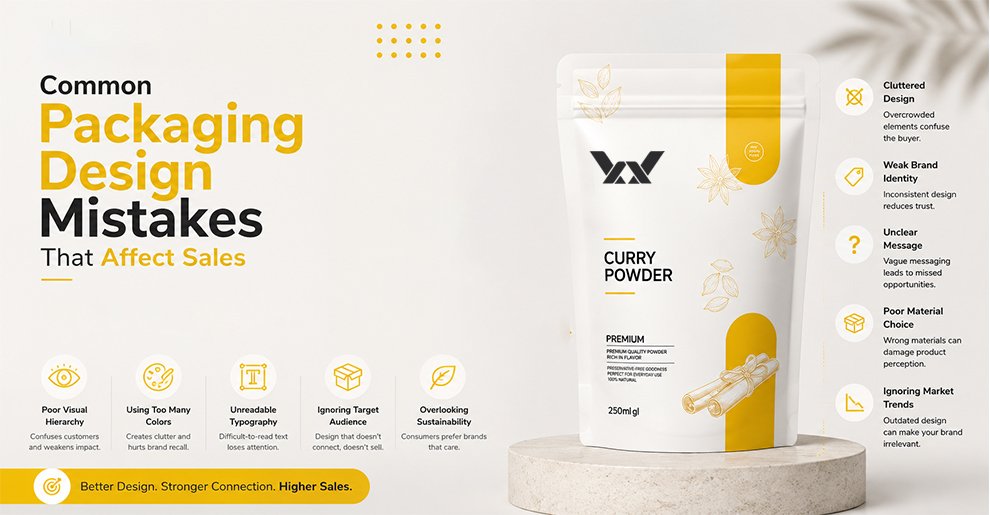
Even high-quality products can struggle in the marketplace if their packaging fails to communicate value effectively. Avoiding common Packaging Design mistakes helps businesses maximize product visibility, improve consumer trust, and increase sales.
1. Choosing the Wrong Colors
Colors strongly influence consumer perception.
Poor color selection may:
- Fail to attract attention
- Communicate the wrong message
- Reduce shelf visibility
- Confuse target audiences
Brands should carefully align color choices with their identity and consumer expectations.
2. Weak Brand Identity
Packaging should immediately communicate the brand behind the product.
Common branding mistakes include:
- Inconsistent logos
- Different typography across product ranges
- Conflicting color schemes
- Poor brand visibility
Strong Packaging Branding creates familiarity and improves customer recall.
3. Cluttered Design Layouts
Too much information overwhelms consumers.
Effective packaging should prioritize:
- Clear hierarchy
- Readable typography
- Balanced spacing
- Focused messaging
Clean layouts improve both aesthetics and usability.
4. Poor Readability
Small fonts, low contrast, and excessive text reduce consumer confidence.
Essential information should always remain easy to locate and understand.
5. Low-Quality Printing
Printing quality directly reflects brand quality.
Poor printing may result in:
- Blurry graphics
- Color inconsistency
- Weak product presentation
- Reduced consumer trust
Investing in high-quality Custom Printed Packaging ensures consistent brand representation.
6. Inappropriate Packaging Materials
Selecting unsuitable packaging materials can affect product quality, transportation efficiency, and shelf life.
Businesses should evaluate:
- Barrier properties
- Product compatibility
- Transportation requirements
- Storage conditions
- Environmental impact
Working with an experienced Packaging Pouches Manufacturer in India helps brands identify the most appropriate packaging structures for their products.
7. Ignoring Consumer Convenience
Consumers value packaging that is practical.
Features such as resealable closures, easy-open tear notches, and ergonomic designs improve the overall user experience.
8. Lack of Product Differentiation
Products that resemble competitors often struggle to capture attention.
Innovative Product Packaging Design helps establish a unique visual identity while supporting long-term brand recognition.
9. Ignoring Consumer Behavior
Successful packaging is designed around consumer needs rather than internal assumptions.
Understanding purchasing habits, shopping environments, and user preferences allows businesses to create packaging that genuinely influences buying decisions.
How White Lotus Industries Supports Modern Packaging Design
Modern brands require packaging that combines attractive design, product protection, operational efficiency, and manufacturing consistency. White Lotus Industries supports these requirements through its expertise in Flexible Packaging Solutions and advanced manufacturing capabilities.
The company specializes in developing packaging that balances aesthetics with functionality across multiple industries, including food, beverages, spices, dairy products, pharmaceuticals, personal care, and FMCG products.
1. Custom Packaging Development
Every product has unique packaging requirements. White Lotus Industries collaborates with brands to create Custom Packaging Design solutions tailored to specific product characteristics, storage conditions, transportation needs, and marketing objectives.
This customized approach helps businesses improve product presentation while maintaining packaging efficiency.
2. High-Quality Custom Printed Packaging
Advanced printing technologies enable vibrant graphics, accurate color reproduction, and premium finishes that strengthen brand identity.
Whether producing stand-up pouches, printed rolls, or specialized packaging formats, consistent print quality ensures every package communicates professionalism and builds consumer trust.
3. Flexible Packaging Solutions
Flexible packaging offers several advantages over conventional rigid packaging, including:
- Lower transportation costs
- Improved storage efficiency
- Extended product shelf life
- Better barrier protection
- Attractive shelf presentation
- Lightweight construction
These benefits make flexible packaging an ideal solution for modern consumer brands.
4. Focus on Food Packaging
Food packaging requires careful consideration of safety, freshness, and compliance. White Lotus Industries manufactures packaging structures designed to preserve product quality while delivering attractive visual appeal.
Businesses exploring advanced pouch solutions can also learn more from Center Seal Gusset Pouches manufacturer in India, particularly for products requiring excellent storage capacity and efficient shelf presentation.
5. Commitment to Quality
Maintaining consistent packaging quality is essential for long-term brand success.
White Lotus Industries emphasizes:
- Precision manufacturing
- Reliable material sourcing
- High-performance laminated structures
- Quality inspection processes
- Consistent printing standards
This commitment helps businesses achieve dependable packaging performance across every production batch.
6. Industry Expertise
With extensive experience serving multiple industries, White Lotus Industries understands the technical, functional, and branding requirements of modern packaging.
Rather than offering standardized solutions, the company focuses on helping brands select packaging structures that align with product characteristics, distribution channels, and consumer expectations.
Benefits of Investing in High-Quality Packaging Design
Packaging influences far more than product appearance. Strategic investment in Packaging Design creates measurable business advantages across branding, marketing, logistics, and customer satisfaction.
1. Higher Sales Performance
Products with attractive packaging naturally receive greater attention, leading to increased purchase consideration and stronger conversion rates.
2. Improved Shelf Visibility
Distinctive graphics, premium finishes, and thoughtful structural design improve product visibility in crowded retail environments.
3. Stronger Brand Recognition
Consistent Packaging Branding helps consumers quickly recognize products, strengthening long-term brand recall and customer loyalty.
4. Increased Consumer Trust
Professional packaging signals quality, reliability, and attention to detail.
Consumers are more likely to trust products presented in well-designed, professionally manufactured packaging.
5. Premium Market Positioning
High-quality Packaging Design enables brands to position products within premium market segments while supporting higher perceived value.
6. Better Customer Experience
Convenient packaging features improve usability and encourage positive customer interactions long after the purchase has been completed.
7. Improved Product Protection
Advanced Flexible Packaging Design helps protect products against moisture, oxygen, contamination, and physical damage during storage and transportation.
8. Longer Shelf Life
High-barrier laminated packaging extends freshness while reducing product waste throughout the supply chain.
9. Greater Competitive Advantage
Innovative packaging differentiates products from competitors and strengthens brand positioning in highly competitive markets.
10. Better Return on Investment
Although premium packaging may involve higher initial costs, it often delivers long-term financial benefits through increased sales, improved customer retention, reduced product damage, and enhanced operational efficiency.
Conclusion
In today’s competitive marketplace, Packaging Design has become one of the most influential factors affecting Consumer Buying Decisions. It serves as the first point of interaction between a product and its potential customer, shaping perceptions of quality, trust, and brand value within seconds.
From color psychology and typography to packaging materials, structural innovation, and sustainability, every design element contributes to the overall consumer experience. Businesses that invest in thoughtful Product Packaging Design not only improve shelf appeal but also strengthen brand recognition, encourage repeat purchases, and build long-term customer loyalty.
The growing adoption of Flexible Packaging Design, Custom Printed Packaging, and environmentally responsible solutions demonstrates how packaging continues to evolve alongside changing consumer expectations. Modern brands increasingly recognize that packaging is not merely a protective layer—it is a strategic marketing asset that influences purchasing behavior throughout the customer journey.
For businesses seeking dependable packaging expertise, experienced manufacturers such as White Lotus Industries combine advanced manufacturing capabilities with practical industry knowledge to develop packaging solutions that balance functionality, aesthetics, and performance. Whether the requirement involves premium food packaging, customized flexible packaging, or innovative printed pouch solutions, working with an experienced packaging partner helps brands create stronger market differentiation and lasting consumer confidence.
As you continue exploring packaging innovations, you may also find value in topics such as Stand Up Pouches manufacturer in India for versatile retail packaging applications and Packaging Pouches Manufacturer in India to better understand how the right manufacturing partner contributes to product quality, branding, and supply chain efficiency. Together with insights from Top Recyclable Packaging Materials for Food Brand, these resources can help businesses make informed packaging decisions that support both commercial success and sustainable growth.
FAQs
Q1. Why is packaging design important for consumer buying decisions?
Packaging Design plays a crucial role in influencing consumer buying decisions because it creates the first impression of a product. Attractive packaging communicates quality, builds trust, strengthens brand identity, and captures attention on retail shelves. Elements such as color, typography, material, and structural design can encourage customers to choose one product over another, even when similar alternatives are available.
Q2. How does flexible packaging design benefit modern brands?
Flexible Packaging Design offers several advantages, including lightweight construction, excellent product protection, extended shelf life, lower transportation costs, and attractive shelf presentation. It also provides greater customization options, making it ideal for food, beverages, pharmaceuticals, cosmetics, and FMCG products. Additionally, flexible packaging supports sustainability goals by reducing material usage and transportation emissions.
Q3.What are the key elements of an effective packaging design?
An effective Packaging Design combines visual appeal with functionality. Essential elements include eye-catching colors, readable typography, high-quality packaging materials, clear product information, strong branding, premium printing, convenient packaging features, and sustainable design. Together, these components improve shelf appeal, enhance the customer experience, and positively influence purchasing decisions.
Q4. How can custom printed packaging improve brand recognition?
Custom Printed Packaging helps businesses create a consistent and memorable brand identity through distinctive colors, logos, graphics, and messaging. High-quality printing enhances product presentation, improves shelf visibility, and builds consumer trust. Consistent packaging across multiple product lines also increases brand recognition and encourages repeat purchases.
Q5. Why should businesses choose a reliable packaging manufacturer?
Choosing an experienced packaging manufacturer ensures access to high-quality materials, advanced printing technology, customized packaging solutions, and consistent production standards. Reliable manufacturers help businesses develop packaging that protects products, enhances brand value, meets industry regulations, and supports long-term business growth. Companies like White Lotus Industries provide flexible packaging solutions tailored to the specific requirements of modern consumer brands across various industries.