
As global environmental concerns continue to grow, businesses and consumers are becoming more conscious about the impact packaging has on the planet. Traditional packaging materials, especially single-use plastics, contribute significantly to pollution, landfill waste, and carbon emissions. This has led to a strong shift toward eco friendly packaging — a sustainable approach designed to reduce environmental harm while maintaining product safety and quality. But what exactly is eco friendly packaging, and why is it becoming essential across industries?
Eco friendly packaging refers to packaging solutions that are recyclable, biodegradable, reusable, or made from sustainable materials with a lower environmental footprint. Companies are increasingly adopting these solutions not only to meet regulatory requirements but also to align with changing consumer expectations for environmentally responsible brands. From flexible packaging innovations to plant-based materials and minimalistic designs, sustainable packaging is transforming how products are produced, shipped, and consumed.
In this complete guide, we will explore the meaning of eco friendly packaging and understand What is Sustainable Packaging, along with different types of sustainable materials, key benefits for businesses, industry applications, and future trends shaping the packaging industry. Whether you are a business owner, manufacturer, or sustainability-conscious reader, this guide will help you understand how eco friendly packaging supports both environmental goals and long-term business success.
What is Eco Friendly Packaging
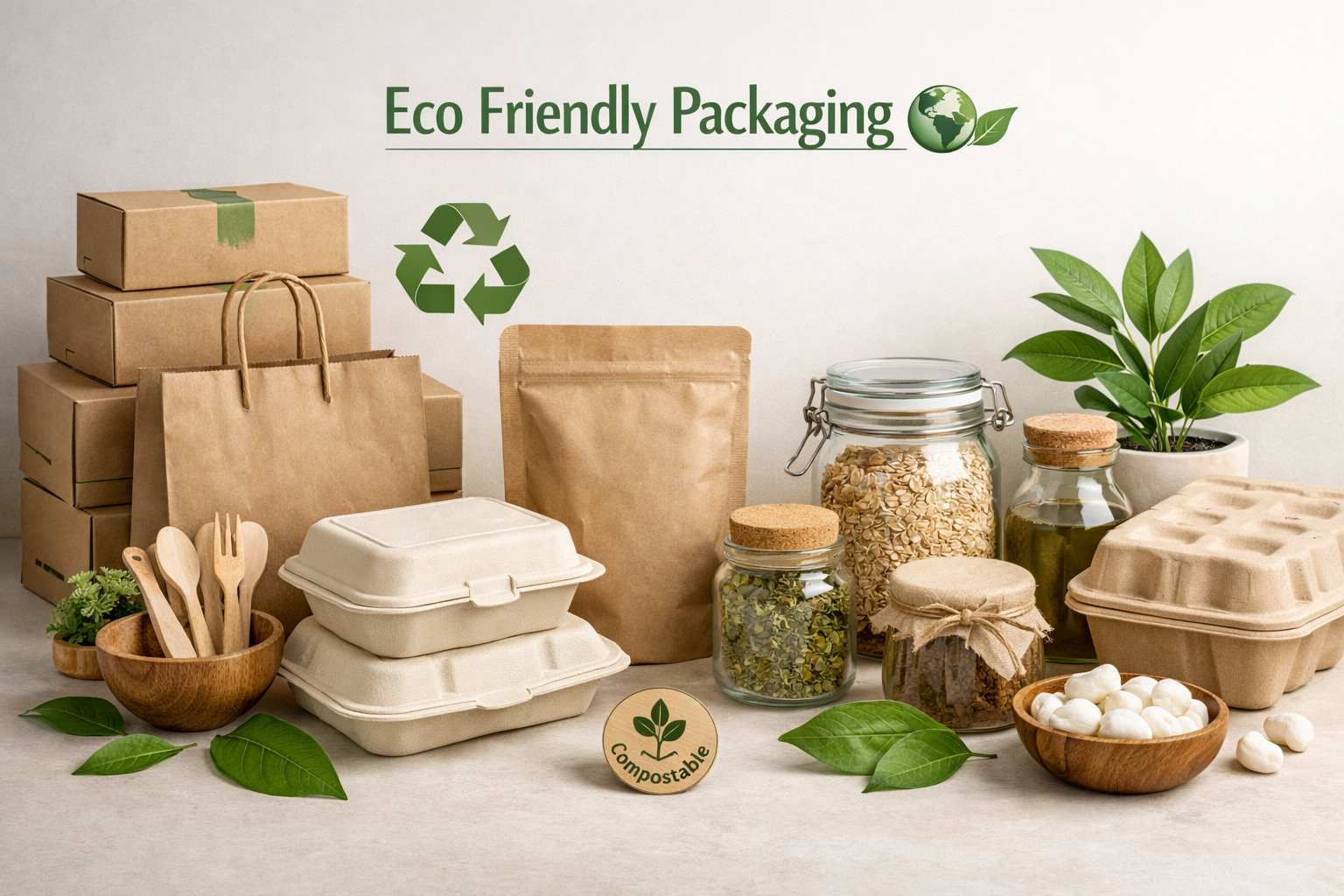
What is Eco Friendly Packaging refers to packaging that is designed to reduce environmental impact throughout its entire lifecycle — from raw material sourcing to production, usage, and disposal. The main goal of eco friendly packaging is to minimize waste, lower carbon emissions, and promote sustainability without compromising product protection or quality. Businesses today are shifting toward sustainable packaging solutions because consumers are becoming more environmentally aware and governments are introducing stricter environmental regulations.
In simple terms, What is Eco Friendly Packaging can be understood as packaging made from recyclable, biodegradable, compostable, or reusable materials that help reduce pollution and conserve natural resources. Instead of relying heavily on traditional plastic or non-recyclable materials, eco friendly packaging focuses on smarter design, lightweight structures, and materials that can be reused or safely returned to nature.
Key characteristics of eco friendly packaging include:
- Use of recyclable or renewable materials such as paper, cardboard, plant-based plastics, or sustainable flexible packaging.
- Reduced material usage through minimalistic design to lower waste generation.
- Energy-efficient manufacturing processes that reduce carbon footprint.
- Packaging that supports recycling systems and circular economy practices.
Understanding What is Eco Friendly Packaging is important for modern businesses because sustainable packaging not only protects the environment but also enhances brand reputation, improves customer trust, and supports long-term business growth. Many companies today partner with a reliable flexible packaging manufacturer to develop sustainable packaging solutions that reduce environmental impact while maintaining product quality and performance. As sustainability becomes a global priority, eco friendly packaging is no longer just an option — it is becoming an essential part of responsible product design and supply chain management.
Types of Eco Friendly Packaging Materials
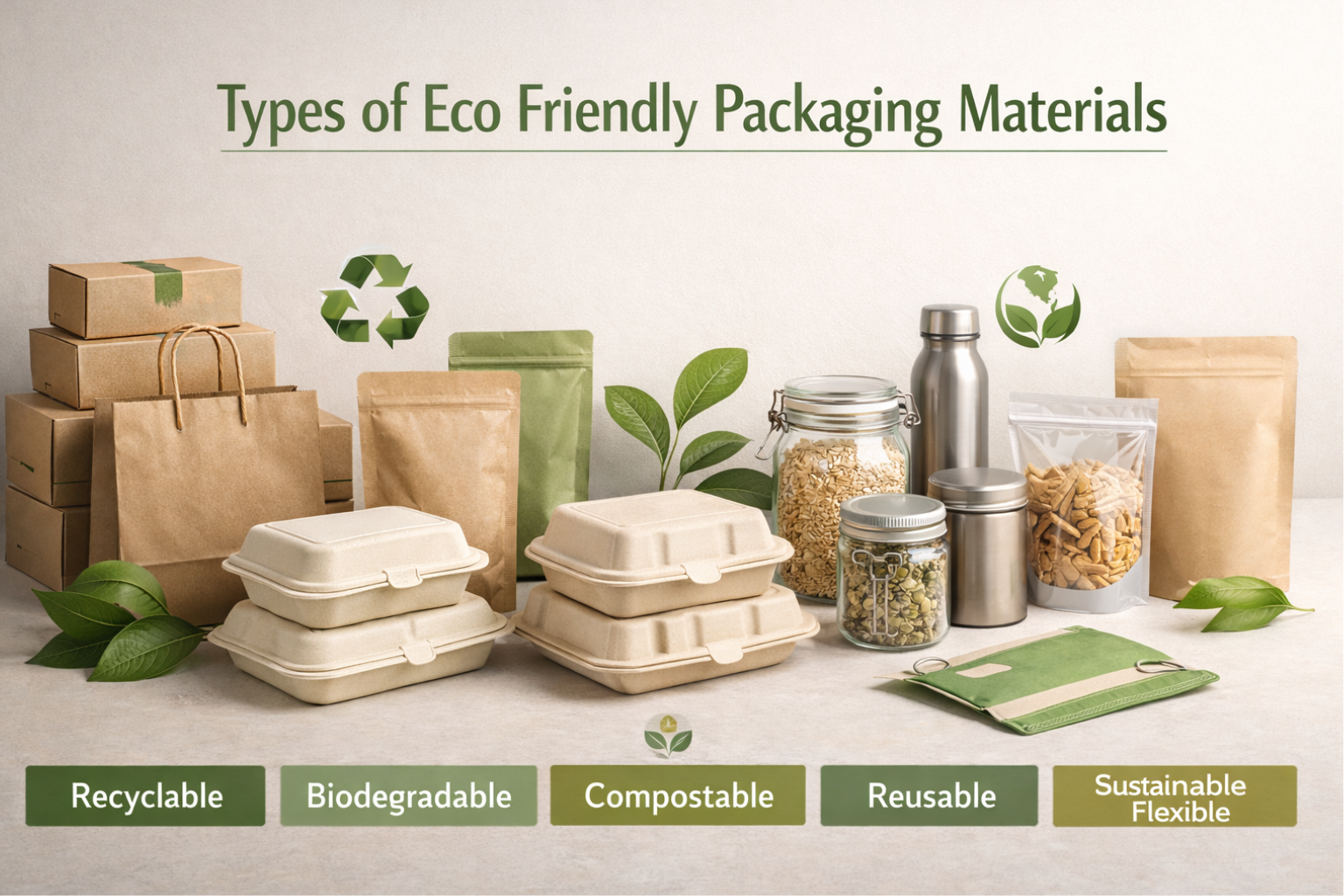
Understanding the Types of Eco Friendly Packaging Materials is important for businesses and consumers who want to reduce environmental impact while maintaining product quality and safety. Sustainable packaging focuses on materials that are recyclable, biodegradable, reusable, or made from renewable resources. As environmental awareness increases, companies are exploring smarter packaging options that minimize waste, lower carbon emissions, and support circular economy practices. Choosing the right eco friendly material depends on product requirements, industry standards, and sustainability goals.
Some common Types of Eco Friendly Packaging Materials used across industries include:
1. Recyclable Materials
Recyclable materials are one of the most widely used Types of Eco Friendly Packaging Materials because they can be collected, processed, and reused to create new products. Common recyclable materials include paper, cardboard, aluminum, glass, and certain types of plastic.
These materials help reduce landfill waste and conserve natural resources by keeping packaging within the recycling system. Businesses prefer recyclable packaging because it supports sustainability goals while maintaining product protection and durability. Many modern Types of Packaging Pouches are now designed using recyclable structures to improve sustainability without compromising performance. Proper labeling and consumer awareness are important to ensure recycling success. Using recyclable materials also reduces energy consumption compared to producing completely new raw materials.
2. Biodegradable Packaging
Biodegradable packaging is among the important Types of Eco Friendly Packaging Materials designed to naturally break down through microorganisms such as bacteria and fungi.
These materials decompose over time without leaving harmful chemical residues in the environment. Biodegradable packaging is often made from plant-based sources like starch blends, cellulose, or biodegradable polymers. It helps reduce long-term pollution caused by traditional plastic packaging. However, proper environmental conditions such as moisture and temperature are required for effective decomposition. Businesses use biodegradable packaging to reduce environmental impact while maintaining functionality, especially in food, retail, and agricultural industries.
3. Compostable Packaging
Compostable packaging is a sustainable solution included in the Types of Eco Friendly Packaging Materials that can break down into natural elements in composting environments. It is usually made from organic materials such as cornstarch, bagasse, bamboo fiber, or PLA (polylactic acid).
Unlike some biodegradable materials, compostable packaging leaves no toxic residue and can enrich soil when processed correctly. This makes it suitable for food packaging and disposable products. To ensure proper composting, industrial or home composting facilities may be required. Compostable packaging supports waste reduction and encourages environmentally responsible disposal practices.
4. Reusable Packaging
Reusable packaging is one of the durable Types of Eco Friendly Packaging Materials designed for multiple uses instead of single-use disposal. It is commonly made from strong materials such as cloth, glass, metal, or high-quality plastics that can withstand repeated handling. Reusable packaging helps reduce overall packaging waste and lowers long-term environmental impact. It is widely used in retail, e-commerce, and logistics industries where returnable packaging systems are possible.
By promoting reuse, businesses reduce raw material consumption and improve sustainability performance. Consumers also benefit by reducing waste generation in daily life.
5. Sustainable Flexible Packaging
Sustainable flexible packaging is a modern solution among the Types of Eco Friendly Packaging Materials that focuses on lightweight design and material efficiency. It uses fewer raw materials compared to rigid packaging, which reduces transportation costs and carbon emissions. Many flexible packaging options are now recyclable or made from renewable materials. High-barrier films help extend product shelf life, reducing food waste and resource loss.
Industries such as food, FMCG, and pharmaceuticals are adopting sustainable flexible packaging for better environmental performance. This packaging type balances sustainability, cost-effectiveness, and product protection in modern supply chains.
Benefits of Eco Friendly Packaging for Businesses and Consumers
The Benefits of Eco Friendly Packaging are significant for both businesses and consumers because sustainable packaging helps balance environmental responsibility with business growth and customer satisfaction. As industries move toward greener solutions, eco friendly packaging is becoming a key factor in reducing environmental impact, improving brand value, and supporting efficient operations. Companies adopting sustainable packaging solutions not only contribute to environmental protection but also gain competitive advantages in modern markets where customers prefer environmentally responsible brands.
Many businesses now collaborate with a reliable Center Seal Pouches manufacturer to develop sustainable pouch solutions that reduce material waste while maintaining strong product protection. Understanding the Benefits of Eco Friendly Packaging helps businesses make smarter packaging choices while helping consumers support products that align with sustainable values.
1. Reduces Environmental Pollution
One of the most important Benefits of eco-friendly packaging is its ability to reduce environmental pollution. Traditional packaging materials, especially single-use plastics, contribute to landfill waste, ocean pollution, and increased carbon emissions. Eco friendly packaging uses recyclable, biodegradable, or reusable materials that reduce harmful waste and minimize environmental damage.
By lowering the use of non-renewable resources and promoting responsible disposal practices, sustainable packaging helps protect ecosystems and reduce overall environmental impact. For consumers, choosing products with eco friendly packaging supports cleaner surroundings and contributes to global sustainability efforts.
2. Improves Brand Image and Customer Trust
Another key advantage among the Benefits of Eco Friendly Packaging is the positive effect on brand image and customer trust. Modern consumers are more aware of environmental issues and prefer brands that demonstrate sustainability and social responsibility. Businesses that adopt eco friendly packaging show commitment toward environmental protection, which builds credibility and strengthens customer relationships.
Transparent communication about sustainable packaging practices increases brand loyalty and helps companies stand out in competitive markets. As sustainability becomes a decision-making factor, eco friendly packaging plays a strong role in enhancing brand reputation.
3. Meets Government Regulations
Compliance with environmental policies is one of the practical Benefits of Eco Friendly Packaging for businesses. Governments around the world are introducing stricter regulations to reduce plastic waste and encourage sustainable production practices. Using eco friendly packaging helps companies stay compliant with environmental standards and avoid potential penalties or restrictions. Sustainable packaging also prepares businesses for future regulatory changes, making operations more secure and adaptable.
For consumers, regulated eco friendly packaging ensures safer materials and responsible manufacturing practices that align with environmental protection goals.
4. Reduces Packaging Waste
Reducing waste is another major aspect of the Benefits of Eco Friendly Packaging. Sustainable packaging focuses on minimalistic design, recyclable materials, and reusable solutions that lower overall packaging waste. Lightweight designs use fewer raw materials, which helps decrease resource consumption and reduces disposal challenges.
Businesses benefit by lowering waste management costs and improving supply chain efficiency, while consumers experience less packaging waste in everyday use. Waste reduction also supports circular economy models where materials can be reused or recycled instead of discarded.
5. Long-Term Cost Efficiency
Long-term cost savings are often overlooked but are among the valuable Benefits of Eco Friendly Packaging. Although some sustainable materials may require initial investment, efficient design and lightweight packaging reduce transportation costs, storage expenses, and material usage over time. Improved product shelf life through advanced sustainable materials can also reduce product damage and waste.
Businesses benefit from operational efficiency and reduced environmental impact simultaneously. For consumers, eco friendly packaging can lead to more responsible consumption patterns and support brands focused on sustainable innovation.
Future of Eco Friendly Packaging
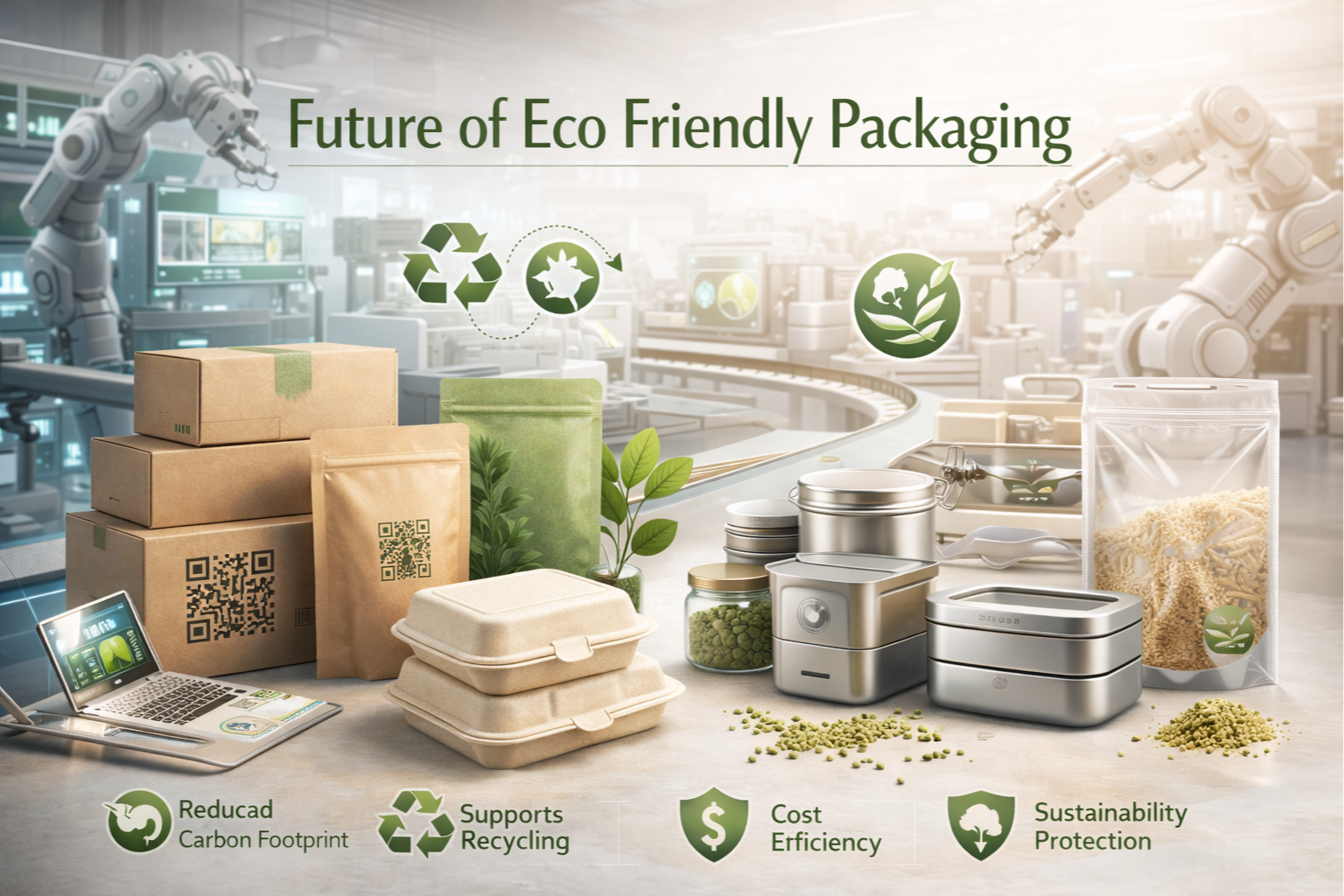
The Future of Eco Friendly Packaging is strongly connected to innovation, sustainability goals, and changing consumer expectations. As environmental concerns continue to rise, businesses across industries are investing in smarter and more sustainable packaging solutions. Governments are introducing stricter environmental regulations, and consumers are actively choosing brands that support eco-friendly practices. Because of these factors, the Future of Eco Friendly Packaging is expected to focus on reducing waste, lowering carbon emissions, and promoting a circular economy where materials are reused and recycled efficiently.
One major trend shaping the Future of Eco Friendly Packaging is the development of advanced biodegradable and compostable materials. Scientists and manufacturers are creating plant-based packaging alternatives that perform like traditional plastics but break down naturally without harming the environment. This helps reduce landfill waste and ocean pollution while maintaining product safety and durability.
Another important aspect of the Future of Eco Friendly Packaging is smart and minimal packaging design. Lightweight packaging reduces transportation emissions and energy use. Companies are also adopting refillable and reusable packaging models, especially in food, retail, and e-commerce industries.
Key trends influencing the Future of Eco Friendly Packaging include:
- Increased use of recyclable mono-material packaging
- Growth of sustainable flexible packaging solutions
- Integration of digital tracking for better recycling systems
- Stronger collaboration between businesses and recycling industries
Overall, the Future of Eco Friendly Packaging will focus on innovation, responsible production, and long-term environmental protection. Businesses that adapt early to these sustainable changes will gain competitive advantage, improve brand trust, and contribute to a cleaner and more sustainable global economy.
Final Thoughts
Eco friendly packaging is no longer just a trend; it has become an essential part of modern business strategy and responsible consumption. Throughout this guide, we explored what sustainable packaging means, the different materials used, its benefits for businesses and consumers, and the future direction of environmentally responsible packaging solutions. As industries continue to evolve, companies are recognizing that adopting eco friendly packaging helps reduce environmental impact while improving operational efficiency and brand reputation.
From recyclable and biodegradable materials to innovative flexible packaging designs, sustainable packaging solutions offer practical ways to minimize waste and conserve natural resources. Consumers are also playing an important role by choosing products that align with sustainability values, encouraging brands to adopt greener practices. Understanding What is Bulk Packaging also helps businesses reduce excess material usage and improve transportation efficiency, further supporting sustainable goals. Businesses that invest in eco friendly packaging today are better prepared to meet regulatory requirements, customer expectations, and long-term environmental challenges.
Looking ahead, innovation will continue to shape the future of packaging through smarter materials, lightweight designs, and circular economy initiatives. By understanding and implementing eco friendly packaging strategies, companies can contribute to a healthier planet while building stronger relationships with environmentally conscious customers. Ultimately, sustainable packaging is not only about protecting products — it is about protecting the environment, supporting responsible growth, and creating a more sustainable future for everyone.
Frequently Asked Questions (FAQs)
1. What materials are commonly used in eco friendly packaging?
Common materials include recycled paper, cardboard, biodegradable plastics, plant-based materials like PLA or cornstarch, glass, aluminum, and sustainable flexible packaging films designed for recycling or reduced material usage.
2. Is eco friendly packaging more expensive than traditional packaging?
Initially, eco friendly packaging may have higher upfront costs, but long-term benefits such as reduced material usage, lower transportation expenses, and improved brand value can make it cost-effective over time.
3. What is the difference between biodegradable and recyclable packaging?
Biodegradable packaging breaks down naturally through biological processes, while recyclable packaging can be processed and reused to create new products. Both help reduce waste but function differently within waste management systems.
4. Which industries benefit most from eco friendly packaging?
Industries such as food and beverage, FMCG, e-commerce, pharmaceuticals, cosmetics, and industrial manufacturing benefit significantly from eco friendly packaging due to sustainability demands and regulatory requirements.
5. What is the future of eco friendly packaging?
The future focuses on innovative materials, recyclable mono-material packaging, reusable systems, smart packaging technology, and circular economy models that reduce waste and improve sustainability across supply chains.