
Choosing the right Snack Packaging Pouch is one of the biggest challenges for snack brands in India today. Whether you’re selling crispy chips, spicy namkeen, or farsan, maintaining freshness is everything. One wrong material choice can turn crunchy snacks into soggy, stale products within days.
Many FMCG brands struggle with issues like moisture entering the pack, oxygen causing oil rancidity, and poor sealing leading to loss of crunch. These problems directly impact customer satisfaction, repeat purchases, and brand trust.For businesses exploring broader packaging solutions.
you can also check Food and Beverage Packaging Ideas for Brands to understand trending packaging formats.
In India’s humid climate and long distribution cycles, selecting the right Snack Packaging Pouch is not just a packaging decision—it’s a business-critical choice. This guide will help you understand which materials actually keep snacks fresher longer and how to choose the right pouch for your product.
What is a Snack Packaging Pouch?
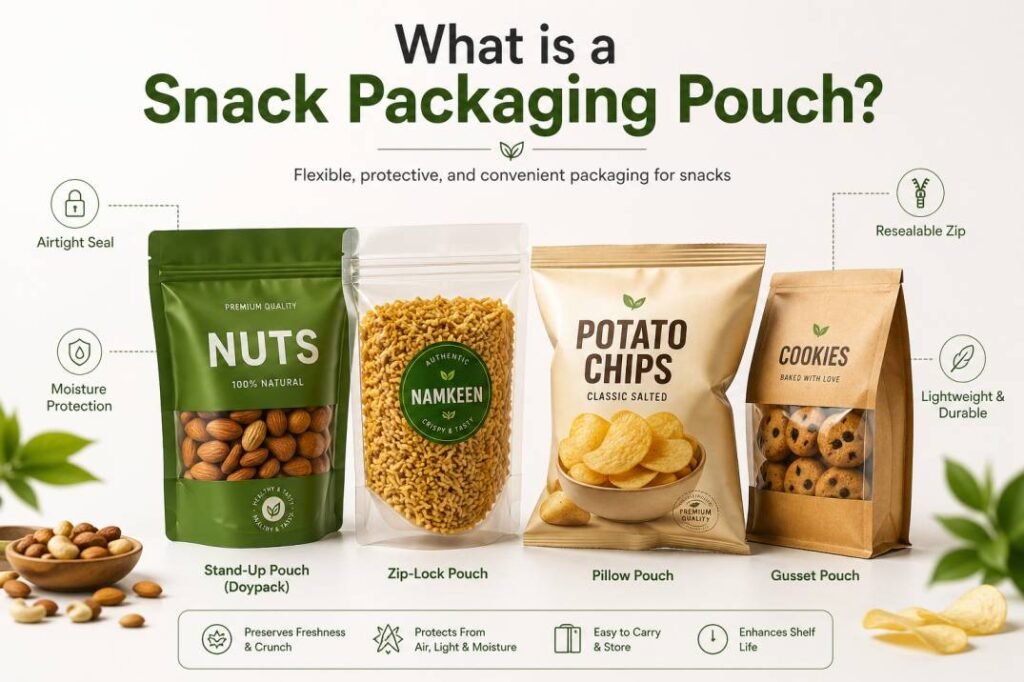
A Snack Packaging Pouch is a flexible, multi-layer packaging format designed to store and protect snacks like chips, namkeen, and dry foods.
Unlike rigid packaging (like jars or tins), flexible pouches are:
- Lightweight
- Cost-effective
- Space-efficient
- Easy to transport
They are widely used in:
- Chips packaging pouch
- Namkeen packaging pouch
- Dry snack packaging
Flexible pouches dominate the Indian FMCG market because they offer better barrier protection and branding flexibility.
Why Freshness is a Big Challenge in Snack Packaging
Freshness is the biggest concern in any snacks packing pouch.
Common Problems:
- Chips losing crispiness
- Namkeen becoming soft
- Oil turning rancid
Why it happens:
- Moisture enters the pack
- Oxygen reacts with oils
- Poor sealing allows air leakage
Real example:
If you leave a chips packet open overnight, it becomes soft due to moisture absorption. The same happens when packaging material is weak.
Key Factors That Affect Snack Freshness
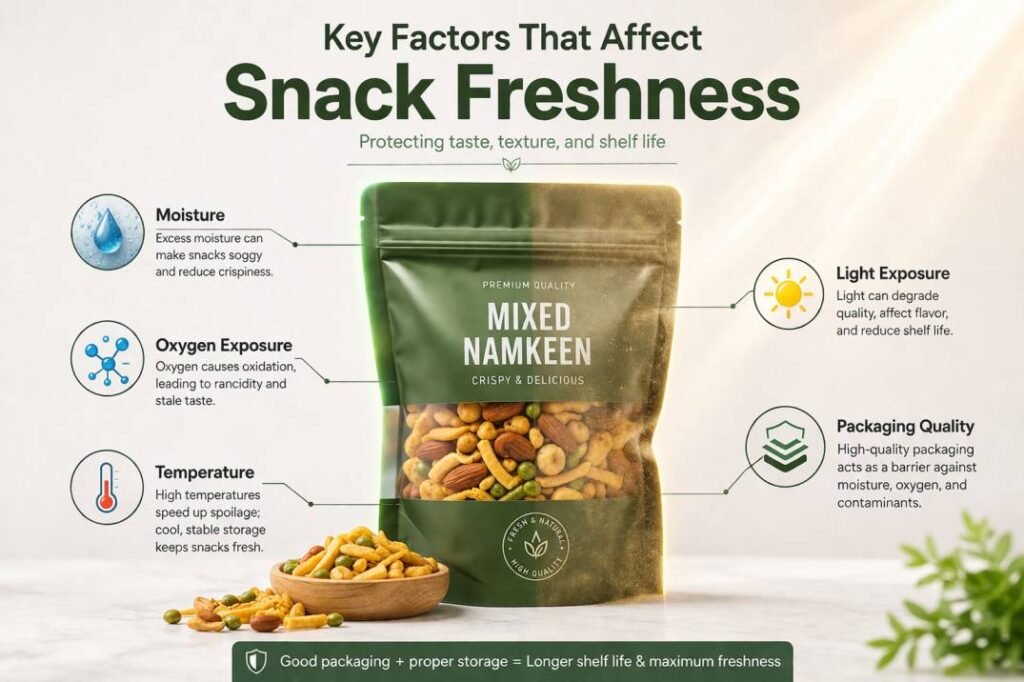
1. Moisture
Humidity is the biggest enemy of snacks.
Even a small amount of moisture can destroy crispiness.
Think of it like leaving biscuits open during monsoon.
2. Oxygen
Oxygen causes:
- Oil oxidation
- Bad smell
- Taste degradation
3. Light
Exposure to light:
- Breaks down oils
- Reduces shelf life
4. Temperature
Heat accelerates spoilage and affects product stability.
How Snack Packaging Pouch Materials Keep Snacks Fresh
Modern Snack Packaging Pouch materials use multi-layer lamination.
How it works:
- Outer layer → Strength & printing
- Middle layer → Barrier protection
- Inner layer → Sealing
Key benefits:
- Blocks moisture
- Prevents oxygen entry
- Ensures airtight sealing
This layered structure is why flexible packaging works better than single-layer plastic.
Types of Snack Packaging Pouch
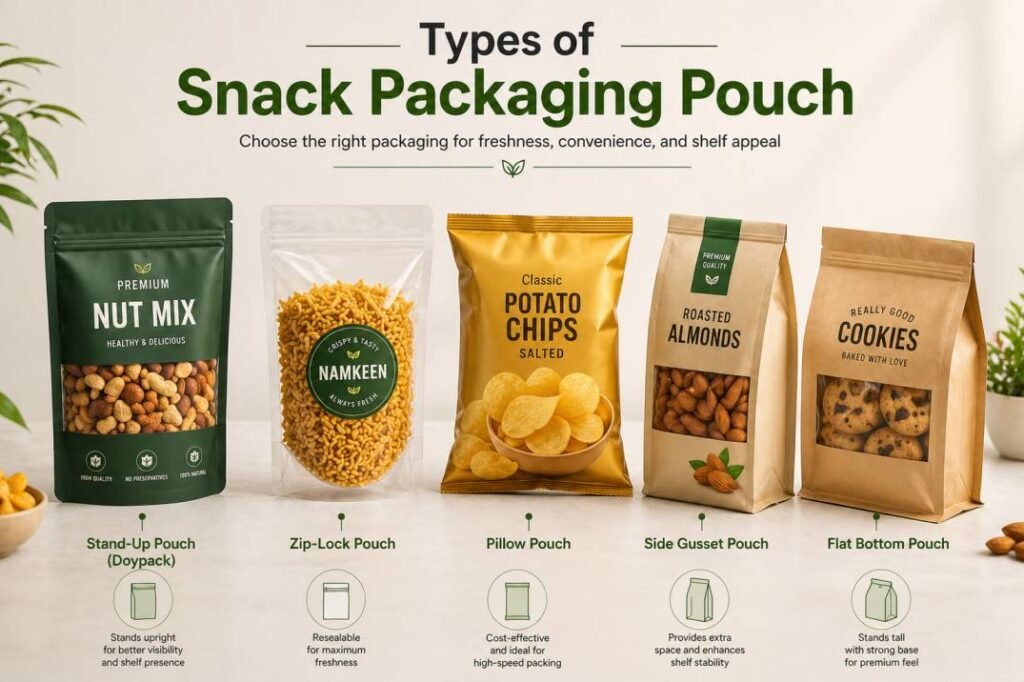
Stand-Up Pouch
- Structure: Bottom gusset for standing
- Best for: Premium snacks, namkeen
- Freshness: High
- Cost: Medium
Best for branding + shelf visibility
Zipper Lock Pouch
- Resealable design
- Best for: Multi-use snacks
- Freshness: Very high (resealing prevents exposure)
- Cost: Slightly higher
Three Side Seal Pouch
- Sealed on 3 sides
- Best for: Single-use chips packaging pouch
- Freshness: Good
- Cost: Low
Four Side Seal Pouch
- Fully sealed structure
- Best for: Premium packaging
- Freshness: Excellent
- Cost: Higher
Center Seal Pouch
- Back seal
- Best for: Chips packaging pouch
- Freshness: Good
- Cost: Low
Center Seal Gusset Pouch
- Extra storage capacity
- Best for: Bulk snacks
- Freshness: Moderate
- Cost: Medium
Two Side Gusset Pouch
- Expands from sides
- Best for: Bulk namkeen
- Freshness: Moderate
- Cost: Medium
Flat Bottom Pouch
- Premium look
- Best for: High-end snacks
- Freshness: High
- Cost: High
Spout Pouch / Variants
For liquid snacks or sauces
Shaped / Dangler / Dori Eyelet Pouches
- Used for marketing & display
- Freshness depends on material
Roll Form Packaging
- Used in automated machines
- Best for high-volume chips production
Best Materials for Each Pouch Type
| Pouch Type | Best Material | Use Case |
|---|---|---|
| Stand-up pouch | PET + PE | Namkeen |
| Chips packaging pouch | MET PET | Chips |
| Low-cost snacks | BOPP | Budget brands |
| Export packaging | Foil laminate | Long shelf life |
Which Material Keeps Snacks Fresher Longer?
Comparison Table
| Material | Moisture Barrier | Oxygen Barrier | Shelf Life | Cost |
|---|---|---|---|---|
| BOPP | Low | Low | Short | Low |
| PET + PE | Medium | Medium | Moderate | Medium |
| MET PET | High | High | Long | Medium |
| Foil Laminate | Very High | Very High | Very Long | High |
Practical Recommendations
- Best for chips packaging pouch: MET PET
- Best for namkeen packing pouch: PET + PE
- Best for export snacks: Foil laminate
Best for low-cost snacks: BOPP
Applications of Snack Packaging Pouch
- Chips packaging pouch
- Namkeen packing pouch
- Farsan & dry snacks
- Ready-to-eat foods
- Export packaging
If your product line also includes spices or dry powders, explore Packaging for Spices for material recommendations and pouch formats.
Advantages of Using High-Quality Snack Packaging Pouch
- Longer shelf life
- Better taste retention
- Reduced wastage
- Strong branding
- Export-ready packaging
Low-quality packaging leads to:
- Product returns
- Customer complaints
- Brand damage
For brands scaling distribution, working with reliable Packaging Box Wholesalers ensures consistent supply and cost efficiency.
How to Choose the Right Snack Packaging Pouch (Buyer Guide)
Checklist:
- Type of snack (oily / dry)
- Shelf life requirement
- Storage conditions
- Transport distance
- Budget
- Printing needs
- Supplier reliability
Common Mistakes to Avoid
- Choosing cheapest material
- Ignoring barrier properties
- Poor sealing quality
- No shelf-life testing
Why Choosing the Right Packaging Manufacturer Matters
A good manufacturer ensures:
- Consistent quality
- Customization
- Food safety compliance
- Timely delivery
This is where a reliable Snack Packaging Pouch Manufacturer becomes critical.
Future of Snack Packaging in India (2026)
- Growing FMCG demand
- Export-focused packaging
- Sustainable materials
- High-barrier films
- Smart packaging innovations
Conclusion
Choosing the right Snack Packaging Pouch material directly impacts product freshness, shelf life, and brand success. Whether you are manufacturing chips, namkeen, or exporting snacks, selecting the correct material like MET PET or foil laminate can significantly improve product quality.
For Indian FMCG brands, packaging is no longer just a cost—it’s a competitive advantage.
FAQs
1. Which material is commonly used in a chips packaging pouch?
A chips packaging pouch typically uses MET PET (metallized polyester) combined with polyethylene layers. This structure offers excellent moisture and oxygen barrier properties, which help maintain crispiness and prevent rancidity. Some low-cost brands use BOPP, but it provides lower protection. For premium chips brands in India, MET PET remains the most reliable and widely used packaging material for longer shelf life.
2. What is the best namkeen packing pouch material in India?
The most commonly used namkeen packing pouch material in India is PET + PE laminate. It provides a good balance of strength, sealing, and moderate barrier protection. For higher shelf life or export-quality namkeen, MET PET or foil laminates are recommended. The choice depends on factors like oil content, storage conditions, and distribution distance across India’s humid climate.
3. How does a Snack Packaging Pouch prevent moisture and oxygen from affecting snacks?
A Snack Packaging Pouch uses multi-layer laminated films to block external elements. The inner layer ensures strong sealing, while the middle barrier layer prevents moisture and oxygen from entering. The outer layer provides durability and printability. This structure helps maintain crunchiness, prevents oil oxidation, and extends shelf life, making it essential for snacks like chips, namkeen, and farsan.
4. Which Snack Packaging Pouch is best for resealing and maintaining freshness?
A zipper-based Snack Packaging Pouch, also known as a resealable pouch, is best for maintaining freshness after opening. It allows consumers to seal the pack multiple times, preventing exposure to air and moisture. This is especially useful for namkeen and dry snacks consumed over time. Zipper pouches are widely used in premium snack segments for better convenience and longer usability.
5. How can snack manufacturers increase shelf life using packaging?
Snack manufacturers can increase shelf life by choosing high-barrier Snack Packaging Pouch materials like MET PET or foil laminates, ensuring proper sealing, and using nitrogen flushing if required. Controlling storage temperature and minimizing exposure to humidity also helps. Selecting the right pouch structure based on product type—such as chips packaging pouch or namkeen packing pouch—is critical for maintaining freshness and quality.
6. Is aluminum foil better than plastic for snack packaging?
Aluminum foil-based Snack Packaging Pouch structures provide superior barrier protection compared to standard plastic films. They block almost all moisture, oxygen, and light, making them ideal for long shelf life and export packaging. However, they are more expensive than materials like BOPP or PET. For premium snacks and international markets, foil laminates are often the best choice for maintaining product freshness.
7. Which Snack Packaging Pouch is best for bulk snack packaging?
For bulk storage and transportation, gusset-based formats like center seal gusset or two-side gusset Snack Packaging Pouch are ideal. These pouches expand to hold larger quantities and are commonly used for wholesale namkeen and farsan. When combined with PET + PE or MET PET materials, they offer decent barrier protection while maintaining cost efficiency, making them suitable for distributors and B2B snack suppliers.
8. What is the difference between BOPP and MET PET in snack packaging?
BOPP and MET PET are both widely used in Snack Packaging Pouch, but they differ in performance. BOPP is cost-effective and suitable for low-budget snacks but offers limited barrier protection. MET PET, on the other hand, has a metallized layer that significantly improves resistance to moisture and oxygen. This makes MET PET a better choice for chips packaging pouch where crispiness and shelf life are critical.