
Your snack may win the taste test, but packaging gets the first chance to win the customer.
Walk through any supermarket and you will see rows of chips, namkeen, roasted snacks, nuts, popcorn, and other ready-to-eat products competing for attention.
A customer may not know your brand yet. Before tasting the product, they judge what they can see, hold, and understand from the pack.
That makes snack packaging an important part of both product protection and brand communication.
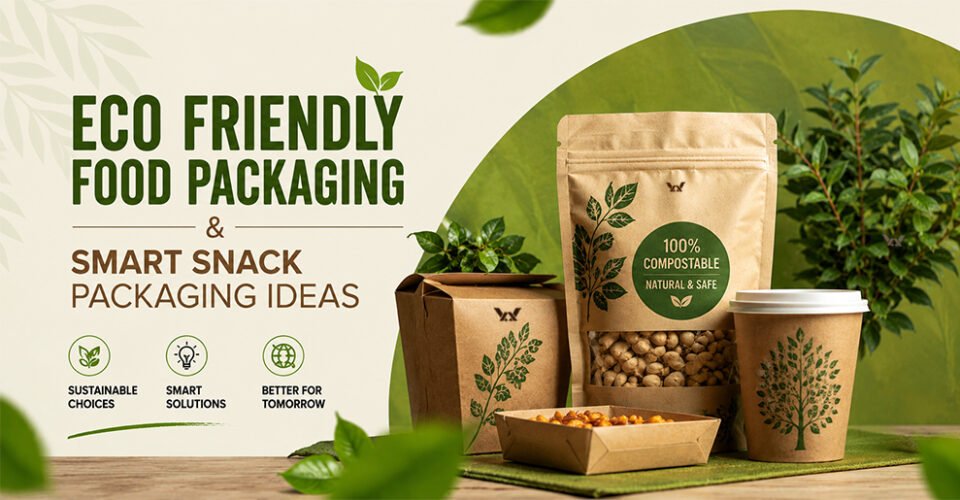
The right packaging should help preserve freshness, handle transportation, provide convenience, and make the product easy to recognise. At the same time, brands are increasingly exploring eco friendly food packaging options that balance environmental considerations with the practical needs of food products.
So, how can snack brands create packaging that protects the product without disappearing on a crowded shelf?
Let’s break it down.
What Is Snack Packaging?
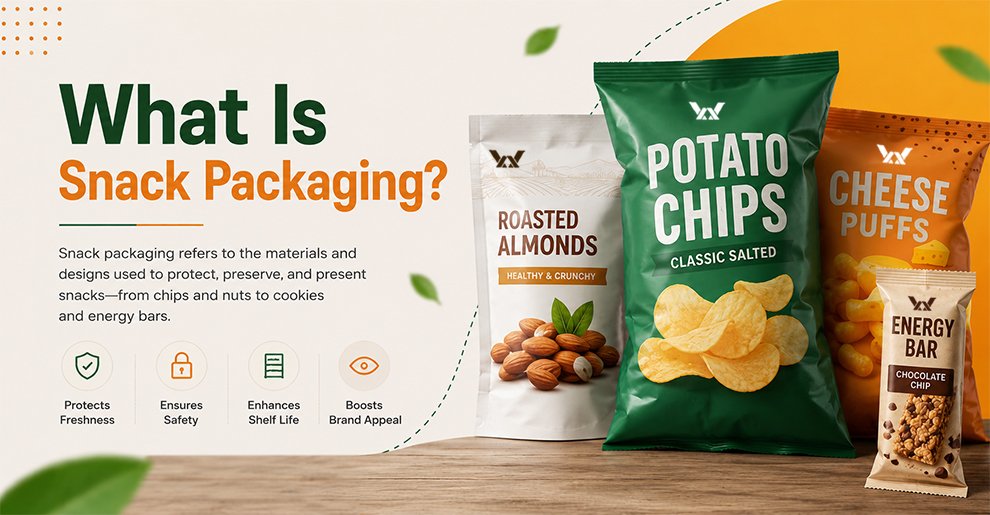
Snack packaging refers to the materials and formats used to contain, protect, store, transport, display, and sell snack products.
Depending on the product, brands may use flexible pouches, stand-up pouches, sachets, laminated structures, or other specialised formats.
The choice depends on several factors, including the snack’s moisture sensitivity, expected shelf life, handling conditions, pack size, branding requirements, and distribution environment.
Good packaging should answer two basic questions:
Will it protect the product?
Will it help the customer notice and understand the product?
If either answer is no, the packaging strategy needs another look.
Key Elements of Effective Snack Packaging
| Element | Main Purpose |
|---|---|
| Material | Protects product quality |
| Design | Creates shelf appeal |
| Pack Format | Supports handling and storage |
| Branding | Builds recognition |
| Convenience | Improves everyday use |
Why Does Snack Packaging Matter?
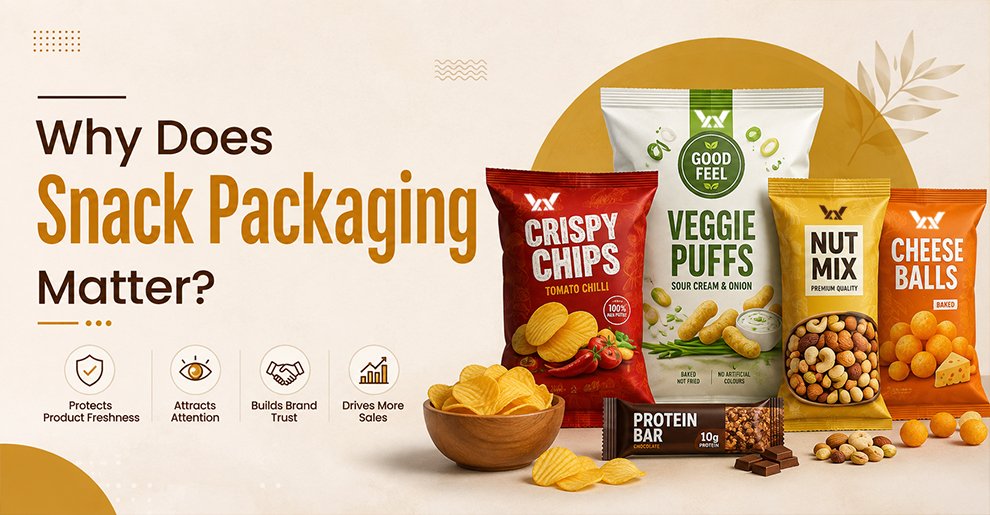
Snack products often compete in visually crowded categories.
When several brands sell similar products, packaging can become one of the easiest ways for a customer to distinguish between them.
A clear logo, memorable colour combination, appealing food imagery, and well-organised information can make a pack easier to recognise.
Packaging also shapes expectations.
A neat and carefully designed package may give shoppers a stronger sense of quality and reliability. On the other hand, a confusing layout or poor presentation can make even a good product seem less appealing.
This is where packaging becomes more than a protective layer. It becomes part of the customer’s first impression of the brand.
How Can Snack Packaging Keep Food Fresh?
Freshness is one of the biggest concerns when selecting packaging for snacks.
Products such as chips, namkeen, roasted snacks, and dry foods can be affected by factors such as moisture, oxygen, light, and handling conditions.
The packaging structure therefore needs to suit the characteristics of the food inside.
Choose the Right Barrier Properties
Different snacks have different protection requirements.
A product that loses its crispness when exposed to moisture needs a packaging solution that addresses moisture transmission. Other products may require protection from oxygen or light.
This is why packaging should not be selected only because a particular format looks attractive.
Consider Storage and Transportation
A snack package may travel through several stages before reaching the consumer.
It can move from the production facility to a warehouse, then through transportation and retail handling before finally reaching someone’s home.
The packaging needs to remain functional throughout that journey.
For brands looking specifically at spice and masala products, Masala Packing Pouch is an example of how packaging can be designed around product protection and presentation requirements.
For manufacturers, the lesson is simple: start with the product’s protection needs and then build the packaging around them.
How Does Packaging Design Help Snacks Stand Out?
A package has only a short window to attract attention.
That does not mean every snack pack needs oversized graphics or extremely bright colours. In many cases, clarity can be more powerful than visual complexity.
Make the Brand Easy to Spot
A consistent logo position, typography style, and colour system can help customers recognise a product range faster.
This becomes especially valuable when a brand has several flavours or product variants.
Create a Clear Visual Hierarchy
The customer should quickly understand:
- What the product is
- Which brand makes it
- What flavour or variant it offers
- What makes it different
When everything is given equal visual importance, nothing stands out properly.
Use Product Images With Purpose
Food imagery can create an immediate connection between the package and the product inside.
However, too many images or design elements can make the front panel feel crowded. The visual should support the product message rather than compete with it.
Custom Snack Packaging for Stronger Branding
Generic packaging can make it harder for a new snack brand to establish a distinct identity.
Custom snack packaging gives brands more control over the appearance, format, size, printing, and overall presentation of their products.
For example, a traditional Indian snack brand might use familiar visual cues while giving them a cleaner, contemporary treatment.
A premium nut or roasted snack brand may take a more restrained approach with sophisticated typography and minimal graphics.
The right choice depends on the audience and positioning.
White Lotus Industries can help brands approach packaging with both product requirements and visual presentation in mind, rather than treating design as a separate decision.
The objective should be simple: when customers see your package, they should have a reason to remember it.
Flexible Packaging vs Other Packaging Formats
Flexible packaging is widely used across food categories because it can be adapted to different product sizes, shapes, and applications.
Pouches can also provide a large printable surface, giving brands plenty of room for product information and visual branding.
However, no packaging format is automatically the right choice for every product.
If you are comparing different formats, understanding the Top 10 Types of Flexible Packaging can help you evaluate which structures may be suitable for different food applications.
The decision should consider the product, required protection, pack size, handling, shelf presentation, and customer expectations.
What Makes Eco Friendly Food Packaging Important?
Sustainability is becoming an important consideration for food brands and consumers.
However, eco friendly food packaging should not be treated as simply choosing a material because it sounds environmentally responsible.
Packaging still needs to protect the product.
If a snack loses quality because the package does not provide sufficient protection, food waste can become another concern.
A more practical approach is to look at the complete packaging system.
Consider:
- How much material is required
- Whether the structure can be made more efficient
- What happens to the packaging after use
- Whether the packaging protects the product effectively
- What sustainability claims can be supported honestly
For brands exploring alternatives, the goal should be to balance product protection, packaging performance, practicality, and environmental considerations.
Sustainable Food Packaging: What Should Brands Consider?
The move toward sustainable food packaging requires more than changing the outer appearance of a package.
Brands need to understand the actual characteristics of the material and how the complete packaging structure performs.
A useful starting point is material efficiency.
Using only the necessary amount of packaging can reduce unnecessary material use while still maintaining the protection required by the product.
Brands should also avoid making vague environmental claims. If sustainability is part of the marketing message, the claim should be clear and supported by the actual packaging solution.
What About Recycled Packaging Boxes?
Recycled packaging boxes can be useful for certain food packaging applications, particularly where a rigid secondary pack is appropriate.
However, snack products often require packaging formats designed specifically around freshness, flexibility, handling, and barrier performance.
That means brands should select packaging based on the product rather than assuming one sustainable format will work everywhere.
Common Snack Packaging Challenges
Even a well-designed package can create problems if important practical details are overlooked.
1. Poor Product Protection
If the packaging does not suit the snack, quality may decline during storage or transportation.
2. Weak Shelf Visibility
A package can contain all the right information but still fail to attract attention if the design lacks hierarchy.
3. Difficult-to-Use Packaging
Consumers want packaging that is easy to open, carry, consume from, and store when necessary.
4. Overcomplicated Design
Too many colours, messages, graphics, and claims can make a product difficult to understand.
5. Choosing Format by Appearance Alone
A pouch may look attractive, but the packaging structure must still match the product’s actual requirements.
This becomes especially important when packaging is designed for products with different handling requirements, such as beverages, where a Fruit Juice Pouch Manufacturer can help address packaging needs beyond appearance.
Flexible Packaging vs Rigid Packaging: Which Is Better?
There is no universal winner between flexible and rigid packaging.
The better choice depends on the product, distribution requirements, shelf-life expectations, pack size, branding needs, and customer experience.
Flexible formats can offer advantages in areas such as lightweight construction and adaptable pack shapes, while rigid formats may be preferred for applications where stiffness or structural support is important.
Before making a decision, compare the practical differences between Flexible Packaging VS Rigid Packaging.
For snack manufacturers, the right question is not simply “Which packaging looks better?”
It is:
“Which format gives this product the right combination of protection, usability, presentation, and commercial value?”
Best Practices for Better Snack Packaging
Before approving your next packaging design, work through these steps.
Start With the Product
Understand what can affect the snack during storage and transportation.
Study Competing Products
Visit physical stores and online marketplaces. Look at what competing packages have in common and identify opportunities to create a distinctive identity.
Keep the Front Panel Clear
Your brand name and product name should be easy to locate.
Design for the Target Customer
A children’s snack, premium dry fruit product, health-focused snack, and traditional namkeen brand may need very different visual approaches.
Think Beyond Appearance
Review opening, handling, storage, printing quality, pack strength, and overall usability.
Test Before Production
A design that looks good on a computer screen may appear different on the actual material.
Review physical samples before committing to larger production quantities.
Current Trends in Snack Packaging
Snack packaging is evolving alongside changing consumer expectations and retail competition.
Convenient Pack Sizes
Single-serve and portable formats can appeal to consumers who snack while travelling, working, or spending time outdoors.
Resealable Solutions
For products consumed over multiple occasions, resealable packaging can improve convenience and help reduce unnecessary exposure after opening.
Cleaner Brand Design
Many brands are moving toward clearer layouts where the logo, product name, and key message are easier to identify.
Sustainability-Focused Packaging
Brands are exploring more efficient material use, recyclable structures, and other packaging approaches that can reduce environmental impact while maintaining product performance.
Digital and Connected Packaging
QR codes and other digital elements can provide additional product information, traceability, or brand experiences without overcrowding the main package design.
How to Choose the Right Snack Packaging Company
Selecting a packaging supplier is an important business decision.
Do not evaluate snack packaging companies only by their price.
Look at whether the supplier understands your product category and can support the practical requirements of your packaging.
Consider:
- Packaging structure
- Product protection
- Printing quality
- Available formats
- Production requirements
- Quality consistency
- Customisation options
- Storage and transportation needs
A reliable packaging partner should understand that the package has to perform beyond the retail shelf.
White Lotus Industries can be considered by brands looking for packaging solutions that bring together product protection, customisation, printing, and presentation.
The right supplier should ultimately help you solve a packaging problem—not simply manufacture a bag or pouch.
Expert Recommendations for Snack Brands
If you are launching a new snack or redesigning an existing product, focus on five areas.
Protect first.
Start by understanding what the snack needs from its packaging.
Make recognition easy.
Your customer should not have to search for the brand name.
Give every design element a purpose.
Avoid decoration that does not improve communication.
Consider the full customer journey.
Think about how the package is picked up, opened, consumed, carried, and stored.
Balance sustainability with performance.
An environmentally focused packaging decision should still protect the food effectively.
This balanced approach can help brands avoid choosing packaging based on a single factor.
The Future of Snack Packaging
The future of snack packaging will likely involve a stronger connection between protection, convenience, branding, and sustainability.
Consumers want products that are easy to use. Brands want packaging that differentiates them. Retailers need products that display effectively. At the same time, environmental considerations continue to influence packaging decisions.
This creates a more complex challenge for manufacturers.
The next generation of packaging will not simply need to look attractive. It will need to work efficiently throughout the product’s journey while supporting the brand’s larger identity and sustainability goals.
For businesses, this means packaging decisions should be made strategically rather than treated as the final step after product development.
Conclusion
Snack packaging plays a much bigger role than simply holding food.
It can help protect freshness, communicate product information, influence first impressions, improve convenience, and give a brand a recognisable presence on the shelf.
At the same time, the growing interest in eco friendly food packaging means brands need to think carefully about material choices, packaging efficiency, product protection, and responsible sustainability claims.
The strongest approach is not to chase every packaging trend. Instead, understand your product, your customer, your distribution environment, and your brand positioning before selecting the right format.
For snack manufacturers, working with an experienced packaging partner such as White Lotus Industries can make it easier to bring together protection, functionality, customisation, and shelf appeal in one packaging strategy.
When packaging works well on all these levels, it stops being just a container and becomes a valuable part of the product experience.
FAQs:
Q1. What is the best packaging for snacks?
The best snack packaging depends on the product’s protection requirements, pack size, shelf-life expectations, transportation conditions, and intended customer experience. Flexible pouches, stand-up pouches, and other formats can work well when their structure matches the specific snack.
Q2. How does snack packaging keep food fresh?
Snack packaging can help protect food from external factors such as moisture, oxygen, light, and physical handling. The appropriate barrier and packaging structure depend on the characteristics of the individual snack and its expected storage conditions.
Q3. What is eco friendly food packaging?
Eco friendly food packaging generally refers to packaging designed with environmental considerations such as material efficiency, recyclability, or reduced resource use. However, the packaging must still provide suitable protection and performance for the food product.
Q4. What is sustainable food packaging?
Sustainable food packaging focuses on reducing unnecessary environmental impact while maintaining the functionality needed to protect and distribute food. Material efficiency, end-of-life considerations, product protection, and realistic environmental claims all matter when evaluating a packaging solution.
Q5. Is flexible packaging good for snacks?
Flexible packaging can be suitable for many snack products because it can be produced in different formats and sizes while offering useful areas for branding and product information. The correct structure should still be selected according to the snack’s specific protection requirements.