
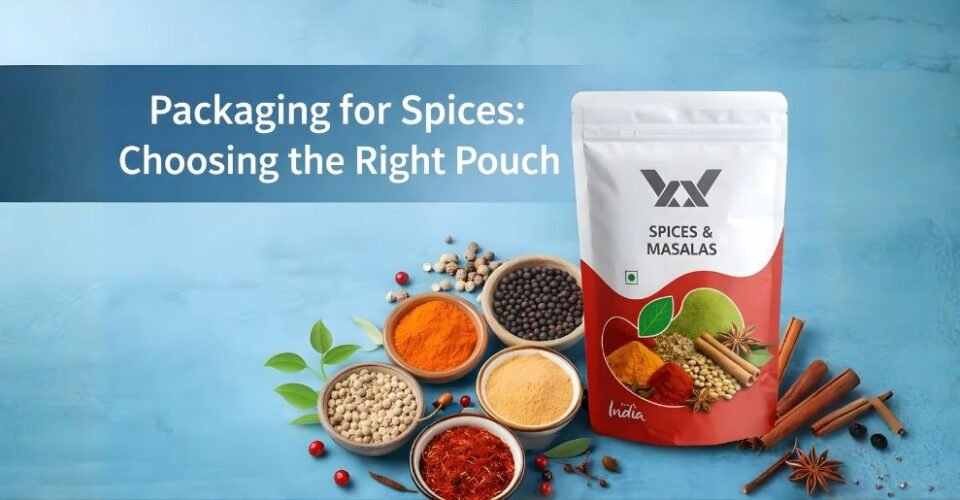
Packaging for spices is essential to preserve aroma, prevent moisture damage, and maintain product quality over time. Spices are highly sensitive to air, light, and humidity, which can quickly reduce their flavor and effectiveness if not stored correctly. This makes spice packaging a critical part of product safety and shelf life management.
Modern spice packaging solutions are designed to protect against moisture, oxygen, and contamination while improving storage and usability. Flexible formats are widely used because they are lightweight, durable, and efficient compared to rigid containers.
As competition increases, packaging for spices also plays a key role in presentation and buying decisions. Businesses often evaluate different approaches to improve product appeal and performance.
To choose the right solution, it is important to understand the key properties that define effective spice packaging.
Key Properties of Effective Spice Packaging
Effective packaging for spices must protect the product from environmental factors that can affect quality and shelf life. A well-designed structure ensures that spices retain their aroma, color, and freshness throughout storage and distribution.
High-performance spice packaging focuses on barrier protection, durability, and product safety. Advanced flexible packaging products are designed to meet these standards and ensure consistent quality across different spice categories.
Moisture Barrier
Moisture can cause spices to clump and lose their original texture. Strong spice packaging must prevent humidity from entering the pack to maintain product quality and usability.
Oxygen Resistance
Oxygen exposure reduces flavor strength and color over time. Proper packaging for spices includes barrier layers that slow oxidation and preserve freshness.
Light Protection
Exposure to light, especially UV rays, can degrade spice quality. Effective spice packaging uses protective layers to reduce light penetration and maintain product stability.
Aroma Retention
Spices are valued for their aroma, which needs to be preserved until use. High-quality masala packaging ensures fragrance remains locked inside the pouch.
Strength and Durability
Whole spices and coarse blends can damage weak packaging. Durable spice packaging pouches provide resistance against tearing and puncture during handling and transport.
Materials Used in Spice Packaging
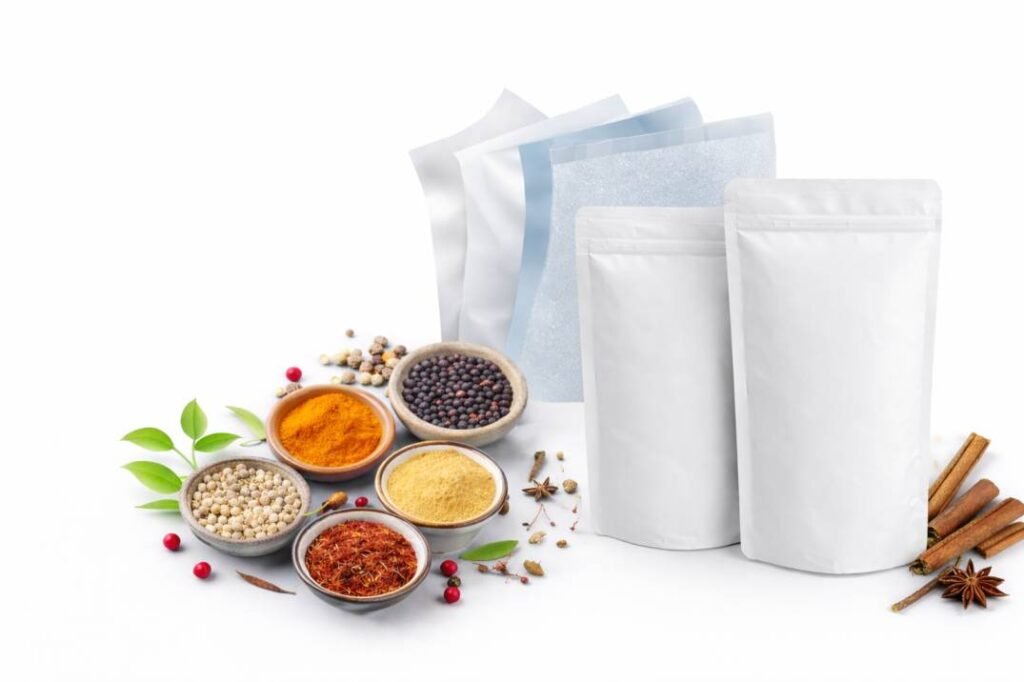
Different materials are used in packaging for spices depending on the level of protection required and the type of product being packed. The right structure ensures that aroma, freshness, and quality are maintained throughout storage and transportation, especially in sensitive categories like masalas and herbs.
Modern spice packaging pouches are typically made using multi-layer laminates that combine strength with high barrier protection. Materials used in masala packaging and packaging for herbs and spices are selected based on moisture resistance, oxygen control, and durability to match product requirements.
Common materials used in spice packaging include:
- PET / AL / PE: Ideal for powdered spices and blended masalas where high barrier protection is required
- BOPP-based films: Suitable for herbs and low-sensitivity dry products with moderate protection needs
- Kraft + PE: Used for organic and premium spice brands to enhance appearance with balanced protection
- Transparent films: Best for retail packs where product visibility is important but barrier needs are low
Types of Spice Packaging Pouches
Different products require different formats, which is why packaging for spices is available in multiple pouch structures. Each format is designed to improve storage, usability, and product protection based on the type of spice and its usage.
To choose the right option, many brands explore different Types of Packaging Pouches and evaluate which structure best fits their product and market needs. Below are the most commonly used spice packaging pouches along with their practical applications.
Stand Up Pouch
Stand up pouches are widely used in spice packaging because they offer excellent shelf visibility and easy storage. Their bottom gusset allows them to stand upright, making them ideal for retail products.
They are commonly used for turmeric powder, chili powder, coriander powder, and everyday kitchen spices sold in 100g–500g packs.
Zipper Lock Pouch
Zipper lock pouches are preferred for resealability, which helps maintain freshness after opening. These spice packaging pouches are suitable for products that are used multiple times.
They are often used for premium masalas, organic spices, dry herbs, and blended spice mixes where repeated usage is expected.
Flat Bottom Pouch
Flat bottom pouches provide a premium appearance along with better stability. They are suitable for bulk spice packaging and products that require strong shelf presence.
This format is commonly used for larger packs like 500g–1kg spices, export packaging, and premium branded masalas.
3 Side Seal Pouch
3 side seal pouches are compact and cost-effective, making them ideal for small sachets and single-use spice packs. They are easy to store and distribute.
They are widely used for sample packs, hotel sachets, trial packs, and export-oriented small quantity spice packaging.
Center Seal Pouch
Center seal pouches are designed for high-speed packaging operations and bulk production. This format is efficient and commonly used for large-scale packaging.
They are typically used for bulk spices, wholesale packaging, and products packed using automated filling machines.
Packaging Based on Spice Type
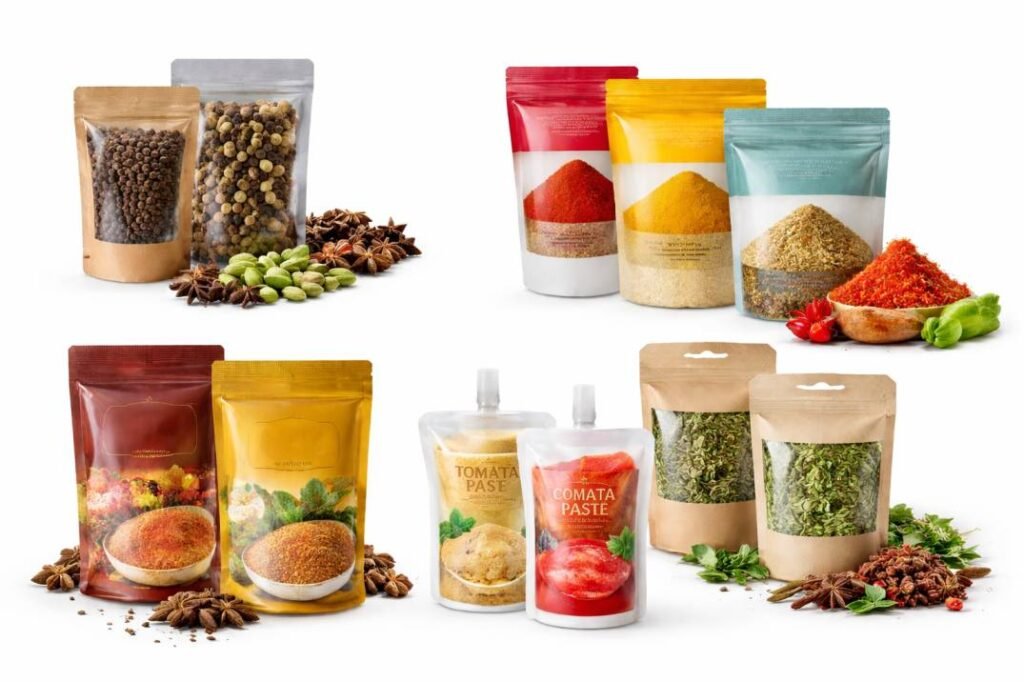
Different spices require different levels of protection depending on their form and sensitivity. Choosing the right packaging for spices becomes easier when you understand how each product behaves during storage and usage.
From whole spices to powdered and blended masalas, each category needs a specific packaging approach. This helps maintain freshness, improve usability, and ensure better shelf life.
Whole Spices
Whole spices like cloves, cardamom, and black pepper are hard and sometimes sharp. Packaging for herbs and spices in this category should be strong and puncture-resistant to prevent damage during handling.
They are commonly packed in center seal pouches or stand-up pouches for better durability and storage.
Powdered Spices
Powdered spices such as turmeric, chili, and coriander are highly sensitive to moisture and air. These products require spice packaging pouches with strong barrier protection to maintain aroma and texture.
They are usually packed in stand-up or zipper lock pouches for easy storage and repeated use.
Blended Masalas
Blended spices like garam masala and curry powder need both protection and presentation. Proper masala packaging ensures aroma retention along with resealability.
These are commonly packed in zipper lock or flat bottom pouches for premium appearance and convenience.
Herbs
Dried herbs like oregano, mint, and basil are lightweight and sensitive to humidity. Packaging for herbs and spices in this case should be moisture-proof and easy to handle.
They are often packed in zipper pouches or small stand-up packs for retail use.
Liquid or Paste Spices
Products like ginger-garlic paste require packaging that allows easy dispensing without leakage. Spout-based pouches are ideal for such applications.
They are commonly used for ready-to-use cooking pastes and liquid spice blends.
From whole spices to powdered and blended masalas, each category needs a specific packaging approach. This helps maintain freshness, improve usability, and ensure better shelf life. Similar pouch formats are also used across other industries, as explained in Top 4 Types of Pouches for Liquid Packaging.
How to Choose the Right Spice Packaging
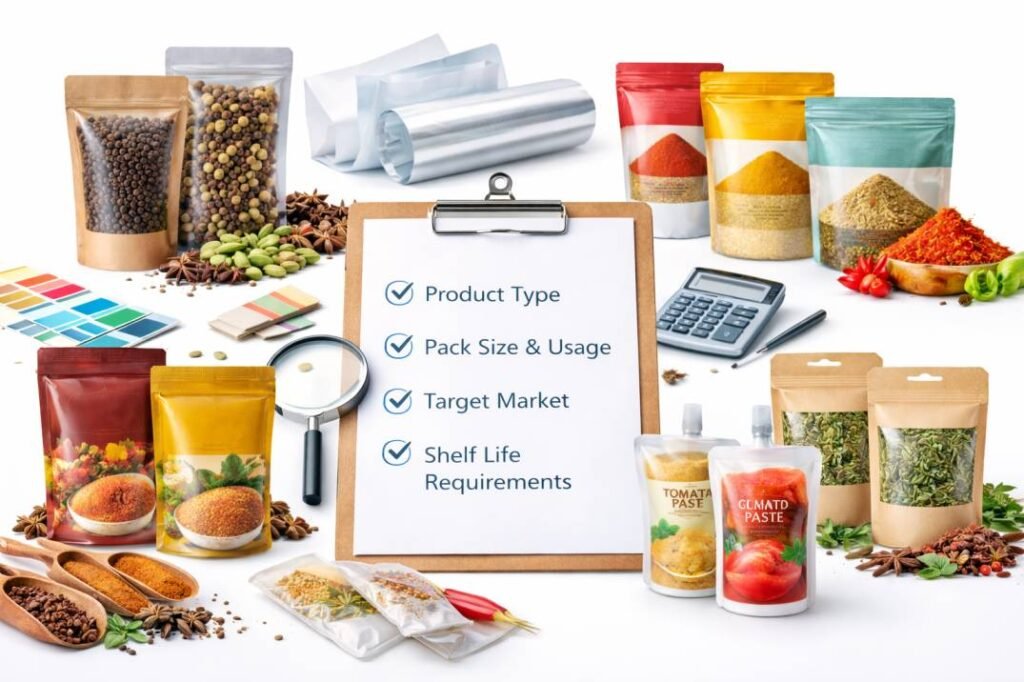
Choosing the right packaging for spices depends on factors like product type, storage conditions, and target market. The right packaging not only protects the product but also improves usability and overall brand perception.
Many businesses evaluate different approaches and even compare insights from Best Flexible Packaging Manufacturers in India to ensure they select packaging that meets quality, performance, and scalability requirements.
- Type of spice (whole, powdered, blended, or paste)
- Pack size and quantity (sachet, retail pack, bulk pack)
- Required shelf life and storage conditions
- Target market (retail, export, or e-commerce)
- Branding, printing, and design requirements
- Budget and production capacity
Selecting the right packaging for spices helps improve product quality, customer experience, and long-term brand growth.
Benefits of Flexible Packaging for Spices
Flexible formats have become a preferred choice in packaging for spices because they offer better efficiency, protection, and convenience compared to traditional packaging. These solutions are lightweight, easy to store, and designed to maintain product freshness for a longer time.
Compared to rigid containers like jars or bottles, flexible spice packaging reduces storage space and transportation costs. It also provides better sealing and barrier protection, which helps preserve aroma, texture, and quality more effectively.
Unlike basic plastic bags, modern spice packaging pouches offer improved durability, better print quality, and stronger branding opportunities. Many brands explore detailed insights like Benefits of Flexible Packaging Over Rigid Containers to understand how these solutions improve overall performance and cost efficiency.
Challenges in Spice Packaging
Even with advanced materials and formats, packaging for spices comes with several challenges that can directly impact product quality and shelf life. Factors like moisture, air exposure, and handling conditions make it important to choose the right packaging structure.
Understanding these challenges helps brands improve their packaging strategy and avoid common issues that affect aroma, freshness, and overall product performance.
Moisture and Humidity Exposure
- Causes clumping in powdered spices
- Reduces shelf life and product quality
- Affects texture and usability
- Common in high-humidity environments
Moisture control is critical in spice packaging pouches to maintain consistency and prevent spoilage during storage and transport.
Aroma and Flavor Loss
- Weak sealing leads to fragrance leakage
- Loss of product strength over time
- Impacts consumer experience
- Reduces perceived product quality
Proper masala packaging must lock in aroma to ensure spices retain their original flavor and effectiveness.
Oxygen and Light Sensitivity
- Leads to color fading in spices
- Causes oxidation and flavor degradation
- Reduces product freshness
- Affects long-term storage stability
Effective packaging for herbs and spices should include barrier layers that protect against air and light exposure.
Handling and Transportation Damage
- Risk of puncture in whole spices
- Tearing during bulk handling
- Leakage in weak packaging
- Product loss during transit
Strong and durable packaging for spices ensures protection against physical damage across the supply chain.
Market Trends in Spice Packaging
The demand for packaging for spices is evolving as brands focus more on convenience, sustainability, and premium presentation. Changing consumer expectations are pushing businesses to adopt packaging that not only protects the product but also improves overall usability.
Modern spice packaging is influenced by factors like branding, shelf appeal, and user convenience. Many businesses analyse insights such as How Packaging Affects Consumer Behavior along with consumer preferences and market performance trends to align their packaging strategies.
- Growing demand for premium and resealable packaging
- Increase in small and single-use spice packs
- Rising focus on export-ready packaging formats
- Shift towards eco-friendly and sustainable materials
- Better printing and branding for shelf visibility
These trends highlight how packaging for spices is becoming a key factor in both product protection and market success.
Conclusion
Choosing the right packaging for spices is essential to protect aroma, maintain freshness, and ensure long shelf life. From selecting the right materials to choosing the correct pouch type, every decision plays a key role in product performance and customer satisfaction.
As competition grows, packaging also becomes a major factor in branding and sales. Many businesses improve their strategies by focusing on solutions that enhance both protection and presentation.
White Lotus Industries Limited provides high-quality packaging for spices with advanced barrier laminates and reliable manufacturing standards. Businesses looking to upgrade their packaging can explore their product range or connect with their team to find a solution that fits their specific needs.
Frequently Asked Questions (FAQs)
1. What is the best packaging for spices?
The best packaging for spices is one that provides strong barrier protection against moisture, oxygen, and light. High-quality spice packaging pouches like stand-up or zipper lock pouches are widely used to maintain freshness, aroma, and shelf life.
2. Why is packaging important for spices?
Proper spice packaging helps preserve flavor, color, and aroma while preventing contamination. Good masala packaging also improves product safety, storage efficiency, and overall consumer experience.
3. What materials are used in spice packaging?
Common materials used in packaging for herbs and spices include multi-layer laminates like PET, aluminum foil, and PE. These materials offer durability and protection, making them ideal for long-term storage.
4. Which pouch is best for spice packaging?
Different spice packaging pouches are used based on product needs. Stand-up pouches are ideal for retail, zipper pouches for resealability, and center seal pouches for bulk packaging.
5. How do I choose the right packaging for spices?
Choosing the right packaging for spices depends on product type, shelf life, and usage. Factors like moisture resistance, durability, and convenience should be considered for effective spice packaging.
1 Comments
Hii,
I am new there, I found this blog very informative. Thanks for the nice blog.
Protect the freshness, aroma and quality of spices with high-performance spice packaging. Our custom barrier pouches help provide oxygen and moisture protection while supporting longer shelf life and strong shelf appeal. Ideal for ground spices, chili, seasonings and dry blends. Get a free quote today!